Description
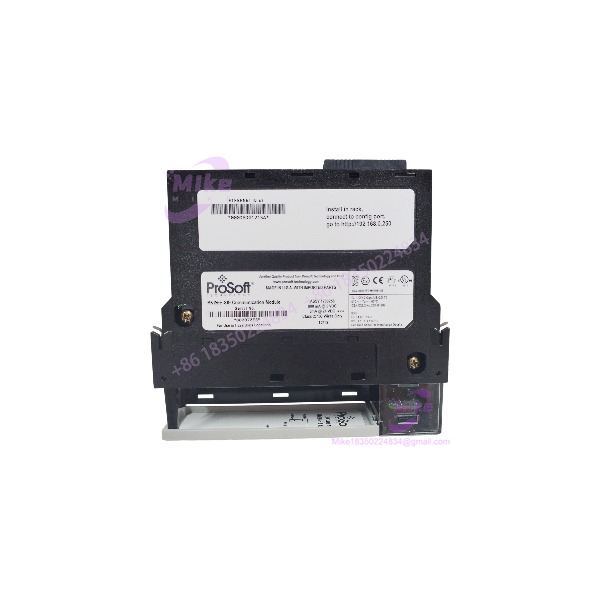
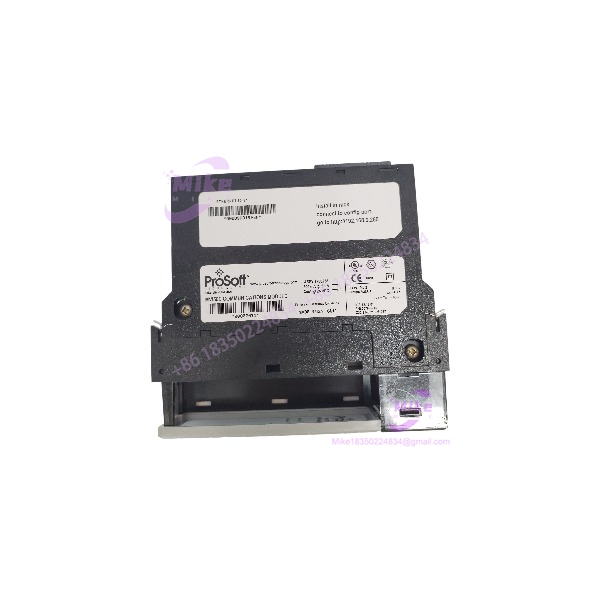
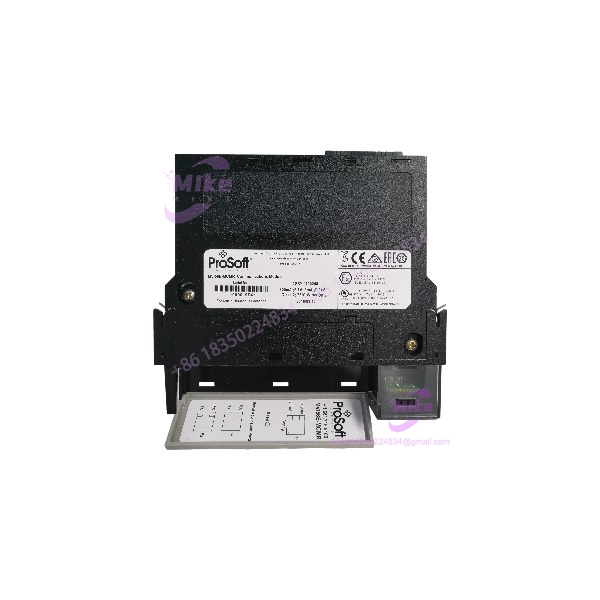
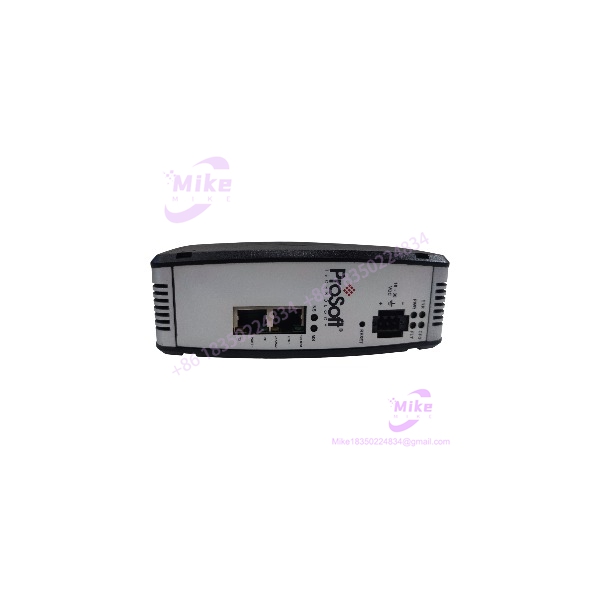
ProSoft PLX31-EIP-ASCII | EtherNet/IP to ASCII Gateway Module
Product Introduction
When a critical barcode scanner on a high-speed packaging line drops its serial handshake, production freezes instantly. The ProSoft PLX31-EIP-ASCII isn’t just an adapter in a DIN-rail plastic shell; it’s a dedicated communication bridge designed to offload serial string parsing entirely from your main PLC processor. Tossing legacy ASCII devices into modern Ethernet networks usually means writing hundreds of lines of tedious rung logic. This gateway eliminates that pain completely by mapping ASCII strings directly to standard I/O data registers.
Operating across harsh industrial floors requires rugged hardware that won’t lock up under electrical noise. The PLX31-EIP-ASCII handles dual-port serial processing simultaneously, allowing you to run two distinct serial devices—like weight scales, printers, or RFID readers—straight into ControlLogix, CompactLogix, or Micro800 systems over standard Ethernet. Built-in optical isolation protects your control architecture from ground loops—though you’ll still want proper shield grounding on long serial runs to avoid erratic frame errors.
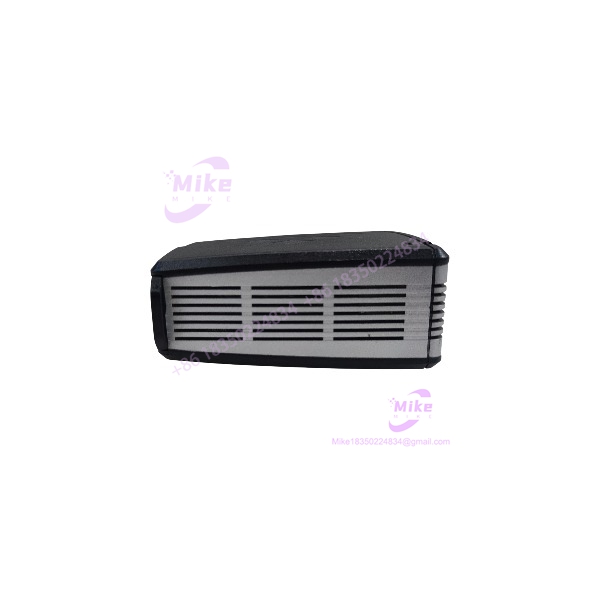
PLX31-EIP-ASCII
Key Technical Specifications
- Power Supply Voltage: 24 VDC nominal (accepts 10 to 30 VDC wide input range)
- Current Draw: Maximum 200 mA at 24 VDC (100 mA typical at 24 VDC)
- Ethernet Port: Single RJ45 port, 10/100 Base-T full-duplex auto-negotiating
- Ethernet Protocols: EtherNet/IP Class 1 Explicit and Implicit Messaging (Server/Client)
- Serial Ports: Two (2) fully isolated software-configurable ports
- Serial Standards Supported: RS-232, RS-422, and RS-485 (2-wire or 4-wire configurations)
- Serial Baud Rate: 110 bps to 115.2 kbps configurable per port
- Serial Data Buffer: 5000 bytes maximum receive/transmit storage array
- Operating Temperature Range: -25°C to +70°C (-13°F to +158°F)
- Storage Temperature Range: -40°C to +85°C (-40°F to +185°F)
- Relative Humidity: 5% to 95% non-condensing operating envelope
- Enclosure Protection Rating: IP20, heavy-duty polycarbonate housing with integrated DIN rail mount
- Operating Shock and Vibration: Meets IEC 60068-2 standards for high-vibration industrial skids
Application Scenarios & Pain Points
A bottling plant in Ohio kept suffering random batch aborts because their legacy inkjet line printers couldn’t process packet timing properly over standard Ethernet-to-serial converters. We replaced those unmanaged converters with the PLX31-EIP-ASCII, mapping the printer status registers directly into the CompactLogix tag database. The result? Zero frame-collision drops and a 14% boost in daily line throughput.
With vs. Without Dedicated Gateway Architecture:
- Without the PLX31-EIP-ASCII: Your PLC CPU wastes valuable cycle time executing custom ASCII string manipulation routines, buffer flushing logic, and timing loops. A single corrupted serial character can deadlock an entire execution task, forcing a manual PLC reset.
- With the PLX31-EIP-ASCII: The gateway hardware acts as an offload engine. It handles string formatting, termination character detection, and checksum calculations in native hardware. The PLC simply reads or writes clean controller tags over EtherNet/IP.
High-Vibration Logistics & Sorting Hubs:
- Condition: Continuous conveyer lines utilizing automated barcode scanning readers operating in high-vibration, high-EMI environments.
- Impact: Standard PC serial cards fail or drop connections under thermal expansion and electrical noise.
- Solution: Mounting the PLX31-EIP-ASCII right near the scanner heads delivers optically isolated dual-channel serial routing back to the main control panel via shielded Ethernet, keeping data pipelines rock solid.
QA & Live Testing SOP (Trust Signal)
Every single PLX31-EIP-ASCII unit leaving our bench undergoes rigorous physical and electrical verification. First, we break factory seal tape only to inspect terminal blocks for physical fracture and verify the hardware revision matches OEM labeling. Next, we snap the unit onto our test rack, powering it up with a benchtop power supply to monitor current draw against nominal specs—we check this on a calibrated Fluke meter to catch subtle short-circuit anomalies early.
Once powered, we establish a live EtherNet/IP connection using ProSoft Configuration Builder (PCB) and run active loopback tests across both RS-232 and RS-485 serial pinouts. We send 100,000 continuous ASCII data strings at 115.2 kbps to ensure zero dropped packets or frame errors before clearing the module’s memory. Finally, the unit is wiped down, sealed inside static-dissipative ESD shielding, and packed into custom-molded foam boxes ready for immediate field installation.
Field Engineer’s Pitfall Guide
❗ GOTCHA #1: Termination Resistors on RS-485 Multi-Drop Networks Do not forget to configure the internal termination jumpers when running the PLX31-EIP-ASCII as an end-of-line RS-485 device. Leaving 120-ohm line termination disabled on long cable runs causes signal reflections that ruin data frames. Conversely, leaving termination enabled on intermediate nodes will overload the module’s transceiver circuitry and kill serial communication altogether.
❗ GOTCHA #2: Termination Character Mismatch A very common commissioning error happens when setting up ASCII delimiter parsing in ProSoft Configuration Builder. If your serial scale outputs a Line Feed (0x0A) followed by a Carriage Return (0x0D), but you only configure the PLX31-EIP-ASCII to look for 0x0D, the internal buffer will overflow before sending data to the controller. Match your device’s exact hex output characters byte for byte.
❗ GOTCHA #3: IP Address Recovery via BOOTP/DHCP If you purchase a surplus or repurposed module, it may ship with a static IP address outside your local subnet. The hardware does not feature external DIP switches for factory IP resets. You must use the ProSoft Discovery Service utility or a dedicated BOOTP server on a isolated network segment to reassign the IP configuration before attempting to download your project file.
Intent-Driven FAQ
Can I hot-swap the PLX31-EIP-ASCII while the rest of the control network is online?
Yes, you can physically snap the module on or off its DIN rail and disconnect the 24 VDC power connector without disturbing other Ethernet nodes on your switch. However, keep in mind that any active EtherNet/IP I/O connection to the host controller will instantly fault out. You must configure fault-handling logic in your PLC controller tags to handle the momentary loss of the module’s input/output data assembly.
Is the PLX31-EIP-ASCII compatible with older Allen-Bradley SLC 500 or PLC-5 processors?
Not directly via native Ethernet messaging if those legacy processors only support older protocols like CSPv4 or DF1. However, if your SLC or PLC-5 system utilizes a 1747-AENT or 1785-ENET sidecar module—or if you route messaging through a ControlLogix gateway bridging EtherNet/IP—you can exchange data with the PLX31-EIP-ASCII without issues. For direct serial connections to older PLCs, consider alternative ProLinx series gateways instead.
What is the maximum length of ASCII string this module can process in a single packet?
The PLX31-EIP-ASCII supports configurable block transfers with string buffers up to 2048 bytes per message transaction. This easily handles standard industrial strings, such as complex 2D matrix codes or multi-field batch weigh scale outputs, which typically run under 256 bytes. You can tweak the payload block size directly inside the ProSoft Configuration Builder configuration tool.
Do I need to buy expensive proprietary software to set up this unit?
No. ProSoft provides its configuration utility, ProSoft Configuration Builder (PCB), as a free software download. PCB allows you to set up IP addresses, define serial port parameters, build mapping tables, and monitor live diagnostic traffic without purchasing an additional software license.
How does this unit handle grounding and electrical isolation on the serial ports?
The PLX31-EIP-ASCII incorporates 1500 VAC optical isolation between its internal logic circuitry and the external serial communications ports. Additionally, it offers 500 VDC port-to-port isolation. This prevents high-voltage spikes or ground loops originating from remote field instruments from jumping into your main 24 VDC power distribution system or burning out Ethernet switches.