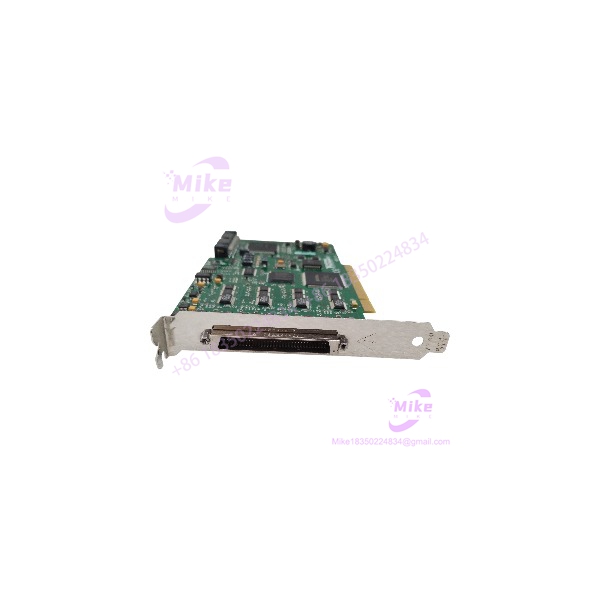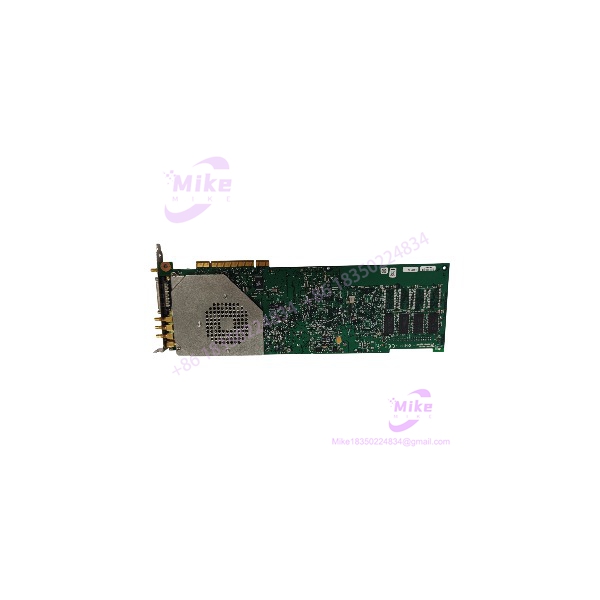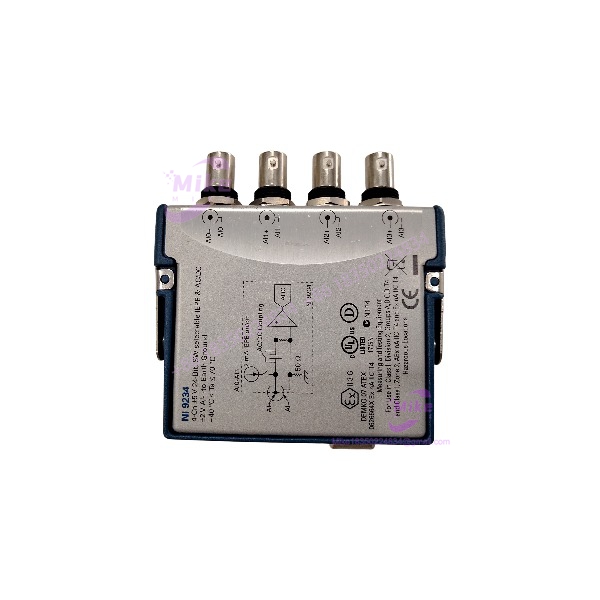

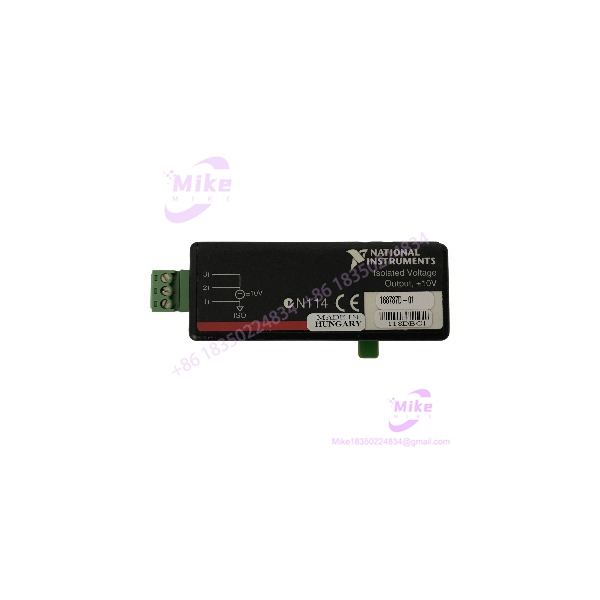
Description
NI SCC-AO10 | Analog Output Signal Conditioning Module Core Category
Dynamic Product Introduction
Field engineers know the headache of chasing ground loops and electrical offset errors when long analog signal runs connect a DAQ board directly to field actuators. Honestly, attempting to drive proportional valves or motor speed references straight from unisolated DAQ analog output lines frequently causes signal degradation, offset drift, or damaged card channels. The National Instruments SCC-AO10 resolves these noise and isolation issues by stepping in as a dedicated, isolated signal conditioning buffer between your DAQ hardware and field devices.
Engineered specifically for SC-2345, SC-2350, and SCC carrier blocks, this SCC-AO10 module delivers clean, galvanically isolated ±10 V outputs capable of sourcing up to 20 mA per channel. In production and automated test bench setups, swapping in a verified SCC-AO10 module restores low-noise analog signal execution and protects upstream multifunctional I/O boards from high-voltage transients on the plant floor.
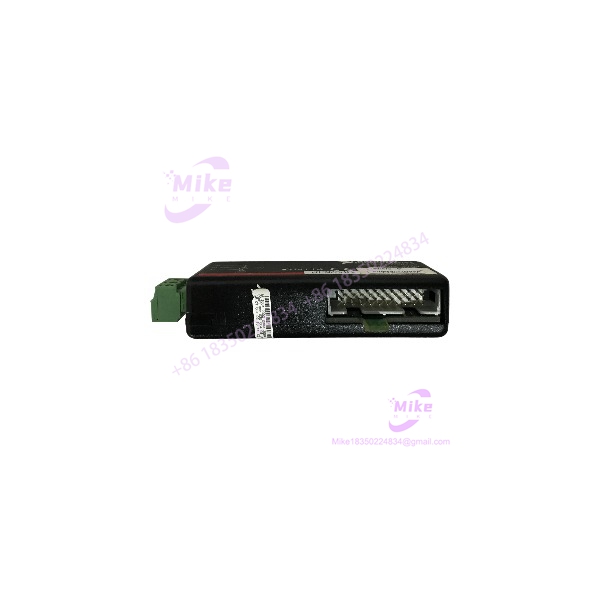
SCC-AO10
Key Technical Specifications
- Number of Output Channels: 2 independent analog voltage output channels
- Output Voltage Range: ±10 VDC full-scale
- Maximum Drive Current: 20 mA continuous per channel (short-circuit protected)
- Isolation Rating: 300 V RMS bank-to-bus/earth galvanic isolation
- Output Impedance: Less than 0.1 ohms at DC
- Slew Rate: 1.0 V/µs minimum
- Accuracy & Gain Error: ±0.05% of full-scale reading at 25°C
- Operating Power Supply: Powered directly through SCC carrier backplane (+5 VDC and ±15 VDC)
- Carrier Compatibility: National Instruments SC-2345, SC-2350, and SCC-68 carriers
- Operating Temperature Range: 0°C to 50°C ambient industrial window
Global Sourcing & Live-Test SOP (Transparency Core)
Sourcing discontinued or secondary-market DAQ hardware demands a strict zero-trust quality verification methodology. Inbound shipments of the SCC-AO10 undergo rigorous customs documentation audits, serial number checks, and microscopic pin inspections to filter out bent connectors, damaged trace layers, or counterfeit components.
Once logged into inventory, every SCC-AO10 module moves directly to our specialized signal conditioning testing rig. Technicians seat the unit into an authentic NI SC-2345 carrier connected to a multi-function DAQ card. We execute a 24-hour thermal soak while commanding full-scale ±10 V sine and step waveforms under maximum 20 mA load conditions. High-precision Keysight multimeters log output linearity, offset error, and thermal drift, while 300 V isolation barriers are stress-tested. After verifying full channel response, the module is vacuum-sealed in ESD-safe packaging prior to dispatch.
The Field Engineer’s Pitfall Guide
❗ SC-2345 Slot Allocation Errors: Installing the SCC-AO10 into an SCC carrier slot wired exclusively for analog input modules will cause software routing conflicts or prevent output signal generation. I once saw an automated test stand sit idle for an entire shift because a tech plugged an analog output module into an input-mapped slot on the carrier block.
❗ Unpowered DAQ Subsystem Ground Loops: Cable connections that combine the floating ground of the SCC-AO10 with an unisolated external power supply can compromise the 300 V galvanic isolation barrier. Always verify isolated signal ground wiring with a digital multimeter before powering up external actuators.
❗ Hot-Plugging Under Carrier Power: Inserting or unseating the SCC-AO10 module while the SC-2345 carrier chassis is energized can cause voltage spikes that damage the module’s edge connectors or cause DAQ driver crashes in NI-DAQmx. Always disconnect main carrier power before servicing individual SCC slots.
Intent-Driven FAQ
Will I need to recalibrate my NI-DAQmx software task when replacing an SCC-AO10? The SCC-AO10 uses fixed unity-gain buffering; while recalibration isn’t required in NI-DAQmx, you should verify channel zero-offset voltages in MAX (Measurement & Automation Explorer) after installing the replacement unit.
Can the SCC-AO10 drive 4-20 mA current loops directly? No, the SCC-AO10 is designed specifically for ±10 V voltage output signals; for current loop applications, a dedicated current-output conditioning module should be used instead.
Are surplus SCC-AO10 modules supplied in factory-sealed ESD packaging? Stock conditions include new old stock (NOS) in original NI packaging as well as certified pre-owned surplus. Regardless of outer box condition, every SCC-AO10 undergoes a complete live-load bench calibration test before dispatch.
What causes an output voltage to clamp near 0 V despite software commands? Output clamping typically points to an excessive current draw beyond 20 mA (e.g., a short circuit on field wiring), missing ±15 V supply rails from the carrier, or improper channel mapping in your DAQmx task.
What warranty coverage applies to a replacement SCC-AO10 module? Our secondary-market and surplus SCC-AO10 modules include a comprehensive 12-month operational warranty covering signal conversion accuracy, channel isolation, and component reliability under standard operating conditions.