Description
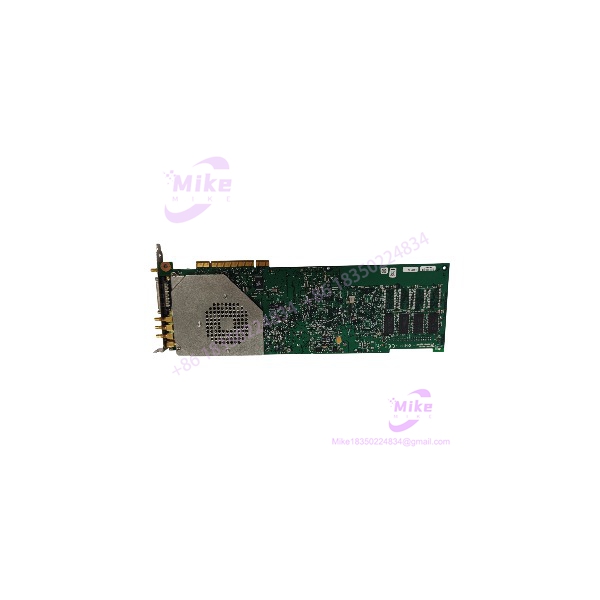
NI PCI-5421 | 100 MS/s 16-Bit Waveform Generator New In Stock
Architect’s Product Breakdown
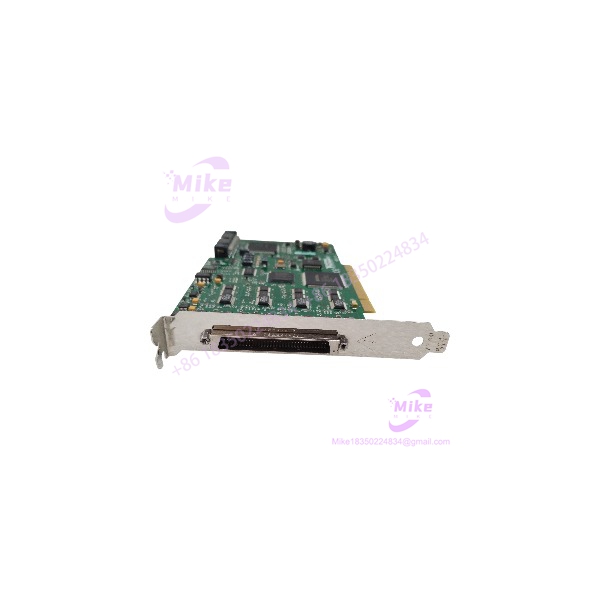
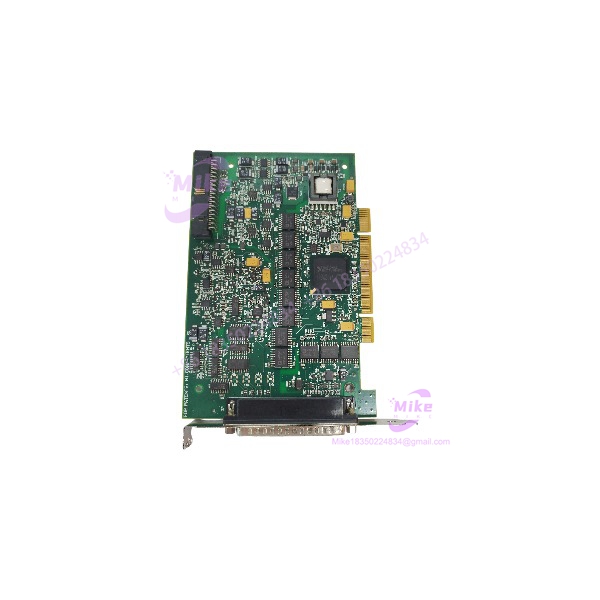
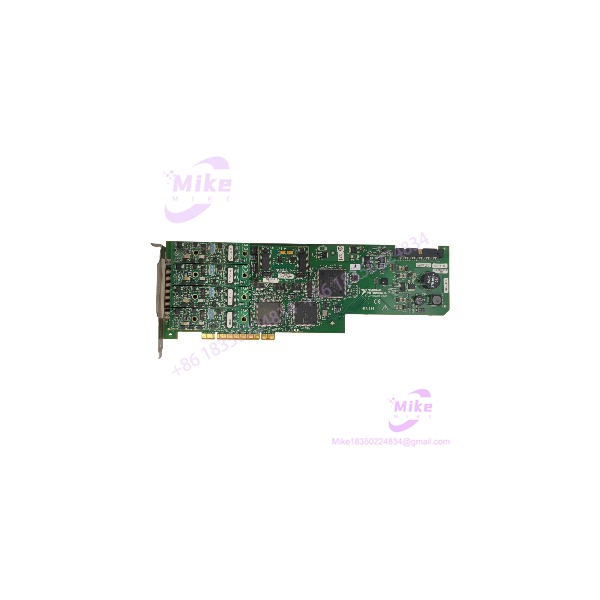
The National Instruments PCI-5421 operates as a high-precision arbitrary waveform generator card within standard industrial computer and PCI expansion chassis. In automated test equipment (ATE) cells, communication testing benches, and physics research setups where signal fidelity and flexible timing control are mandatory, this generator model delivers exceptional synthesis performance. Utilizing direct digital synthesis (DDS) alongside deep onboard memory options (ranging from 8 MB up to 256 MB), it streams complex user-defined waveforms without taxing the host computer bus.
Deploying or replacing this generator card requires careful attention to impedance matching, coaxial cable shielding, and software driver integration via NI-FGEN. When performing hardware maintenance swaps, engineers must ensure that output termination settings (such as 50 \Omega or 75 \Omega) align with the external device under test to prevent amplitude reflection errors. Omitting proper coaxial shielding or overloading the output amplifier can cause thermal shutdown trips and signal clipping during high-amplitude bursts.
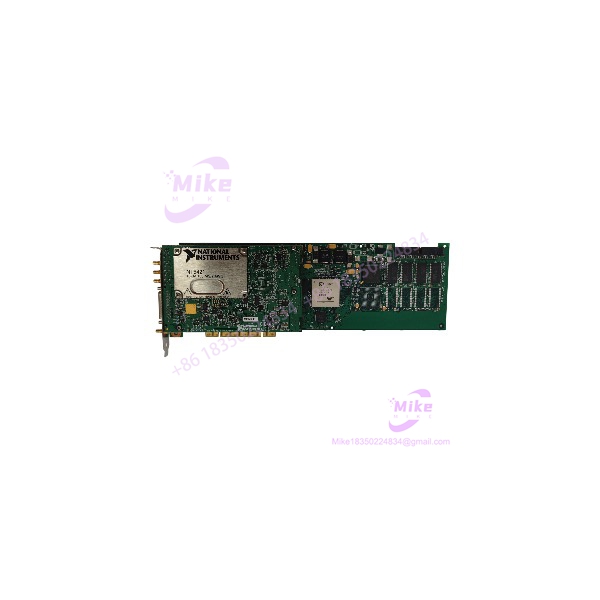
PCI-5421
Key Technical Specifications
- Manufacturer: National Instruments (NI)
- Product Category: PCI Arbitrary Waveform Generator Board
- Part Number / Catalog No.: PCI-5421
- Maximum Update Rate: 100 MS/s
- DAC Resolution: 16-bit
- Onboard Memory Options: 8 MB, 32 MB, or 256 MB
- Output Amplitude: Up to 12 Vpk-pk into a 50 \Omega load
- Standard Waveforms: Sine (up to 43 MHz), square, triangle, ramp, and user-defined arbitrary paths
- Bus Architecture: Standard PCI master/slave interface
- Operating Temperature Range: 0°C to +50°C (standard industrial threshold)
- Weight: Approximately 0.3 kg to 0.4 kg
Field Engineer’s Pitfall Guide (Unique Value)
- Hot-Swapping Under Power: Never insert or remove the PCI-5421 module while the host computer is powered on. Doing so risks shorting live PCI bus power rails and permanently damaging motherboard components.
- Mismatched Output Load Impedance: Failing to configure the correct software termination impedance (e.g., matching a 50 \Omega load when software expects high-Z) will result in double or halved output voltage amplitudes relative to programmed values.
- Neglecting External Clock Synchronization: When synchronizing multiple generator modules using NI-TClk or external reference clocks, improper cabling or missing termination on trigger lines will cause phase drift and timing jitter.
QA & Testing SOP (Transparency)
- Visual & Origin Verification: Units undergo microscopic inspection to verify clean gold-finger connectors, undamaged surface-mount analog components, and authentic OEM labeling.
- Live Test Bench Environment: Generator cards are seated in a dedicated test PC running validated NI-FGEN driver suites to evaluate bus communication and register stability.
- Signal & Distortion Testing: Technicians capture output waveforms on high-bandwidth oscilloscopes across all amplitude ranges to verify total harmonic distortion (THD), frequency response flatness, and DAC linearity.
- Anti-Static Packaging: Post-testing units are sealed inside conductive ESD shielding bags and cushioned with high-density foam inserts to prevent electrostatic discharge during transit.
Technical FAQ
Can I hot-swap the PCI-5421 card while the host computer is energized?
No. Standard PCI expansion slots do not support live hot-swapping. Always power down the host computer entirely before installing or removing this module.
Which programming environments are compatible with this waveform generator model?
The PCI-5421 is supported by NI-FGEN drivers, enabling seamless integration with LabVIEW, LabWindows/CVI, MATLAB, C#, and Python development environments.
What causes an output signal attenuation or unexpected amplitude drop?
Output attenuation is typically caused by driving a 50 \Omega load while the instrument software is configured for an open-circuit (high-Z) termination setting.
What is the standard warranty status for surplus inventory units?
Verified surplus or factory-sealed instrument modules typically carry a 12-month operational warranty covering material and manufacturing defects under standard laboratory or industrial conditions.