


Description
Honeywell CC-PDIL01 | Digital Input Module Category ID
Product Introduction
When a safety interlock trips or a critical limit switch changes state, the control system needs to register the event instantly—delay is simply not an option. Designed natively for the Series-C platform, the CC-PDIL01 consolidates massive binary monitoring requirements into a compact footprint without wasting valuable cabinet space.
Reliable status acquisition separates a robust plant architecture from chronic false trips. The CC-PDIL01 processes 32 isolated digital channels with rapid 2 ms response filtering, ensuring that binary inputs from the field translate cleanly into deterministic control logic (—though your mileage may vary depending on cabinet temp and active ventilation).
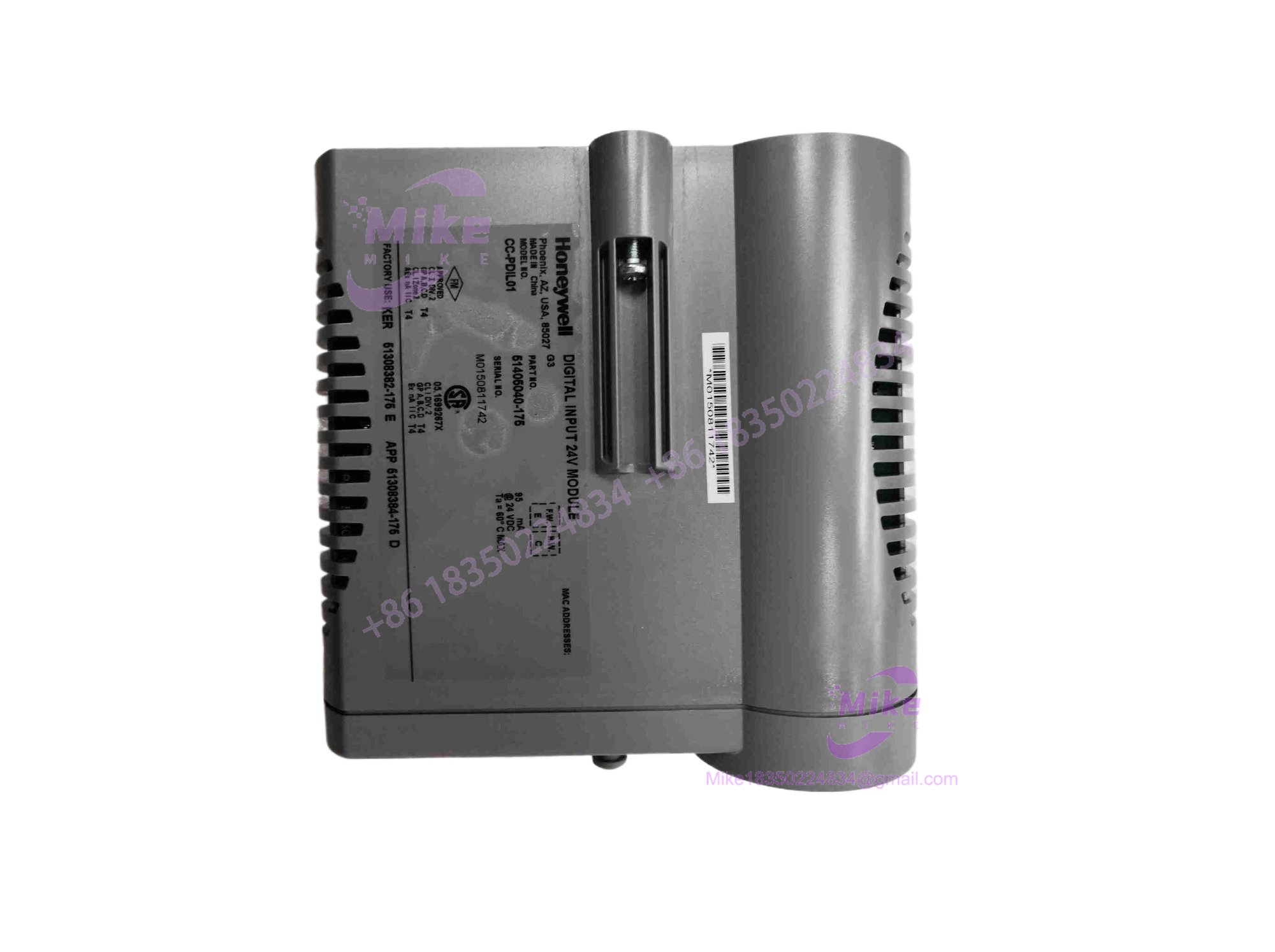
CC-PDIL01
Key Technical Specifications
| Parameter | Technical Specification |
| Input Channels | 32 discrete digital input channels |
| Input Voltage Range | 24 VDC nominal (18 VDC to 30 VDC operating limit) |
| Input Current | Typically 4.5 mA at 24 VDC per channel |
| Input Scan Rate | 2 ms update interval |
| Isolation | Channel group-to-logic isolation |
| Diagnostic Feedback | Individual channel status LEDs on the faceplate |
| Nominal Operating Power | 24 VDC industrial bus supply via IOTA |
| Operating Temp Range | -40^\circC to +70^\circC |
Application Scenarios & Pain Points
- Emergency Shutdown (ESD) Verification: Fast-acting trip loops demand sub-millisecond signal validation; the CC-PDIL01 utilizes a rapid 2 ms scan filter to capture rapid contact closures accurately.
- A “With vs. Without” Contrast: Without high-density digital grouping, managing hundreds of discrete field wires requires sprawling terminal blocks that eat up cabinet real estate. With the CC-PDIL01, 32 channels terminate neatly onto a single Series-C IOTA footprint.
- High-Vibration Compressor Skids: Heavy machinery constantly shakes loose poorly secured wiring connections. The CC-PDIL01 snaps securely into rugged backplane assemblies to maintain uninterrupted contact state monitoring.
QA & Live Testing SOP (Trust Signal)
We treat surplus industrial hardware with strict scrutiny. Every CC- undergoes a rigorous multi-stage evaluation before hitting our inventory shelf. First, we verify physical OEM seals and inspect backplane pin integrity under magnification. Next, we drop the CC- onto a live test rack running a compatible controller node, cycling simulated 24VDC discrete inputs across all 32 channels to validate optical isolation and communication handshakes. Finally, the card is wrapped in dissipative ESD-safe packaging to ensure it survives transit straight to your plant floor.
Field Engineer’s Pitfall Guide
- ❗ Firmware Revision Mismatch: Dropping a newer revision CC- onto an outdated controller backplane without verifying the system software tree can trigger communication faults. Check your node configuration files before initiating a hot-swap.
- ❗ Field Power Supply Sag: Ensure your auxiliary 24VDC loop power supplies are robust enough to handle simultaneous state changes across all 32 channels without dropping below the 18VDC minimum threshold.
- ❗ Sinking vs. Sourcing Mismatch: Verify that your field contact wiring matches the sinking or sourcing configuration of your specific Series-C Input/Output Termination Assembly (IOTA) to avoid inverted logic states or unverified inputs.
Intent-Driven FAQ
- Can I hot-swap the CC- without crashing the rack?
Yes, the Series-C architecture supports hot-swapping under normal operating conditions, provided you follow proper hardware release procedures and ensure the replacement card matches your exact configuration.
- Is the CC- compatible with older controller firmware revisions?
Compatibility depends on your specific system profile release. Verify your node builder database version, as older software loads may require a minor patch to correctly map the 32 channels of the CC-.
- How do you verify the authenticity of surplus units?
Every CC- we supply is sourced directly from decommissioned industrial inventory, verified for original component markings, and bench-tested under power.
- What is the standard warranty on this module?
We back every CC- unit with a comprehensive 12-month replacement warranty covering any functional defects.
- Does the CC- require external fusing for individual channels?
The module incorporates internal channel protection, but external fusing on field power distribution lines is recommended depending on local electrical safety codes.





