


Description
Honeywell 2106B1110 | Signal Interface Converter Quantified Spec
Dynamic Product Introduction
Signal drift and communication errors between legacy catalytic combustible gas sensors and central control systems often trace back to failing signal interface or conversion modules. When an aging bridge converter suffers from electronic drift or electrical transient damage, gas concentration readings become skewed or drop entirely, risking safety interlocks. The Honeywell Analytics 2106B1110 catalytic bridge to 4-20 mA converter resolves these vulnerabilities by accurately translating raw sensor bridge outputs into reliable, linear analog control signals.
Unlike generic signal conditioners, this specialized Honeywell module is engineered specifically to withstand the harsh electromagnetic interference and temperature swings found in heavy industrial plant environments. Maintaining absolute measurement fidelity across critical safety monitoring loops demands exact hardware matching—making this replacement converter essential for compliance and uptime.
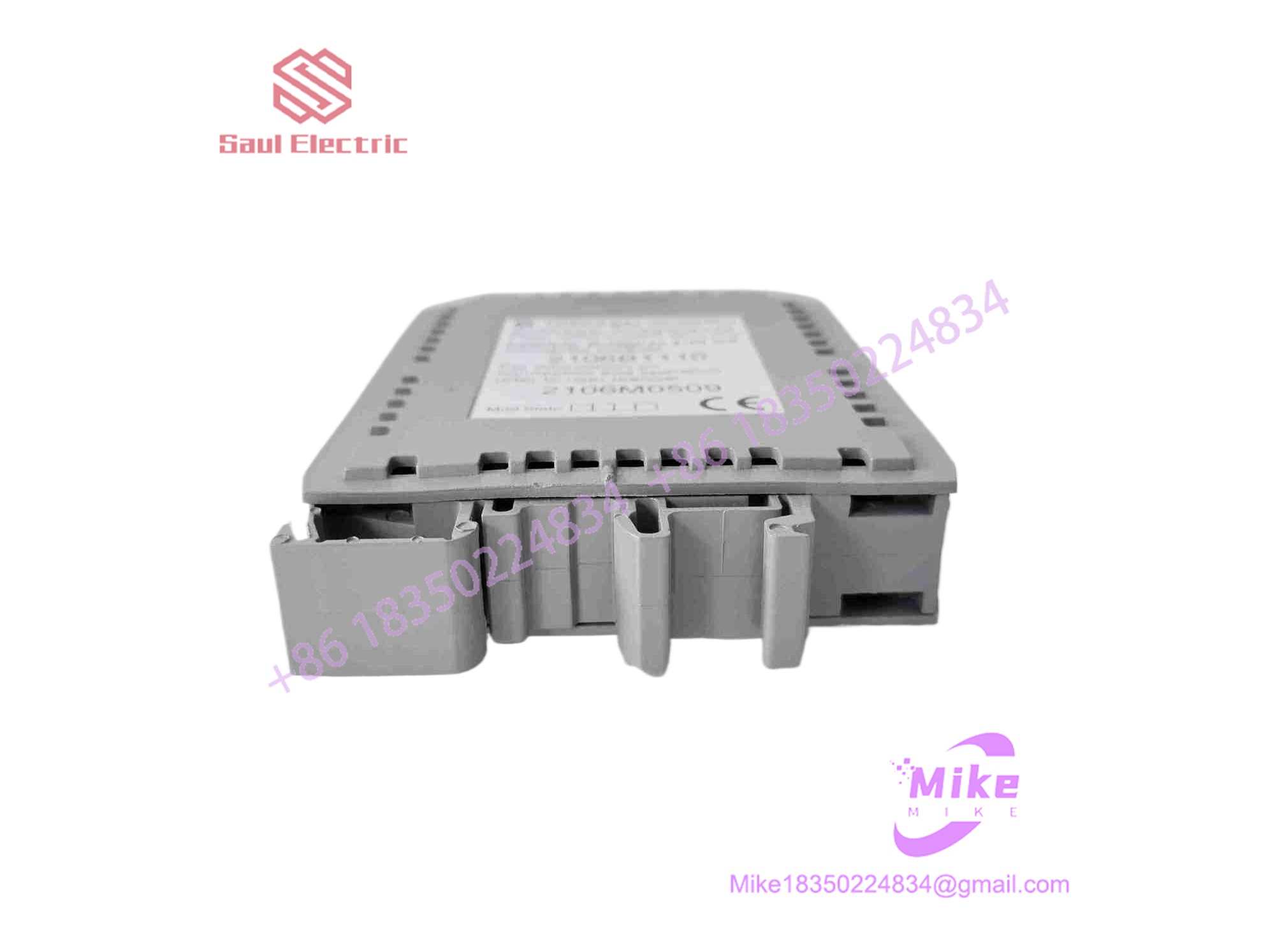
2106B1110
Key Technical Specifications
| Parameter | Specification Detail |
| Manufacturer | Honeywell Analytics |
| Catalog / Part Number | 2106B1110 |
| System Application | Fixed Gas Detection / Combustible Sensor Loops |
| Module Type | Catalytic Bridge to 4-20 mA Signal Converter |
| Input Signal | Raw millivolt bridge input from catalytic bead gas sensors |
| Output Signal | Standardized 4-20 mA analog loop output |
| Operating Environment | Industrial control and safety enclosures (-40^\circ C to +70^\circ C) |
Global Sourcing & Live-Test SOP (Transparency Core)
Acquiring secondary-market safety-critical signal conditioning hardware requires strict electronic calibration and bridge simulation protocols to zero out drift or linearity errors prior to installation. Our multi-stage qualification protocol covers:
- Inbound Verification: Incoming converter modules undergo high-magnification optical inspection along terminal blocks, microchip solder joints, and traces to check for corrosion, moisture ingress, or thermal stress. OEM part numbers are cross-referenced against historical archives.
- Live Simulation: We mount the converter onto a dedicated Honeywell sensor test bench configured with a calibrated millivolt bridge simulator mimicking a live catalytic bead element.
- Diagnostics: Engineers execute full span and zero calibration checks, verifying linear 4-20 mA loop tracking across full-scale gas concentration simulations. The unit undergoes an accelerated thermal stabilization soak.
- Final Prep: Once testing criteria are met, terminal connections are cleaned, and the unit is sealed inside an antistatic, moisture-barrier shielding bag.
The Field Engineer’s Pitfall Guide
❗ Hot-Work and Power Risks: Never service or disconnect signal wiring on a live loop inside a classified hazardous area unless power is isolated or the environment is verified gas-free.
❗ Incorrect Bridge Zeroing: I’ve seen technicians adjust the 4-20 mA span before properly establishing a stable zero baseline in clean air, resulting in permanent reading offsets across the entire detection range.
❗ Loop Power Supply Mismatch: Ensure your control system’s analog input card supply voltage matches the converter’s power requirements to avoid loop starvation and erratic signal scaling.
Intent-Driven FAQ
Can the 2106B1110 converter be used with any brand of catalytic gas sensor?
It is specifically designed for Honeywell/legacy catalytic bridge sensor configurations matching standard bridge resistances and millivolt outputs. Always verify sensor impedance specifications before pairing.
What causes a constant 4mA output reading from the converter?
A locked 4mA floor usually points to an open circuit in the catalytic sensor bridge wiring, a burned-out detector bead, or a complete loss of input bridge voltage.
How do you calibrate the 2106B1110 module during routine maintenance?
Calibration is typically performed by applying a zero gas (clean air) baseline adjustment followed by a known calibration gas mixture (such as 50% LEL Methane) while trimming the onboard zero and span potentiometers.
Are these signal converter boards field-repairable?
Due to surface-mount calibration circuits and precision multi-layer traces, component-level field repairs are not recommended. Complete board replacement ensures safety loop integrity.
What level of warranty is included with this surplus safety component?
We back this component with a comprehensive one-year replacement warranty, covering material defects and signal conversion accuracy under standard industrial operating conditions.





