

Description
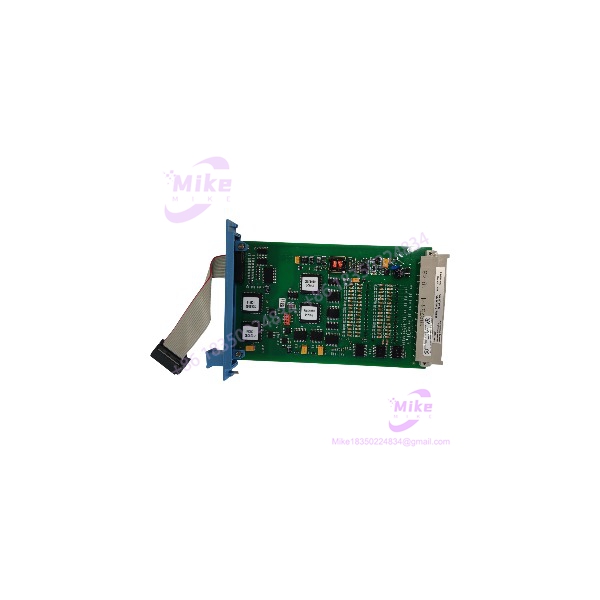
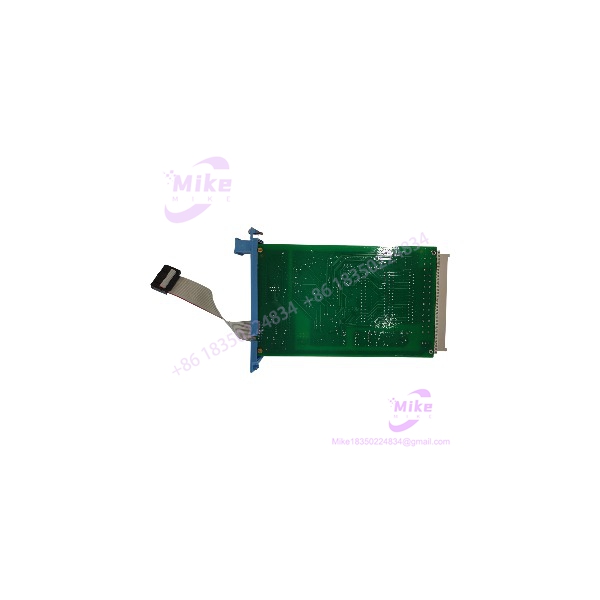
Honeywell FC-SAI-1620M | 16-Channel Safe Analog Input
Dynamic Product Introduction
The Honeywell FC-SAI-1620M is a safety I/O module where the wiring details matter just as much as the channel count. It provides 16 safe analog input channels, but the module’s native measurement interface is 0–4 V, not a conventional direct 4–20 mA PLC input. That distinction is easy to miss when sourcing legacy Safety Manager hardware.
For process transmitters using 0–20 mA or 4–20 mA, Honeywell specifies a conversion stage through the applicable field termination assembly or the BSAI-1620mE signal-conversion module. Thermocouple and RTD signals similarly require appropriate conversion before being presented to the SAI-1620m.
This architecture gives the Safety Manager controller a defined, safety-oriented analog acquisition path while keeping field signal conditioning in the appropriate interface hardware. It also means that replacing an FC-SAI-1620M without checking the associated termination and conversion hardware is a classic maintenance mistake.
Honeywell’s system documentation also records an important historical point: the FC-SAI-1620M had documented revisions V1.1 through V1.4 in a 2019 Safety Manager failure notification. The currently supplied marketplace unit is identified as V1.5, so the hardware revision should be captured rather than treating every SAI-1620M as automatically interchangeable.
FC-SAI-1620M
Key Technical Specifications
- Manufacturer: Honeywell
- Exact Type: FC-SAI-1620M
- Functional Designation: SAI-1620m
- Product Type: Safe high-density analog input module
- System: Safety Manager / Safety Manager SC
- Number of Analog Inputs: 16
- Native Analog Input Range: 0–4 V
- External Voltage Readback: 0–4 V
- Analog 0 V: Isolated analog common for the 16 channels
- Field Current Signals: 0–20 mA / 4–20 mA require appropriate conversion
- Thermocouple / RTD Signals: Require suitable signal conversion
- Safety Classification: Suitable for SIL 3 applications within the approved Safety Manager architecture
- Associated Conversion Hardware: BSAI-1620mE or applicable TSAI-1620m-family termination/conversion hardware
- Self-Test Functions: Absolute accuracy, conversion across the range, channel crosstalk, input filtering, and internal supply checks
- Application: Safety-related analog process measurement
Honeywell documentation specifically states that the SAI-1620m self-test checks absolute accuracy, conversion over the full range, crosstalk between inputs, channel input filters, and internal supply voltages.
Global Sourcing & Live-Test SOP
1. Inbound Verification
Before putting an FC- into safety-system spare stock, capture:
- Exact type marking
- Hardware revision
- Serial number
- Conformal-coating condition
- Backplane connector condition
- Field termination interface condition
- Evidence of corrosion, contamination, overheating, or previous repair
- Any revision or configuration label
- ESD packaging condition
If the unit is marked V1.5, record that revision explicitly. Do not silently collapse it into an inventory record simply labeled “.”
2. Live Simulation
The correct acceptance environment is a compatible Safety Manager I/O chassis and field termination arrangement.
A meaningful test should verify:
- Module initialization
- Controller recognition
- Module status
- Representative 0–4 V analog input response
- Channel-to-channel isolation behavior
- Input filtering
- External voltage-readback behavior
- Diagnostic response
- Stable operation under representative load
For current-loop applications, test the complete signal path, including the conversion hardware. Testing the bare module with a voltage source does not prove that a 4–20 mA field loop will operate correctly after installation.
3. Diagnostics
Record the module’s diagnostic condition before shipment.
Where the test environment permits, verify:
- Channel accuracy
- Full-scale conversion behavior
- Crosstalk between channels
- Input filtering
- Internal supply diagnostics
- Controller/module communication
- External readback
- Fault response
The Honeywell self-test architecture is particularly useful here because it goes beyond a simple “module detected” check.
4. Final Preparation
Before shipment:
- Photograph the complete nameplate
- Record hardware revision
- Record serial number
- Record test voltage and measured response
- Document the associated termination/conversion hardware used during testing
- Protect the backplane connector against impact
- Use ESD-safe packaging
- Keep the module dry and mechanically restrained
For safety analog I/O, the test configuration should stay with the spare’s procurement record.
Field Engineer’s Pitfall Guide
❗ FC- Is Not a Direct 4–20 mA Input Card
This is the biggest trap.
The SAI-1620m’s native analog input is 0–4 V. Honeywell specifies conversion for field signals such as 0–20 mA and 4–20 mA. Do not wire a conventional current-loop transmitter directly into the module simply because the application is described as an “analog input.”
A field technician can easily make this mistake when replacing a conventional PLC analog card. The channel count may look familiar; the signal interface is not.
❗ Check the Termination and Conversion Assembly
The module does not define the entire field interface by itself.
Honeywell shows the SAI-1620m used with field termination assemblies and separately documents the BSAI-1620mE conversion module. The correct interface depends on how the existing Safety Manager installation was engineered.
Before ordering a replacement, compare the existing wiring diagram and termination assembly against the spare.
❗ Hardware Revision Matters
Honeywell’s historical system notification specifically lists FC- revisions V1.1 through V1.4 in connection with a known failure notification. The supplied marketplace unit is identified as V1.5, making revision verification particularly important.
Do not assume that a later revision is automatically acceptable merely because the base part number is identical. Check the installed Safety Manager release and Honeywell compatibility documentation.
Intent-Driven FAQ
What is the Honeywell FC-?
The FC- is a 16-channel Safe High-Density Analog Input Module used in Honeywell Safety Manager systems. Its native analog input range is 0–4 V.
Is FC- a 4–20 mA input module?
Not directly. The module itself accepts 0–4 V. Honeywell specifies external signal conversion for 0–20 mA and 4–20 mA field signals.
How many analog channels does FC- provide?
It provides 16 analog input channels, plus an external voltage-readback input.
Can FC- handle thermocouples or RTDs directly?
No. Honeywell specifies that thermocouple and PT-100 signals require conversion to the appropriate current/voltage signal before being applied to the SAI-1620m interface.





