


Description
Honeywell 2104B2131 | Searchline Excel ATEX Source Receiver Quantified Spec
Dynamic Project Introduction
Process plant safety and fugitive emission monitoring on hazardous industrial sites rely heavily on uninterrupted open-path gas detection. When an aging receiver module suffers from optics degradation or environmental fog/rain interference on legacy safety loops, false trips or blind spots can compromise facility protection. The Honeywell Analytics 2104B2131 Searchline Excel medium-range receiver resolves these vulnerabilities by utilizing advanced double band-pass optics to ensure continuous, high-speed combustible gas monitoring.
Unlike standard point detectors, this specialized receiver unit is engineered specifically to cover wide perimeter zones and harsh environments—from arctic installations to extreme deserts. Maintaining absolute safety compliance on hazardous industrial perimeters demands exact hardware matching—making this replacement receiver essential for preventing unexpected safety system downtime.
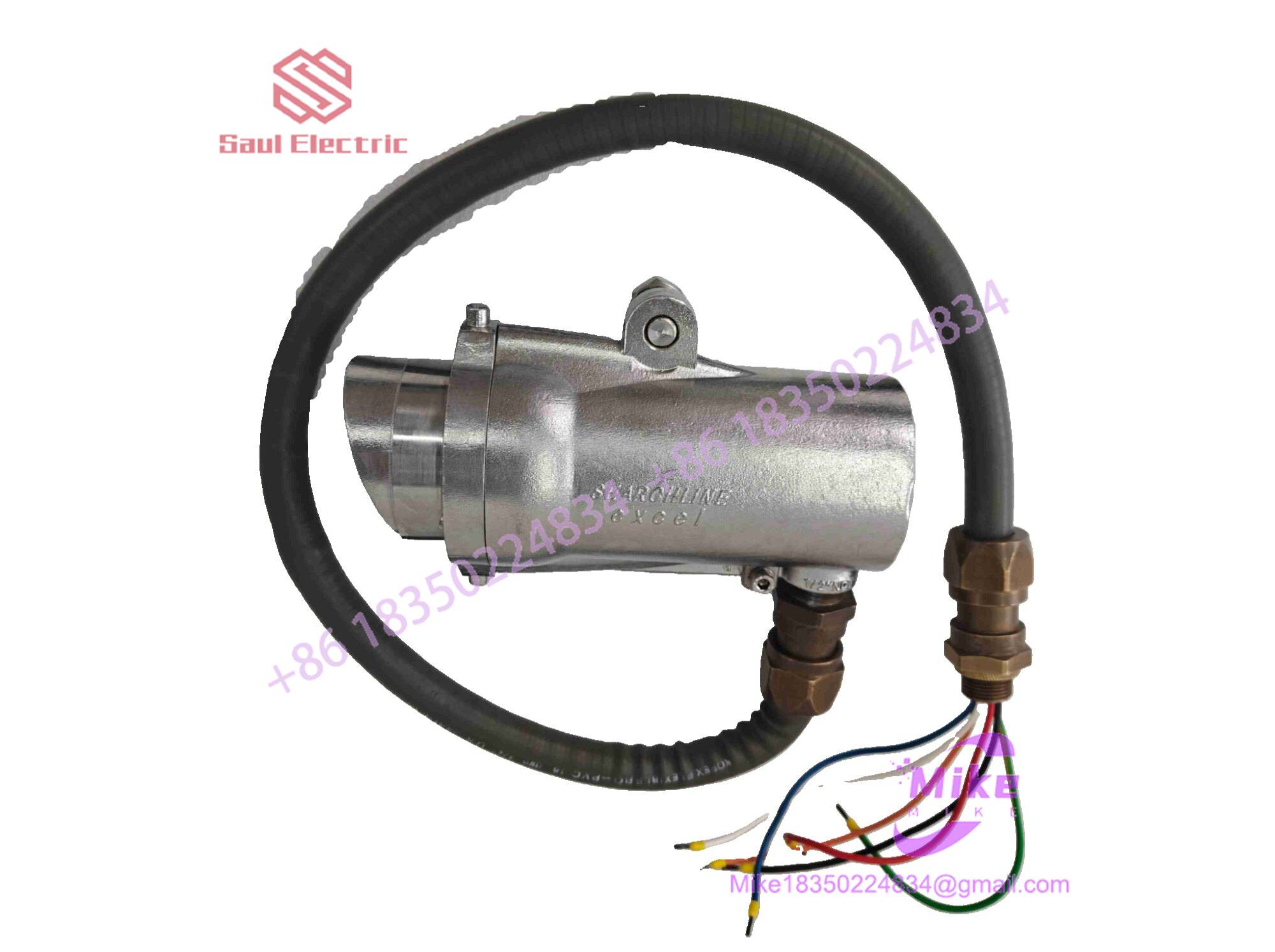
2104B2131
Key Technical Specifications
| Parameter | Specification Detail |
| Manufacturer | Honeywell Analytics (Searchline Excel Series) |
| Catalog / Part Number | 2104B2131 |
| System Application | Searchline Excel Infrared Open Path Flammable Gas Detection |
| Module Type | Medium Range Receiver (ATEX Source Configuration) |
| Operational Path Length | Medium Range: 40 m to 120 m (130 ft to 390 ft) |
| Detection Gases | Methane, Ethane, Propane, Butane, Ethylene, Propylene, etc. |
| Response Time (T_{90}) | Less than 3 seconds (under normal conditions) |
| Electrical Output | 3-wire 4-20 mA (Source configuration) |
| Operating Voltage | 18 to 32 VDC (V_{max} = 32 VDC, P_{max} = 10 W) |
| Hazardous Area Approvals | ATEX Certified: Ex d IIC T6 (T_{amb} -40^\circ C to +40^\circ C), Gb Ex II 2 G T5 (T_{amb} -40^\circ C to +65^\circ C) |
| Operating Environment | -40^\circ C to +65^\circ C (Humidity: 0 to 99% RH, Non-condensing) |
Global Sourcing & Live-Test SOP (Transparency Core)
Acquiring secondary-market safety-critical gas detection instruments requires strict optical and electrical verification to ensure zero lens drift, signal attenuation, or communication failure before installation. Our multi-stage qualification protocol covers:
- Inbound Verification: Incoming optical receivers undergo high-magnification visual inspection along the external window filters, internal lens assemblies, and terminal compartment pins to check for micro-cracks, moisture ingress, or salt corrosion. OEM part and hazardous-area certification tags are cross-referenced against global traceability databases.
- Live Simulation: We mount the receiver onto a dedicated optical test bench aligned with a compatible Searchline Excel infrared transmitter source across a calibrated path simulation fixture.
- Diagnostics: Engineers execute full beam alignment checks, optical response speed tests (T_{90}), and 4-20 mA output signal scaling verification using certified test filters. The unit undergoes an accelerated thermal stabilization soak.
- Final Prep: Once testing criteria are met, optical surfaces are cleaned to pristine condition, internal seals are inspected, and the unit is packaged inside antistatic, shock-absorbing protection barriers.
The Field Engineer’s Pitfall Guide
❗ Hot-Work and Power Risks: Never open the terminal compartment or service the unit in a live explosive atmosphere unless power is fully isolated or the area is verified gas-free.
❗ Optics Alignment Sensitivity: I’ve seen technicians rush physical bracket installations without utilizing the high-power alignment telescope correctly, resulting in weak signal margins that cause weather-induced nuisance trips during heavy rain or fog.
❗ Source vs. Sink Wiring Errors: The 2104B2131 is an ATEX Source model. Mixing up source and sink configurations with your control system’s analog input card will cause loop power failures and communication dropouts.
Intent-Driven FAQ
Can the 2104B2131 medium-range receiver be paired with any Searchline Excel transmitter?
It must be paired with a compatible medium-range transmitter (such as the 2104B2081 ATEX transmitter) designed for the same distance parameters (40 m to 120 m). Mixing short-range or long-range components will prevent proper optical calibration.
How does the Searchline Excel handle false alarms caused by heavy fog or rain?
The unit utilizes patented double band-pass filter technology that actively compensates for adverse weather conditions, ensuring high operational availability where standard optical detectors fail.
What causes a “Beam Block” or low signal fault on startup?
Low signal levels usually point to physical misalignment between the transmitter and receiver, heavy accumulation of dirt or chemical residue on the optical windows, or partial structural obstruction in the path.
Are replacement internal components field-repairable on site?
To maintain hazardous area ATEX safety certifications and optical calibration integrity, component-level field repairs inside the optical assembly are not recommended. Whole-unit replacement or factory-certified overhauls are required.
What level of warranty is included with this surplus safety receiver?
We back this component with a comprehensive one-year replacement warranty, covering material defects and operational measurement accuracy under standard industrial conditions.





