Pulp & Paper Industry DCS/PLC Control Solutions
The pulp and paper industry represents one of the most automation-intensive manufacturing sectors, where precise quality control and coordinated drive systems directly impact product consistency and profitability. ABB has established a dominant position in paper mill automation, particularly through its Quality Control Systems (QCS) and integrated drive control platforms.
Paper Machine Drive Control
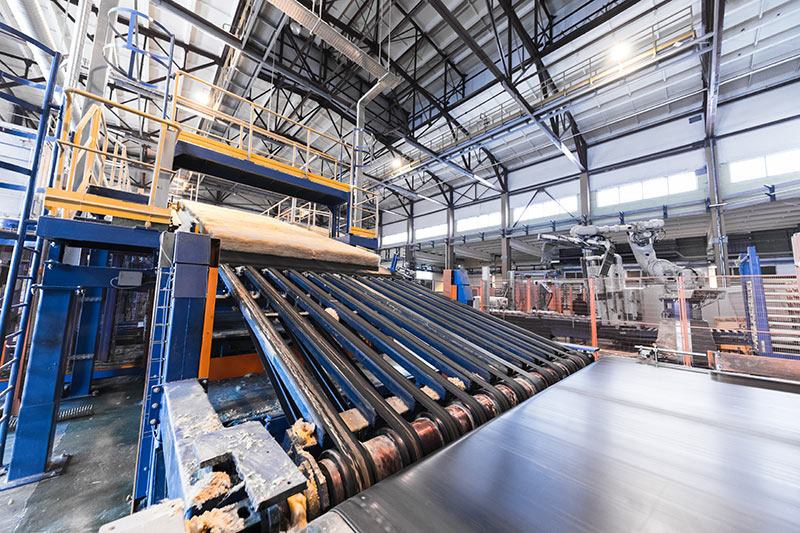
Paper machines require sophisticated sectional drive coordination to maintain precise web tension and speed synchronization across multiple sections including headbox, press, dryer, and reel. Modern drive control systems like ABB’s PMC800 manage mechanically connected drives that behave adaptively, optimizing acceleration and deceleration sequences to reduce power consumption while maintaining product quality. The control architecture integrates seamlessly with ABB’s System 800xA, providing operators with real-time visibility into motor load, draw, operating status, and control modes for effective machine management. Advanced Direct Torque Control (DTC) technology enables sensorless operation, reducing the number of components requiring maintenance and increasing overall system reliability.
Quality Control Systems (QCS) and Scanner Platforms
ABB’s QCS scanning platforms represent the industry standard for real-time paper quality measurement and control. These systems deploy scanning sensors mounted on traversing beams that measure critical sheet properties including basis weight, moisture, caliper, and coating weight in both machine direction (MD) and cross direction (CD). The Network Platform family of scanners provides high-resolution, precise measurements even in harsh mill environments with dust, heat, and vibration. Modern QCS implementations include virtual measurement capabilities that maintain accurate basis weight estimation during sheet breaks or startup events when physical scanners are offline, reducing off-spec production time. With over 70 years of measurement experience, ABB’s sensors feature advanced diagnostics and reporting that facilitate faster troubleshooting and reduced maintenance downtime.
Pulping and Digester Control
The pulping process requires integrated control of cooking digesters, chemical handling, and material flow management. ABB’s Advant OCS platform has been extensively deployed in pulp mills for batch control, recipe management, and production planning functions. The system manages logic control, sequence control, positioning, regulatory control, and motor-drive control within the same hardware and software environment, enabling horizontal integration across the entire pulping operation.
Critical Spare Parts Management
ABB’s market dominance in paper industry automation creates unique spare parts requirements, particularly for facilities operating legacy control systems.
QCS-Specific Components
Quality Control System reliability depends on maintaining adequate inventories of specialized scanning platform components. Critical spare parts include measurement sensors for basis weight, moisture, and caliper detection, scanner beam drive mechanisms and positioning encoders, communication interface modules connecting scanners to the control system, and operator workstation hardware for QCS visualization. Many mills operate QCS systems installed 15-20 years ago where original sensor technology may no longer be in production, making sourced spare parts essential for continued operation.
Advant OCS Legacy System Support
Numerous pulp and paper mills worldwide continue operating ABB Advant OCS platforms installed in the 1990s and early 2000s. These facilities require ongoing access to Advant OCS controller modules, I/O cards for field device connectivity, communication cards for network integration, and human-machine interface components. The system’s ability to integrate logic, batch, and drive control functions on common hardware means that controller failures can impact multiple production areas simultaneously. Strategic spare parts management, including preventive replacement of aging modules during scheduled maintenance outages, helps mills avoid unplanned downtime that can cost hundreds of thousands of dollars per day in lost production.