High-Performance Automation Solutions for Steel & Metals: Precision Control in Mill and Blast Furnace Applications
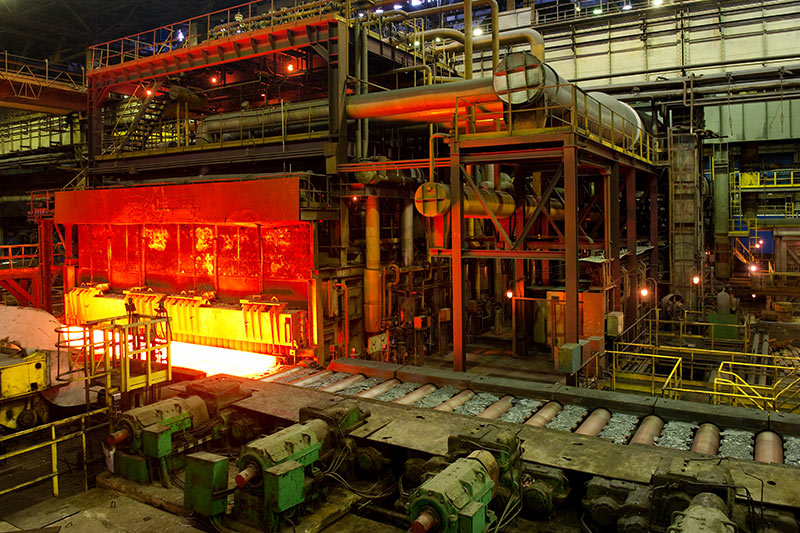
The steel industry operates at the intersection of extreme thermal energy, massive mechanical forces, and nanosecond-level control precision. Nowhere is this more evident than in hot/cold rolling mills and blast furnace automation systems, where process stability directly dictates product quality, yield, and equipment longevity.
In modern steel plants, automation isn’t just about monitoring—it’s about real-time coordination of multi-axis drives, hydraulic actuators, and thermal profiles at speeds that leave no room for latency. A delay of even a few milliseconds in roll gap adjustment can cause strip thickness deviation, edge cracking, or catastrophic mill jamming.
The Heart of High-Speed Rolling: ABB AC800PEC Controller
Among the most critical—and specialized—components in high-performance steel automation is the ABB AC800PEC (Power Electronics Controller). This real-time controller is purpose-built for applications demanding:
- Sub-millisecond cycle times (<100 µs typical)
- Tight synchronization across multi-motor drive lines (e.g., roughing, finishing, and coiler stands)
- Direct integration with ABB’s DCS800/ACS880 drives via optical fiber (DriveBus)
The AC800PEC executes advanced algorithms for:
- Automatic gauge control (AGC)
- Interstand tension regulation
- Dynamic speed matching during threading and tail-out
Without a fully functional AC800PEC, even the most advanced mill cannot achieve the required flatness, thickness tolerance, or surface finish—especially in thin-gauge or high-strength steel production.
Why the AC800PEC Is a Mission-Critical Spare
Unlike general-purpose PLCs, the AC800PEC is a dedicated, FPGA-based motion and power electronics controller. Its failure cannot be mitigated by standard redundancy or software patches. Common causes of degradation include:
- Power supply surges from regenerative braking in reversing mills
- Thermal stress from continuous operation in E-house environments (50–60°C ambient)
- Firmware corruption due to abrupt shutdowns during coil breaks
Given its high unit cost, long OEM lead times (often 6–12 months), and platform-specific firmware dependencies, the AC800PEC represents one of the highest-risk single points of failure in a modern steel mill’s automation stack.
Strategic Spare Parts Management for Steel Plants
To safeguard production continuity, leading steelmakers adopt a three-tier approach:
- Maintain On-Site Redundant AC800PEC Units
Keep at least one fully configured, firmware-matched spare—pre-loaded with your mill’s specific control logic and network settings—for immediate hot-swap capability. - Include Supporting Components in Spares Inventory
The AC800PEC relies on ancillary hardware that also experiences high stress:- Optical DriveBus interface modules
- Redundant 24VDC power supplies with surge protection
- Real-time communication backplanes (e.g., for integration with System 800xA)
- Partner with Specialized Suppliers for Tested Refurbished Units
Given the prohibitive cost of new units, certified refurbished AC800PEC controllers—fully tested on mill-simulation rigs and accompanied by firmware validation reports—offer a cost-effective alternative without compromising performance.
Beyond Rolling: Blast Furnace Control Reliability
While the AC800PEC dominates in rolling, blast furnace automation (burden charging, tuyere control, gas cleaning) relies on high-availability DCS controllers (e.g., ABB AC 800M or Siemens S7-400H). These also demand strategic spares—but with emphasis on redundancy and thermal resilience rather than microsecond response.