


Description
Woodward 8290-185 | Isochronous Speed Control Module
Architect’s Product Breakdown
The Woodward 8290-185 operates as a dedicated isochronous speed control module engineered to manage fuel delivery actuators like the Woodward 524 or 1724 series. Its primary role in industrial automation architecture is maintaining constant prime mover RPM regardless of load shifts, ensuring stable frequency output across standalone power generation assets. By processing frequency signals from a magnetic pickup (MPU), the controller dynamically adjusts output current to match load demands with minimal transient droop.
Tuning and calibration are handled via onboard adjustments or companion potentiometers depending on the specific application sub-variant, allowing field engineers to dial in loop stability and gain without complex software suites. However, precise physical setup is mandatory to match the dynamic response of the attached actuator and engine flywheel mass.
Cabinet integration requires clean 24 VDC power isolation and rigid shielding on sensor inputs to block high-frequency electromagnetic interference. Deploying an 8290-185 provides a direct, drop-in replacement path for aging governor hardware, restoring tight speed regulation without altering the wider switchgear control layout.
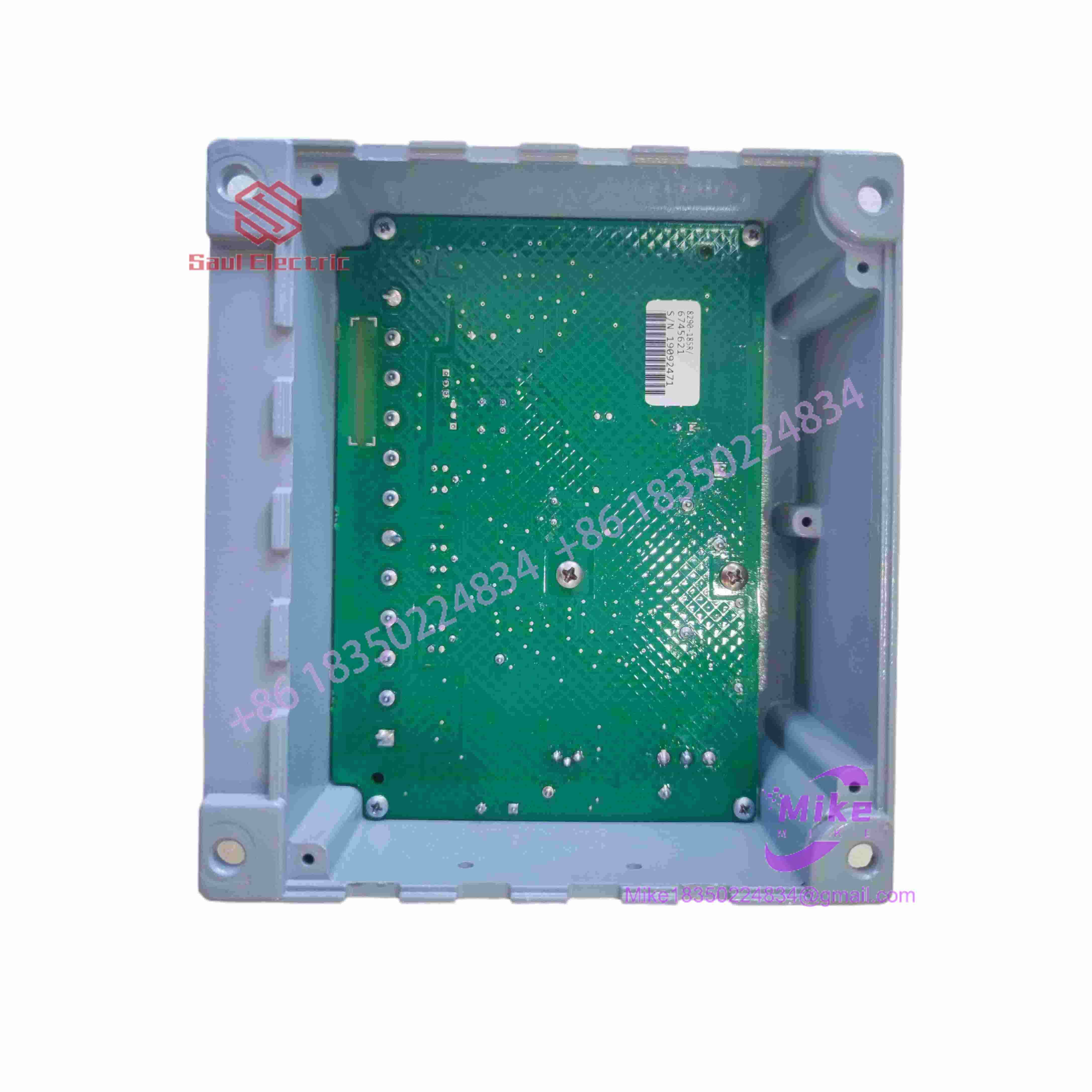
8290-185
Key Technical Specifications
| Parameter | Technical Specification |
| Operating Voltage | 24 VDC nominal (18 to 36 VDC range) |
| Power Consumption | Max 95W (including actuator load) |
| Speed Sensor Input Range | 3000 to 6000 Hz (MPU frequency) |
| Actuator Compatibility | Woodward 524 or 1724 series |
| Control Mode | Isochronous Speed Control |
| Operating Temperature | -40°C to +85°C (-40°F to +185°F) |
| Vibration Resistance | 10G (5 to 2000 Hz) |
| Enclosure Rating | Chassis mount, industrial potted protection |
| Physical Weight | ~1.3 kg (2.87 lbs) |
Field Engineer’s Pitfall Guide
- WARNING: Actuator Phasing Error. Reversing the output leads to the 524 or 1724 actuator creates an immediate positive feedback loop, driving the prime mover straight to overspeed conditions on startup. Verify actuator wiring polarity before enabling fuel flow.
- WARNING: MPU Signal Attenuation. Running unshielded magnetic pickup cables parallel to high-voltage AC power lines will inject noise into the frequency input, resulting in random governor throttling. Terminate the shield exclusively at the cabinet ground bar.
- WARNING: Power Supply Voltage Sag. Operating near the lower 18 VDC threshold under heavy actuator transient loads can trigger internal brownouts and sudden control resets. Ensure your 24 VDC power supply maintains stable regulation under peak current draws.
QA & Testing SOP (Transparency)
- Visual & Origin Verification: Inspection of factory serial plates, structural housing integrity, and connector pin blocks against baseline OEM specifications.
- Bench Power & Signal Injection: Modules are secured to an active test bench, powered via an isolated 24 VDC source, and fed calibrated frequency sweeps to simulate MPU rotation inputs.
- Actuator Loop Simulation: Technicians monitor output current stability and transient response curves against simulated 524/1724 actuator loads to guarantee precise isochronous tracking.
- Final Packaging: Units are cleared of temporary test data, wrapped in anti-static shielding, and packed inside high-density foam-lined boxes to prevent transit damage.
Technical FAQ
Can I hot-swap this module while the engine is running?
No. Disconnecting or replacing the 8290-185 while the prime mover is online will instantly drop the actuator drive signal, causing an abrupt fuel shutoff and engine trip. Perform swaps only during scheduled outages.
What actuators are compatible with this controller?
The 8290-185 is specifically designed to interface with Woodward 524 or 1724 series actuators, supplying the necessary proportional current for precise fuel rack positioning.
Does this module require programming software?
No. This is a dedicated analog-electronic control unit. Adjustments to gain, stability, and speed settings are handled directly via physical onboard potentiometers or trimpots.
Are settings preserved if input power drops?
Yes. Because core tuning relies on physical analog potentiometers rather than volatile digital memory blocks, calibration parameters remain locked and unchanged through total power loss.





