Description
MVI56-PDPMV1 | PROFIBUS Master, 125 Slaves, 12 Mbps, In Stock
Architect’s Product Breakdown
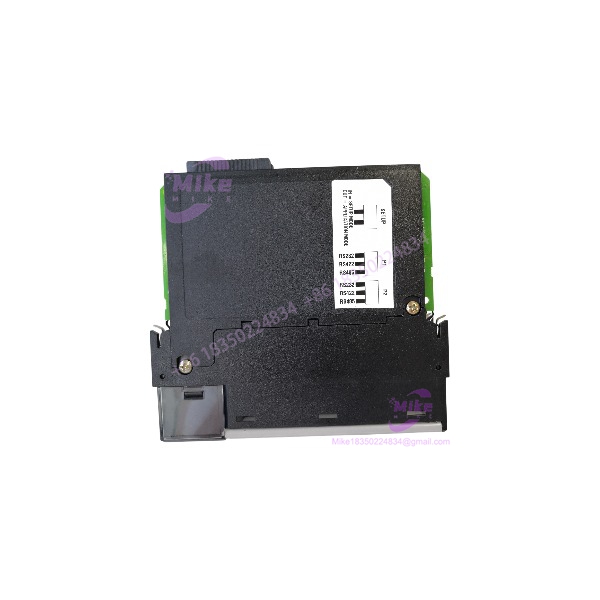
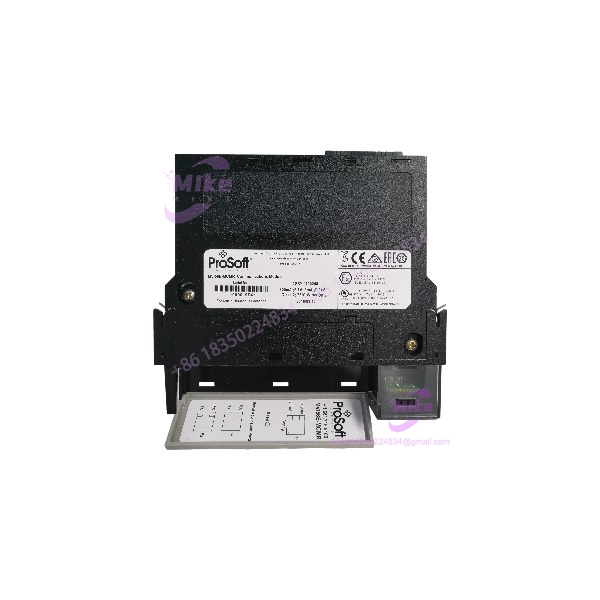
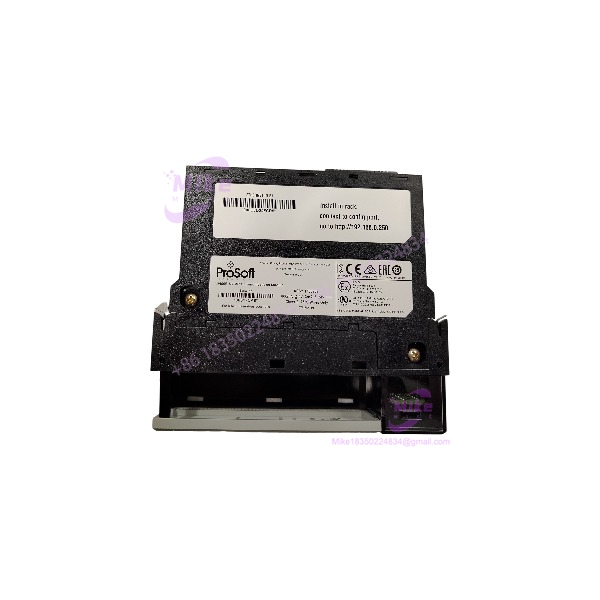
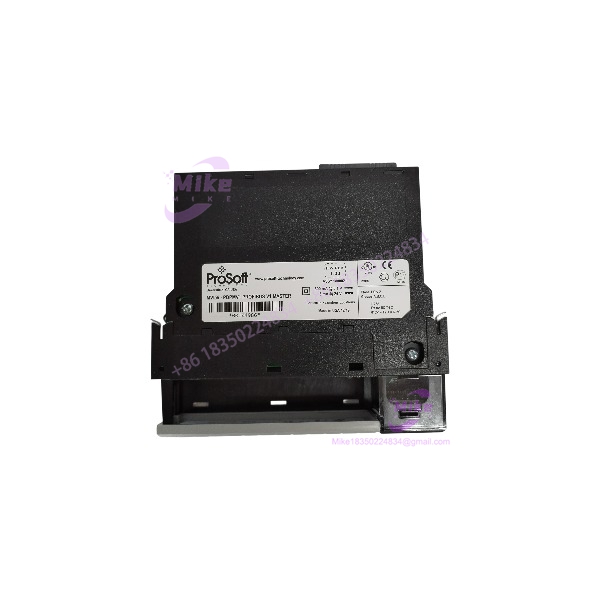
The MVI56-PDPMV1 is the classic answer to a question that hasn’t gone away: how do you make a ControlLogix processor act as a PROFIBUS DP master over a fieldbus full of Siemens ET200 remote I/O, ABB drives, or any of the thousands of DP-V0/V1 devices that Rockwell hardware won’t talk to natively? The module occupies one 1756 chassis slot and behaves as an I/O-style module on the backplane — the processor exchanges data through user-defined database blocks moved by ladder logic (a sample Add-On Instruction is supplied), and the module handles the entire PROFIBUS network on its own, asynchronously from the PLC scan.
The module supports complete master specifications per IEC 61158, including both cyclic DP-V0 I/O exchange and acyclic Class 1 and Class 2 DPV1 services. That DPV1 support is the reason the “V1” suffix exists and the reason this part outlived its DP-V0 predecessor: acyclic reads and writes let you upload drive parameters, pull diagnostic records, and reach slave data that isn’t in the cyclic image — all while the cyclic poll runs. The PROFIBUS side is a single, optically isolated RS485 port handling up to 125 slaves at bus speeds up to 12 Mbps, compatible with PROFIBUS repeaters for multi-segment trunks. On the Rockwell side, the module is CIPconnect-enabled, and ProSoft Configuration Builder can reach it through Rockwell Ethernet routing for configuration and diagnostics — a genuine convenience on a legacy-series part, since there’s no dedicated local config port on this unit.
Two honest engineering caveats. First, data transfer from the processor is asynchronous with the PROFIBUS network scan, and databases are user-defined within the module — run the math on your GSD files before committing, because the I/O database size is finite and acyclic DPV1 traffic competes with cyclic data for module resources. Second, the successor MVI56E-PDPMV1 is functionally compatible and adds the Ethernet config port — so if you’re maintaining an installed fleet, like-for-like spares keep your workflow consistent; if you’re building new, buy the E.
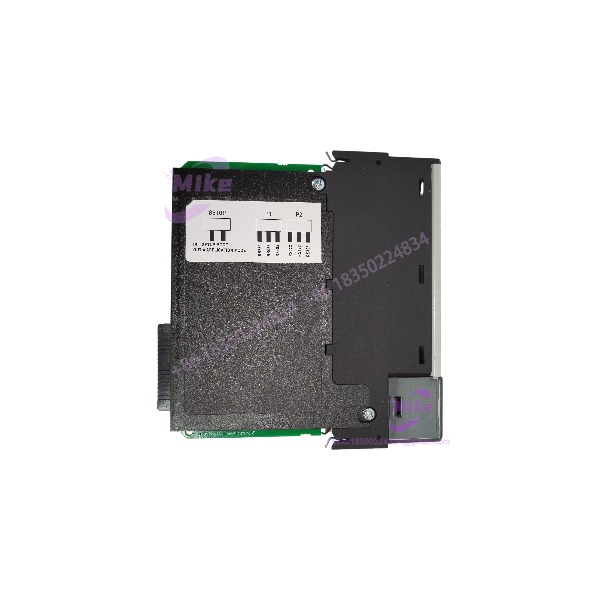
MVI56-PDPMV
Key Technical Specifications
| Parameter | Specification |
|---|---|
| Part Number | MVI56-PDPMV1 |
| Manufacturer | ProSoft Technology |
| Compatible Platform | Allen-Bradley ControlLogix (1756 chassis, 1 slot, local or remote rack) |
| Protocol | PROFIBUS DP-V0 / DP-V1 master, IEC 61158 compliant |
| PROFIBUS Port | 1× RS485, optically isolated |
| Max Slave Count | 125 PROFIBUS slaves |
| Bus Speed | 9.6 kbps to 12 Mbps |
| DPV1 Services | Acyclic parameter data via Class 1 / Class 2 services |
| Data Transfer | Asynchronous backplane transfer via ladder logic; user-defined databases in module memory; sample AOI included |
| Configuration | ProSoft Configuration Builder (PCB) via Ethernet routing through Rockwell Ethernet interface; FDT comDTM supported |
| Network Options | Compatible with PROFIBUS repeaters for multi-segment networks |
| Backplane Current Load | 800 mA @ 5 VDC, 3 mA @ 24 VDC |
| Operating Temperature | 0°C to 60°C (32°F to 140°F) |
| Storage Temperature | ‘-40°C to 85°C |
Field Engineer’s Pitfall Guide
⚠️ Set bus parameters for the slowest device, not the headline 12 Mbps. The module will happily clock 12 Mbps, but an older drive or remote I/O slice rated at 1.5 Mbps will token-timeout intermittently — often only under EMI load when a nearby VFD starts. I’ve debugged this at 2 AM more than once: clean polls in a quiet panel, then the shredder motor kicks in and two slaves vanish. Match the network to the weakest GSD file, and respect PROFIBUS segment rules — 32 devices per segment, repeaters beyond that, 120-ohm termination at both physical ends. A missing terminator on a long trunk will ghost you for hours.
⚠️ The CIPconnect routing path must be built into your EtherNet/IP project, and old PCB versions choke on it. Configuration goes through ProSoft Configuration Builder via Ethernet routing through a Rockwell Ethernet module — which means the module’s slot, the bridge path, and the ENxT configuration all have to be right before PCB sees the module at all. A laptop running a 2013-era Configuration Builder will not enumerate this module correctly. Update PCB before the outage window, not during it. I’ve watched a crew burn half of an 8-hour window discovering that the hard way.
⚠️ Backplane budget: 800 mA @ 5 VDC adds up fast. Three or four ProSoft modules in a 13-slot chassis will eat into a 1756-PA75 supply’s margin faster than most engineers expect. Compute chassis power consumption in Rockwell’s planning tool before adding this module to a loaded rack — 5 V rail brownouts present as intermittent module faults and corrupted transfers that look exactly like a fieldbus problem. And on the DPV1 side: acyclic services are one-shot transactions initiated from logic — queue them, don’t spam them, because a flood of acyclic reads will starve your cyclic data and slave watchdogs will start tripping.
QA & Testing SOP (Transparency)
Every MVI56-PDPMV1 unit passes a documented four-stage process before shipping:
- Visual & Origin Check: OEM label, serial number, and ProSoft production records verified; enclosure inspected for mounting marks, port wear, or reseal evidence. New surplus stock confirmed factory-sealed.
- Live Rack Test: Module installed in a 1756 ControlLogix test chassis with a known-good processor; minimum 30-minute powered burn-in; backplane enumeration and AOI data transfer confirmed in RSLogix 5000.
- Functional Diagnostics: PROFIBUS master operation exercised against a simulated slave network — cyclic I/O exchange at 1.5 Mbps and 12 Mbps, acyclic DPV1 Class 1/Class 2 read/write handshake verified, watchdog and timeout behavior tested against a deliberately unresponsive slave; optical isolation continuity confirmed; PCB configuration path verified through Ethernet routing.
- Documentation & Packing: Firmware revision and test results recorded on the unit certificate; module set to factory-default configuration; sealed in ESD-safe anti-static bag with conductive foam.
Technical FAQ
Q: Can I hot-swap the MVI56-PDPMV1 while the process is running?
No. The 1756 chassis accepts hardware insertion/removal in principle, but pulling the master drops the entire PROFIBUS network — all 125 possible slaves go to fault state and drives revert to their configured fault reactions. Treat replacement as a scheduled outage. Back up the module configuration in ProSoft Configuration Builder first.
Q: Is this a direct replacement for the original MVI56-PDPM, and what does the MVI56E-PDPMV1 change?
Three related parts, one family. The original MVI56-PDPM was DP-V0 only. The MVI56-PDPMV1 added acyclic services and a larger I/O database. The MVI56E-PDPMV1 is the current enhanced successor — same PROFIBUS DP-V1 master role, same 125-slave capacity, plus a built-in 10/100 Mbps Ethernet port for configuration and diagnostics. Your configuration file carries over to the E-series, and the AOI-based ladder logic survives with minimal rework. Buy the E for new builds; buy this for like-for-like fleet spares.
Q: Does the module need firmware flashing before first use?
Usually no — new surplus stock ships factory-current. But verify the installed revision against your plant’s spare-interchangeability standard before the module goes on the shelf, not during a 3 AM failure. If an update is ever needed, it goes through ProSoft Configuration Builder.
Q: Can the module act as a PROFIBUS slave instead of a master?
No. The is a master/scanner only — “PDPM” = PROFIBUS DP Master. If you need ControlLogix data to appear as a slave on someone else’s PROFIBUS network, you want the MVI56-PDPS (slave variant) or a gateway product. Buying the PDPMV1 for a slave application is one of the most common and expensive procurement mistakes in this product family — check the suffix before ordering.
Q: Will I lose my PROFIBUS configuration if the module loses power?
No — the network configuration and slave database are stored in the module’s non-volatile memory, so a power cycle doesn’t wipe it. But there’s no removable Personality Module on this legacy unit, so if the module itself dies, the configuration dies with it. Keep a current PCB backup on your engineering server at all times; rebuilding a 60-slave database from GSD files by hand is a genuinely painful exercise.