

Description
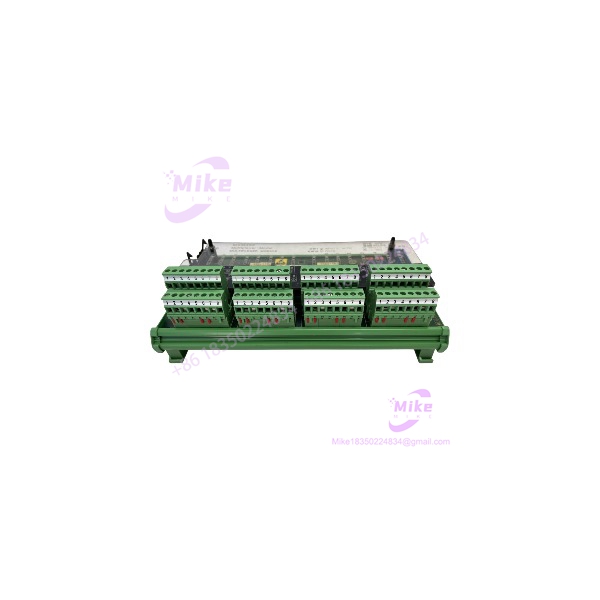
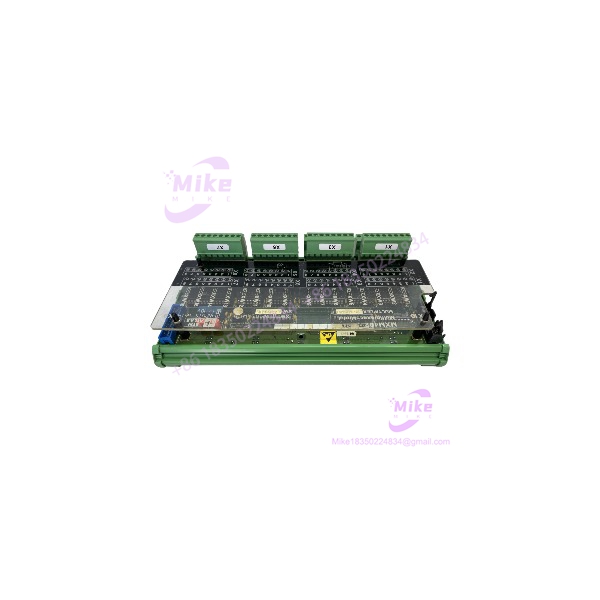
Lyngso Marine MXM402 | Multiplexer Interface Module 962.004.300
Dynamic Product Introduction
Corrosive salt-laden air and continuous engine room vibration frequently degrade analog signal loops long before core processing nodes fail. When bridge alarm and monitoring systems experience random channel dropouts, technicians usually trace the fault back to unstable multiplexing hardware on the marshalling rack. The Lyngsø Marine MXM402 multiplexer module resolves these signal degradation issues by cleanly isolating and digitizing multi-channel analog inputs right at the boundary layer.
Operating within complex vessel automation frameworks originally pioneered by STN Atlas and SAM Electronics, this interface card recognizes backplane expansion topologies automatically through hardwired ID pins. Unlike generic signal conditioners that drift under extreme temperature shifts, the MXM402 maintains precise conversion accuracy across harsh marine environments. It safely aggregates distributed sensor data, feeding clean telemetry straight into the main processing core without bus saturation.
MXM402
Key Technical Specifications
- Module Designation: MXM402 Multiplexer Module
- OEM Part Numbers: 962.004.300 / 271.130 442/F
- Primary Function: 16-channel analog signal acquisition and multiplexing
- Backplane Recognition: Automatic module type identification via local hardware ID resistor/bus links
- Physical Dimensions: 125.4 mm (Depth) x 216 mm (Width) x 68 mm (Height) support housing
- Mounting Interface: Standard DIN European rail mounting format
- Terminal Arrangement: 8 dedicated terminal strips for direct interface signal wiring
- Enclosure Construction: Industrial marine-grade polymer and aluminum framing
- Operating Environment: Designed for shipboard engine rooms, bridge consoles, and auxiliary automation spaces
Global Sourcing & Live-Test SOP (Transparency Core)
Sourcing obsolete or legacy marine automation cards from the secondary market requires strict inspection routines to filter out water-damaged or thermally fatigued inventory.
- Inbound Inspection: Incoming MXM402 units undergo microscopic evaluation for salt crystallization, green corrosion on the terminal strips, and hairline PCB micro-cracks. Part numbers and manufacturer stamps are cross-referenced against authentic Lyngsø Marine and SAM Electronics production databases.
- Component Testing: Technicians verify internal analog multiplexer ICs, optocouplers, and power supply decoupling capacitors using high-resolution multimeters and oscilloscope bench meters.
- Live Test Bench Simulation: Modules are mounted onto an authentic DIN-rail test backplane powered by regulated 24V marine rails. A multi-channel signal generator injects precise variable current and voltage sweeps across all input channels to verify linear conversion accuracy.
- Burn-In Verification: Units undergo a 24-hour thermal soak cycle to flush out latent solder joint failures under operational temperatures.
- Final Preparation: Diagnostic logs are archived, configuration jumpers are verified, and the hardware is sealed in static-shielding moisture barrier bags with fresh desiccant.
The Field Engineer’s Pitfall Guide
- ❗ Forgetting to match backplane module ID jumpers causes address faults: Swapping an MXM402 unit without verifying the internal configuration or address links can cause the central processor to throw a bus configuration error. Always check the physical slot assignment before powering up the rack.
- ❗ Over-torquing terminal strip screws strips the block housing: The 8 terminal strips use compact screw-down clamps designed for marine fine-strand wires. I’ve seen overzealous electricians crack the terminal block housing with a power driver, forcing an entire hardware swap out at sea. Always hand-tighten these connections.
- ❗ Ignoring shield grounding leads to analog signal noise interference: Multiplexing low-level analog sensor signals demands proper braided shield termination to the cabinet ground bar. Skipping this step introduces high-frequency generator ripple straight into the measurement loop, causing erratic bridge alarm triggers.
Intent-Driven FAQ
Can I use this module as a direct drop-in replacement for older STN Atlas automation nodes?
Yes. The MXM402 shares identical form factors and backplane pinouts with legacy units produced under the STN Atlas and SAM Electronics banner, ensuring full mechanical and electrical compatibility.
How does the system recognize a newly installed module on the backplane?
The backplane architecture features an automatic module type recognition system. When the MXM402 is locked into the DIN rail and seated on the bus, the master controller reads the internal hardware identifier pins instantly.
What causes intermittent channel drift on analog inputs?
Channel drift typically stems from failing reference voltage regulators on the board or high-resistance oxidation on the terminal screw connections due to moisture exposure. Regular contact cleaning and calibration resolve most drift issues.
Is specialized software required to configure the unit?
No. The module functions as a hardware-defined multiplexer managed directly by the central rack processor configuration. Physical slot placement and backplane bus settings dictate its operational mapping.
How should spare units be stored to prevent environmental degradation?
Spare cards must be kept in sealed anti-static bags inside a climate-controlled store room free of salt mist, high humidity, and extreme temperature fluctuations.





