

Description
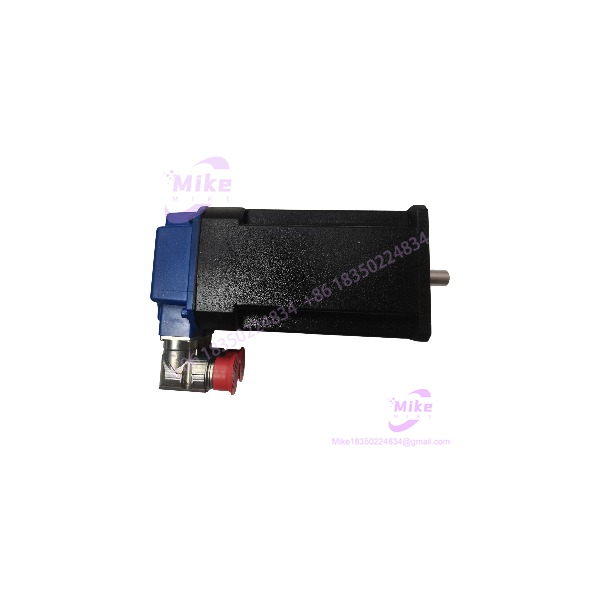
Kollmorgen MT308B1-E2C1 | Brushless Servo Motor 3000 RPM, In Stock
Architect’s Product Breakdown
The Kollmorgen MT308B1-E2C1 represents a streamlined approach to industrial motion control by integrating the motor winding assembly and the drive electronics into a single, cohesive mechanical envelope. Belonging to the MTC series, this unit eliminates the traditional cabinet-mounted servo amplifier requirement, drastically shortening cabling runs and mitigating the high-frequency electromagnetic interference issues typically associated with long motor leads.
Deploying an integrated-drive servo like the MT308B1-E2C1 requires meticulous panel and machine design, particularly regarding thermal dissipation. Because the power electronics are physically attached to the motor housing, ambient thermal limits must be strictly respected to prevent premature degradation of the on-board switching components. Additionally, engineers must ensure clean auxiliary power and robust shielding on command signals to maintain stable communication in high-speed material handling or automated packaging axes.
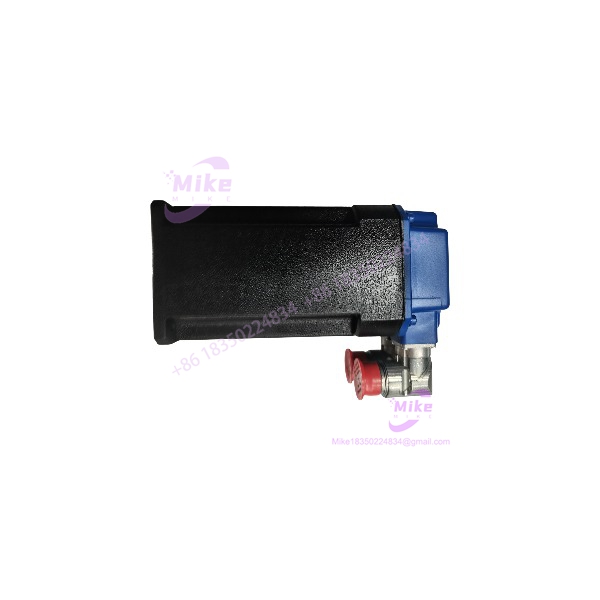
MT308B1-E2C1
Key Technical Specifications
| Parameter | Specification |
| Input Voltage | 3 x 43 V AC (230 V nominal supply) |
| Standstill Peak Torque | 4.79 Nm |
| Standstill Peak Current | 24.5 A |
| Standstill Continuous Current | 15 A |
| Peak Speed | 3000 RPM |
| Output Stage | 4-Quadrant (Motoring & Regeneration) |
| Insulation Class | Class F |
| Operating Temperature | 0°C to 45°C |
| Protection Class | IP00 (Enclosure dependent) |
| Weight | 4.62 kg |
Field Engineer’s Pitfall Guide
- WARNING: Thermal Dissipation Neglect. Never enclose this integrated motor unit in a completely dead-air pocket. I once commissioned a multi-axis packaging line where lack of airflow around the housing caused internal thermal trips within two hours of heavy acceleration profiles.
- WARNING: Auxiliary Voltage Sag. Ensure the 24V DC auxiliary logic supply has adequate gauge wiring. Voltage drop over long cable distances will cause the onboard processor to reset during high-current transient spikes.
- WARNING: Earth Ground Integrity. Verify that the motor chassis has a low-impedance earth strap separate from the signal commons. Omitting a dedicated ground will introduce severe bus noise into the internal commutation logic.
QA & Testing SOP
- Visual & Origin Verification: Inspect the outer housing for casting flaws, verify OEM nameplate data against factory build sheets, and check connector pins for oxidation.
- Electrical Isolation Testing: Perform a 500V DC megohm test between power stages and the motor frame to ensure zero winding breakdown.
- Logic and Commutation Test: Power the unit on an isolated bench test fixture to verify processor boot sequence, communication handshakes, and encoder zero-position alignment.
- Dynamic Response Check: Run step-response profiles under no-load conditions to validate current loop stability and 4-quadrant braking behavior.
- Packaging: Seal in heavy-duty anti-static barrier bags surrounded by custom high-density foam padding.
Technical FAQ
Can I replace a standard separate-drive motor with this integrated unit without changing the control architecture?
No. Because the drive electronics are built directly into the housing, command signals and power distribution must be reconfigured to match the onboard interface requirements.
Does the 4-quadrant output stage support energy recovery during deceleration?
Yes. The integrated drive topology allows bidirectional power flow, returning regenerative braking energy back into the DC bus structure.
What is the primary cause of sudden over-temperature faults on this model?
Exceeding the 45°C ambient threshold combined with high root-mean-square (RMS) continuous torque demands without auxiliary cooling fans will trigger thermal protection limits.
Is field-level firmware flashing possible on the integrated drive module?
Firmware updates require specialized Kollmorgen communication adapters and software tools; field modifications are generally restricted to parameter tuning and configuration mapping.





