


Description
Kollmorgen CP310250 Servo Drive Introduction
I. Product Overview
The Kollmorgen CP310250 is a high-performance servo drive designed for industrial automation applications, widely used in CNC machines, packaging machinery, printing equipment, robotics, and automated production lines. Its core strengths lie in high-precision control, rapid response, robust reliability, and flexible communication capabilities, enabling it to meet complex motion control demands while enhancing equipment efficiency and product quality.
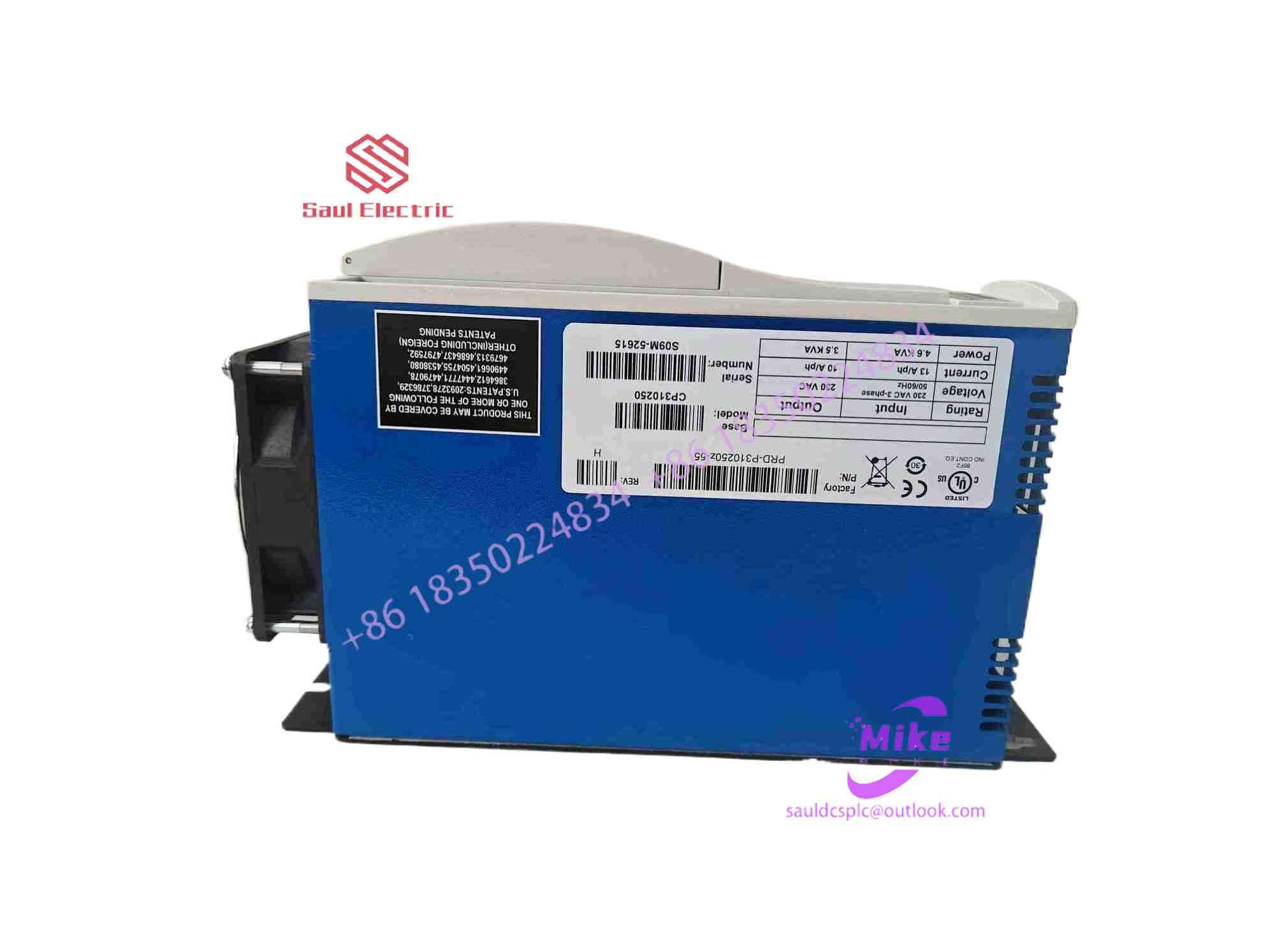
Kollmorgen ServoStar SP Servo Drive CP310250
II. Key Specifications and Performance
- Power Supply and Output
- Supports 200-240V AC or 380-480V AC input (model-dependent), compatible with diverse industrial power grids.
- Offers current ratings of 10A, 20A, and 30A, matching servo motors of varying power levels for light- to heavy-duty applications.
- Control Precision
- Position Control: Accuracy up to ±0.01mm, ideal for precision machining (e.g., electronic component assembly).
- Speed Control: Precision of ±0.1%, ensuring smooth operation.
- Torque Control: Advanced algorithms minimize ripple output, reducing mechanical vibrations.
- Dynamic Response
- Response time ≤5ms, enabling rapid tracking of control commands for high-speed start/stop and reversal (e.g., hundreds of stamping cycles per minute in high-speed presses).
- Communication and Compatibility
- Supports industrial fieldbus protocols such as CANopen, EtherCAT, and Profinet for seamless integration with PLCs and HMIs.
- Compatible with pulse + direction control for legacy motion controllers.
- Works with incremental and absolute encoders, including multi-turn absolute feedback for enhanced positioning reliability.
III. Functional Features
- Dual Encoder Interface
- Simultaneously reads motor and load position signals, optimizing dynamic response for applications requiring high-precision synchronization (e.g., robotic joint motion).
- I/O Expansion
- Provides digital/analog input/output ports for integrating external sensors (e.g., limit switches, pressure transducers), enhancing system flexibility.
- Safety Functions
- Features a Safe Torque Off (STO) interface compliant with international safety standards (IEC 61800-5-2), preventing unintended system restarts during emergencies.
- Protection Mechanisms
- Overvoltage/Undervoltage Protection: Monitors input voltage to prevent damage from power anomalies.
- Overcurrent Protection: Rapidly cuts abnormal currents to safeguard motors and drives.
- Overtemperature Protection: Built-in temperature sensors prevent performance degradation or failure.
- Encoder Fault Detection: Continuously monitors feedback signals to avoid loss of control.
- Environmental Adaptability
- Operating temperature range: -10°C to +50°C (extendable to -40°C to +70°C for specialized models).
- Protection class: IP20 (standard) / IP65 (ruggedized), with dustproof and waterproof designs for harsh environments.
IV. Typical Applications
- CNC Machines
- Drives spindle and feed axes in lathes, milling machines, and drills, achieving precision machining (e.g., ±0.05mm accuracy in engine block processing).
- Packaging Machinery
- Controls motion positioning in automatic carton sealers, labelers, and sealers, improving packaging efficiency and consistency.
- Printing Equipment
- Powers paper feeding and color registration systems, ensuring precise color alignment and high-quality print output.
- Robotics
- Drives joints in welding, assembly, and handling robots, enabling precise trajectory control and posture adjustment.
- Automated Production Lines
- Powers conveyors, fixtures, and assembly equipment in automotive and electronics manufacturing, enhancing production automation.
V. Key Advantages
- High Precision: Micron-level positioning improves product quality.
- Rapid Response: Millisecond-level command tracking optimizes dynamic performance.
- Robust Reliability: Multi-layer protection ensures operation in harsh environments.
- Flexible Communication: Supports diverse industrial protocols for easy system integration.
- Energy Efficiency: Optimized current control reduces power consumption and operating costs.





