

Description
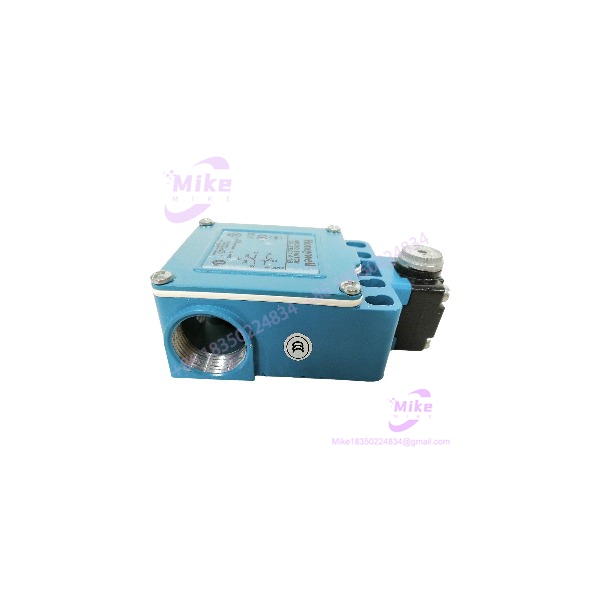
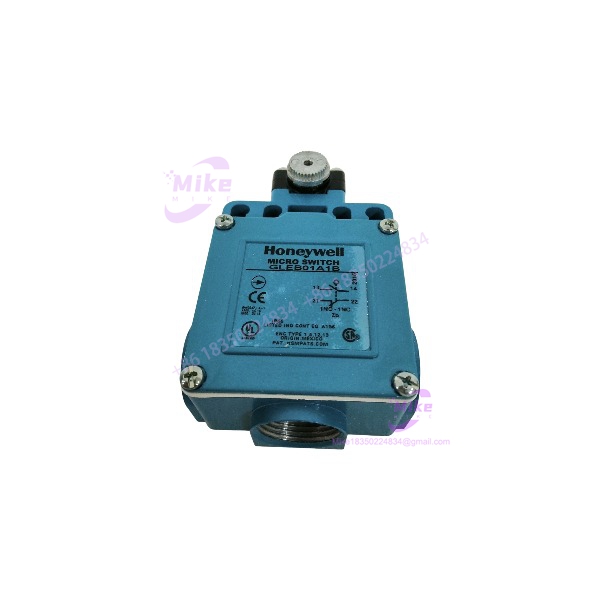
Honeywell GLEB01A1B | IP67 Industrial Roller Limit Switch
Product Introduction
A limit switch is only useful if its mechanical actuation point, contact arrangement, mounting geometry, and environmental protection all match the machine. The Honeywell GLEB01A1B is built around that requirement: it combines a side rotary metal-roller actuator with a sealed industrial housing and snap-action contacts for repeatable machine-position detection. Honeywell’s GLE family is intended for globally applicable industrial installations, with versions designed around EN50047-compatible mounting arrangements.
The GLEB01A1B uses an SPDT 1NO/1NC contact arrangement, allowing one mechanical movement to provide complementary switching states to a PLC input, relay circuit, interlock, or machine-control circuit. Its IP67 housing is particularly relevant where the switch is exposed to dust, water, coolant, or routine washdown conditions (within the limits of the actual installation).
This is a conventional electromechanical sensing device—not a proximity sensor and not an electronic encoder. That makes mechanical alignment and actuator travel just as important as the electrical specifications during replacement.
GLEB01A1B
Key Technical Specifications
- Model: GLEB01A1B
- Manufacturer: Honeywell MICRO SWITCH
- Series: GLE
- Switch Type: Global industrial limit switch
- Actuator: Side rotary metal roller
- Contact Configuration: SPDT
- Contact Arrangement: 1NO + 1NC
- Switching Action: Snap action
- Termination: Screw terminal
- Conduit Entry: PG13.5
- Housing Material: Die-cast zinc with epoxy coating
- Ingress Protection: IP67
- Operating Temperature: -40°C to +85°C
- Mechanical Life: Approximately 10 million cycles in published GLEB01A1B specifications
- Operating Force: Approximately 0.12 Nm in published distributor data
- Dimensions: Approximately 106.5 × 65 × 30 mm
- Published Switching Rating: 6 A in several GLEB01A1B distributor records
- Maximum Contact Ratings: Some Honeywell distributor records specify up to 10 A, with maximum contact voltage figures of 300 VAC / 250 VDC; verify the exact electrical duty from the applicable Honeywell datasheet before using these maximum figures in a production circuit.
- Approvals: CE, UL, CSA, CCC
- Hazardous Area Certification: Not indicated for this standard version
Published sources differ on how they present the electrical ratings. RS identifies the as a 6 A switch at 240 VAC / 250 VDC, while Newark lists maximum contact values of 10 A, 300 VAC and 250 VDC. These figures should not be treated as interchangeable: switching category, voltage, load type, and electrical-life requirements determine the permissible field duty.
Global Sourcing & Live-Test SOP
For a used or surplus , the most important checks are mechanical condition, contact integrity, actuator alignment, and enclosure sealing.
1. Inbound Verification
- Confirm the complete part number.
- Photograph the nameplate and housing before installation.
- Verify the metal roller actuator is the correct configuration.
- Inspect the roller for excessive wear, cracking, or free play.
- Check the rotary shaft for binding.
- Inspect the die-cast housing for impact damage.
- Examine the epoxy coating for exposed corrosion.
- Inspect the PG13.5 conduit entry and sealing area.
- Check all screw terminals for stripped threads or damaged clamps.
- Confirm the mounting holes and actuator orientation match the existing machine.
2. Electrical Contact Test
With the switch completely isolated:
- Identify COM, NO, and NC terminals from the applicable wiring diagram.
- Measure continuity with the actuator released.
- Operate the roller slowly through its travel.
- Confirm the expected NO/NC state transition.
- Check for contact bounce or intermittent operation.
- Measure contact resistance after repeated actuations.
- Verify that the switch returns reliably when the actuator is released.
Do not infer terminal assignments from another GLE-series variant. Confirm the actual wiring diagram for .
3. Mechanical Simulation
Install the switch on a controlled test fixture or machine mock-up.
Check:
- Roller engagement
- Approach direction
- Actuator travel
- Operating position
- Overtravel
- Return action
- Mechanical clearance
The roller should be actuated within its specified mechanical travel. A common field mistake is allowing a cam or machine stop to force the lever beyond its intended travel, which can shorten mechanical life even though the electrical contacts still appear functional.
4. PLC Interface Test
When used as a PLC input:
- Verify the PLC input voltage/current requirements.
- Confirm whether the circuit uses the NO or NC contact.
- Test the input with the machine stopped and running under controlled conditions.
- Confirm the PLC detects both the actuated and released states.
- Check the diagnostic behavior if the circuit uses the NC contact for fault detection.
- Confirm the input wiring does not exceed the switch’s applicable electrical rating.
For safety-related circuits, the complete safety circuit must be validated independently; the presence of an NC contact does not by itself make a machine safety function compliant.
5. Environmental Inspection
Because the is specified as IP67, inspect the sealing system before relying on that protection.
Check:
- Housing gasket condition
- Conduit entry seal
- Terminal cover
- Cracked housing
- Missing fasteners
- Evidence of water ingress
- Corrosion around terminals
An IP67 rating applies to the correctly assembled product, not to a switch with a damaged enclosure or incorrectly installed conduit fitting.
6. Final Preparation
Before shipment:
- Record exact model and revision markings.
- Photograph the actuator and terminal arrangement.
- Document contact continuity.
- Record mechanical actuation results.
- Protect the roller and housing from impact.
- Keep the terminal area clean and dry.
- Package the switch to prevent the actuator from being forced during transport.
Field Engineer’s Pitfall Guide
❗ Do not substitute the actuator configuration by appearance
The uses a side rotary roller actuator. A visually similar GLE-series switch can have a different lever, roller, contact block, or actuation geometry. Even when the mounting footprint appears compatible, the operating point can change enough to cause premature switching or insufficient travel.
❗ Do not use the highest published current number without checking load type
Distributor data variously lists the as a 6 A switching device and as having maximum contact capability up to 10 A under specified conditions. The correct field rating depends on voltage, AC/DC load, inrush, inductive characteristics, and required electrical life. For contactor coils, solenoids, motors, or other inductive loads, check the applicable load category instead of treating 10 A as a universal rating.
❗ IP67 does not fix a poor installation
The ‘s rating depends on the complete installation. A damaged gasket, incorrect conduit fitting, loose cover, or compromised cable entry can defeat the environmental protection. Inspect the entire assembly after installation, especially on washdown machinery.
Intent-Driven FAQ
What is the Honeywell ?
The is a Honeywell MICRO SWITCH GLE Series industrial limit switch with a side rotary metal roller actuator and snap-action contacts.
Is the SPDT?
Yes. Published specifications identify it as an SPDT switch with 1 normally open and 1 normally closed contact.
What is the used for?
Typical applications include machine-position sensing, end-of-travel detection, conveyor equipment, mechanical interlocks, and general industrial automation where a physical machine movement needs to change an electrical contact state.
Is the waterproof?
It is specified with an enclosure rating, meaning the properly assembled switch is designed for dust-tight protection and temporary water immersion under the applicable test conditions. Installation details still matter.
What temperature range does it support?
Published specifications identify an operating range of approximately -40°C to +85°C.
What conduit connection does the use?
The published specifications identify a PG13.5 conduit entry and screw-terminal termination.
Is the suitable for hazardous areas?
The standard records reviewed here do not indicate hazardous-area certification. RS specifically lists hazardous-area certification as absent. Do not install this standard version in a classified hazardous location unless the exact certification and installation requirements have been independently verified.
Is Honeywell still available?
Mouser currently classifies the exact as NRND (Not Recommended for New Designs) and reports non-stock/long-lead status, while other distributors continue to list the part. For legacy machinery, verified surplus or replacement inventory may therefore be relevant.
Procurement Notes
For a replacement , match the complete part number rather than buying solely by the words “Honeywell GLE limit switch.”
Verify:
- exact model
- Side rotary metal-roller actuator
- SPDT / 1NO + 1NC configuration
- Screw terminals
- PG13.5 conduit entry
- housing
- Mechanical mounting dimensions
- Required electrical load rating
- Machine actuation direction and travel
- Environmental temperature
- Required approvals
The exact is also cross-referenced by distributors under other internal stock numbers, but those distributor numbers should not replace the Honeywell manufacturer part number during procurement.
For a production machine, the safest sourcing description is:
HONEYWELL MICRO SWITCH — GLE Series — Side Rotary Metal Roller — SPDT 1NO/1NC — — PG13.5





