

Description
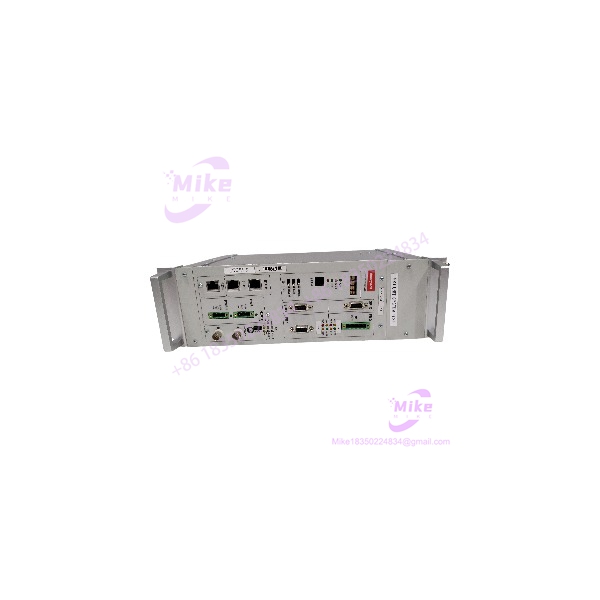
Honeywell FC-RPB2N12 | FSC Field Controller CPU
Dynamic Product Introduction
The Honeywell FC-RPB2N12 is a legacy field-controller assembly associated with the Honeywell Fail Safe Controller (FSC) platform. This is an important distinction for procurement: it should not be treated as a generic PLC CPU or as a modern Honeywell Experion controller.
Honeywell identifies FSC as its first-generation safety controller and states that the FSC system is no longer available for purchase, directing customers toward migration, spare-parts, repair, and service support. The current Safety Manager platform is the successor safety architecture.
Third-party industrial references identify FC-R/PB2/N/12 as a field controller/CPU-type component and associate it with the Honeywell FSC ecosystem. However, the available public Honeywell documentation does not provide enough verified model-specific electrical and performance data to justify copying the numerous generic specifications published by resellers. For a safety-system spare, that distinction matters more than filling a specification sheet with questionable numbers.
FC-RPB2N12
Key Technical Specifications
- Manufacturer: Honeywell
- Model: FC-RPB2N12
- OEM Formatting: FC-R/PB2/N/12
- Product Category: Field Controller / CPU
- System Family: Honeywell Fail Safe Controller (FSC)
- System Role: Controller/processing assembly within an FSC safety-control architecture
- Application: Safety-related industrial process control
- Typical System Use: Emergency shutdown and other high-integrity process-safety applications
- Architecture: Associated with Honeywell’s legacy FSC safety-system architecture
- Lifecycle: Legacy / discontinued platform
- Replacement Strategy: Application-specific migration or qualified spare strategy
- Verification Requirement: Exact FSC system configuration, hardware revision and installed application must be checked before replacement
Honeywell describes FSC as a SIL 3 certified first-generation safety controller. Its current Safety Manager platform also uses a fault-tolerant architecture and is designed for SIL 1–3 applications, but that does not mean a modern Safety Manager module can simply be substituted for an FC-RPB2N12.
Global Sourcing & Live-Test SOP
1. Inbound Verification
Treat this part as a legacy safety-system processor, not ordinary surplus PLC hardware.
Record and verify:
- FC-RPB2N12 marking
- Full FC-R/PB2/N/12 designation where present
- Hardware revision
- Serial number
- PCB and enclosure condition
- Connector condition
- Signs of corrosion or contamination
- Previous repair or component replacement
- Configuration labels
- Original Honeywell identification labels
The most important check is the complete OEM designation. Do not accept an FC-RPB2N12 replacement solely because a seller describes it as a “Honeywell controller.”
2. Live Simulation
A meaningful functional test requires an appropriate FSC test environment.
The test should verify, where supported by the target system:
- Controller initialization
- Processor diagnostics
- Communication with the FSC system
- Application/configuration recognition
- Controller status
- Fault indication behavior
- I/O communication
- Stable operation during an extended powered test
A generic 24 VDC bench test is not sufficient evidence that a legacy FSC processor is serviceable.
3. Diagnostics
For a used or surplus FC-, document:
- Power-up behavior
- Controller diagnostic state
- Communication status
- Fault indications
- Processor/application initialization
- System response under representative load
Where the original FSC engineering environment is unavailable, clearly classify the unit as power-tested only, rather than claiming a full functional test.
4. Final Preparation
Before shipment:
- Photograph all identification labels
- Record hardware revision and serial information
- Protect controller connectors
- Use ESD-safe packaging
- Prevent PCB movement inside the package
- Preserve any configuration documentation supplied with the unit
- Attach the actual test status to the procurement record
For a discontinued safety controller, traceability is particularly important. A physically clean module with no documented identity or test history should not be treated as equivalent to a verified spare.
Field Engineer’s Pitfall Guide
❗ Do Not Confuse FC- With a Modern Honeywell PLC
The FC- belongs to the legacy Fail Safe Controller ecosystem. Honeywell identifies FSC as its first-generation safety controller and states that FSC is no longer available for purchase. It is therefore incorrect to position this part as a current general-purpose Honeywell PLC CPU.
❗ Do Not Substitute by Physical Fit
Legacy safety controllers can have similar mechanical and electrical characteristics while remaining incompatible at the system level.
Before replacement, compare:
- Exact part number
- Hardware revision
- Controller chassis
- Application configuration
- System software/release
- Associated I/O architecture
- Redundancy arrangement
A field anecdote worth remembering: “It powered up” is not the same as “it is a qualified safety-system replacement.”
❗ Verify the Migration Path Before Buying Deep Stock
Honeywell now positions Safety Manager as the active successor safety platform, while FSC is a legacy system. If the plant is maintaining an FSC installation, buying one spare FC- may solve an immediate maintenance requirement; building a large inventory without checking the site’s migration strategy can create stranded stock.
Intent-Driven FAQ
What is Honeywell FC-?
FC-, also written FC-R/PB2/N/12, is identified in industrial automation references as a Honeywell field-controller/CPU assembly associated with the legacy Fail Safe Controller safety system.
Is FC- a PLC module?
It is better classified as a field controller/CPU for Honeywell’s FSC safety architecture rather than as a conventional modular PLC CPU.
Is the Honeywell FSC system still current?
No. Honeywell’s current safety-systems portfolio identifies FSC as its first-generation safety controller and states that FSC is no longer available for purchase. Honeywell directs customers toward migration, spare parts, repair and service support.
Can FC- be replaced with a Safety Manager module?
Do not assume that. Safety Manager is a successor Honeywell safety platform, but migration between safety architectures requires an engineering assessment rather than a simple part-for-part substitution.
What should I verify before purchasing an FC-?
At minimum, verify the complete part number, hardware revision, target FSC chassis, installed system release, controller configuration, physical connector condition, and functional test status.
Is a power-on test enough for this part?
No. A power-on test only establishes that the module shows some electrical activity. For a safety-system processor, a proper test should include controller initialization, diagnostics, communication and application-level operation in a compatible FSC environment.
Why are some online specifications inconsistent?
Because the FC- is a legacy component and current public OEM documentation is limited. Several reseller pages publish generic CPU, temperature, communication and power specifications without showing a primary Honeywell source. Those figures should not be treated as procurement-grade specifications without OEM documentation or a verified system manual.
Procurement Verdict
Honeywell FC- is a legacy FSC field-controller/CPU spare, not a current generic PLC module.
For maintenance stock, the correct buying procedure is:
- Confirm FC- / FC-R/PB2/N/12 exactly.
- Match the target FSC controller and chassis.
- Verify hardware revision.
- Establish system software/application compatibility.
- Inspect connectors and PCB condition.
- Prefer a unit with documented functional testing.
- Record serial and traceability information.
- Determine whether the plant’s longer-term strategy is FSC maintenance or migration to Safety Manager.
The biggest procurement mistake would be to populate an e-commerce listing with unsupported CPU speed, memory, protocol, temperature or I/O figures simply because a reseller publishes them. For this discontinued safety-system component, verified compatibility is more valuable than an impressive-looking specification sheet.





