


Description
Honeywell CC-TAID01 | Series C Analog Input IOTA Core Category
Dynamic Product Introduction
Tracing loose field wires inside a cramped marshaling cabinet during a midnight outage tests the patience of any instrumentation tech. When aging terminal blocks corrode and introduce erratic resistance into low-level loops, control system accuracy degrades fast.
Enter the Honeywell CC-TAID01, a foundational Input/Output Termination Assembly engineered to anchor precision analog signal collection. By offering 16 differential channels in a structured footprint, this CC-TAID01 hardware base eliminates the messy point-to-point wiring typical of older DCS platforms. Facilities upgrading to this termination architecture experience cleaner signal isolation and faster module swapouts—though this strictly depends on correct backplane seating.
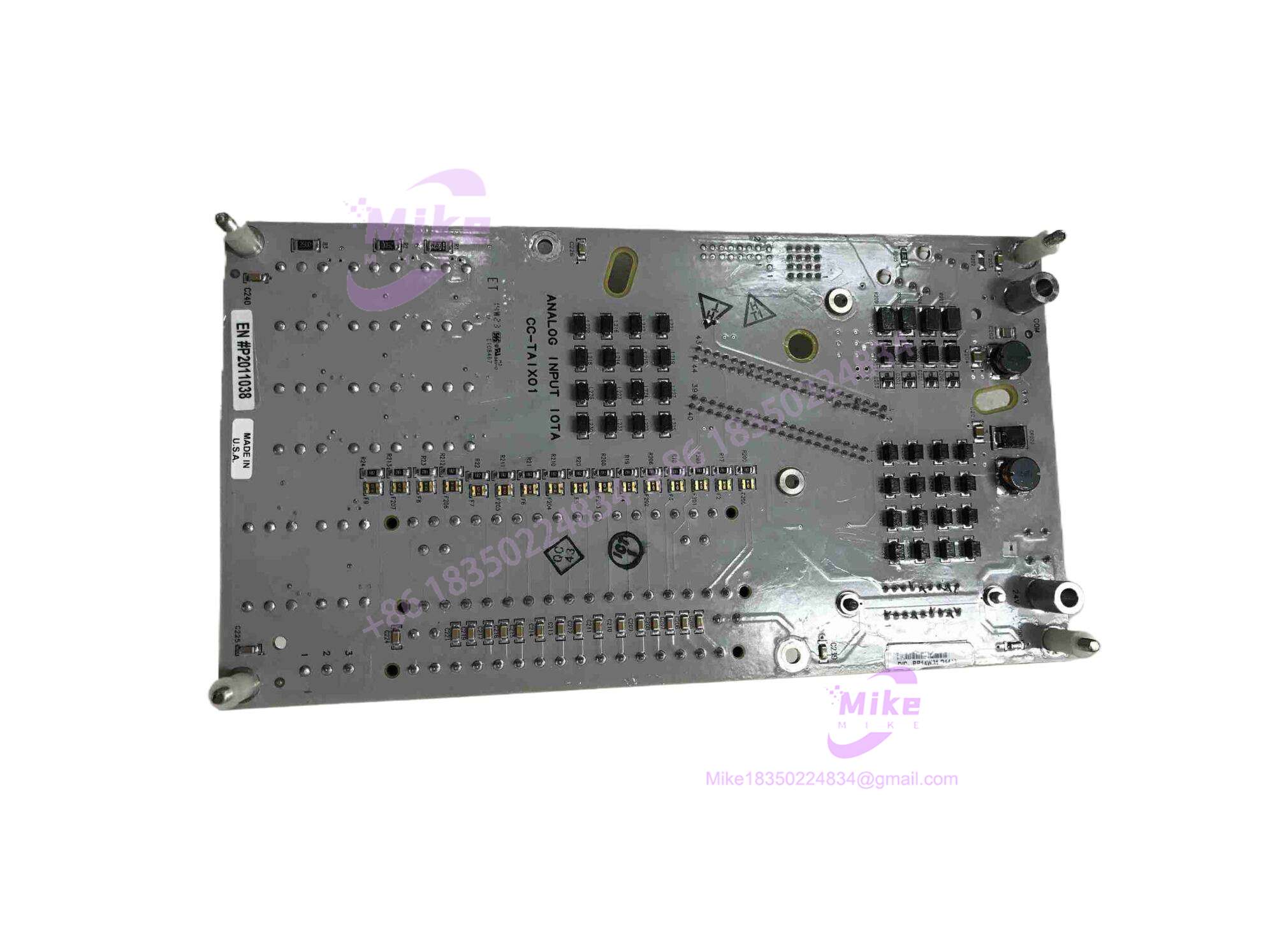
CC-TAID01
4. Key Technical Specifications
| Core Parameter | Technical Specification |
| Module Series | Series C |
| Model Order Number | 51306733-175 |
| Channel Capacity | 16 Differential Channels |
| Input Signal Types | 4-20mA, 1-5V, 0-5V |
| A/D Conversion Resolution | 16 bits |
| Input Scanning Rate | 50 milliseconds |
| Common Mode Rejection (CMRR) | 70 dB |
| Nominal Operating Power | 24 VDC |
| Operating Temperature | -40°C to +85°C |
| Mounting Architecture | Series C Chassis Base |
Global Sourcing & Live-Test SOP (Transparency Core)
Procuring surplus or replacement automation hardware demands an uncompromising quality control pipeline. In field deployments, dropping an untested board into a live rack can trigger catastrophic controller faults.
- Inbound Verification: Every incoming shipment of the CC-TAID01 undergoes meticulous customs documentation review alongside high-magnification holographic serial number checks to block gray-market counterfeits.
- Live Simulation: Technicians mount the CC-TAID01 hardware onto an authentic Series C test bench to verify backplane pin alignment and mechanical latching integrity.
- Diagnostics: Engineers execute full-scale loop resistance testing, check differential channel isolation using calibrated multimeters, and run a 24-hour thermal heat run to flush out infant mortality defects.
- Final Prep: Once cleared, the unit is logged by revision level, packed in anti-static shielding, and vacuum-sealed for storage.
The Field Engineer’s Pitfall Guide
❗ Terminal Fastener Torque Failures: Overtightening field wire clamp screws on the CC-TAID01 during installation can crack the underlying terminal housing block. I’ve seen plants spend hours tracing intermittent open circuits because a technician stripped a connection terminal under excessive torque.
❗ Shield Grounding Omissions: Failing to properly tie incoming analog signal cable shields to the designated ground bar on the CC- chassis invites severe electromagnetic interference (EMI) into low-level loops.
❗ Series C Latching Misalignment: Forcing the matching analog input module onto the CC- base without verifying proper keying pins can bend backplane pins, instantly compromising module communication.
Intent-Driven FAQ
- Will I lose my configuration logic if I swap out a faulty CC- assembly?
No. The termination assembly is a passive and semi-active physical connection base; control logic and channel configurations reside in the system controller database.
- Does the CC- supply loop power to connected transmitters?
Yes, it provides non-incendive field loop power to drive connected 2-wire and 4-wire analog transmitters safely.
- Can this IOTA support redundant module configurations?
Depending on the specific system revision and matching carrier setup, Series C architecture allows proper module pairing for high-availability setups.
- What maintenance tools are required to verify terminal integrity locally?
A calibrated digital multimeter is necessary for measuring loop voltage drops and verifying continuity across differential pairs.
- Are factory-sealed units supplied with updated hardware revisions?
Surprise inventory often ships with baseline factory hardware revisions. Always cross-check the CC- build level against your system engineering requirements before final commissioning.





