

Description
HIMA H6200A | Analogue Isolator Power Supply
Dynamic Product Introduction
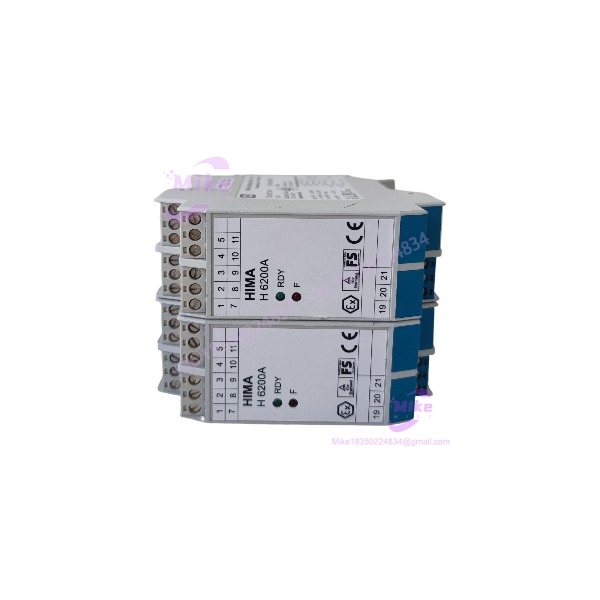
The HIMA H6200A is an instrumentation-interface component used in HIMA safety-related architectures. HIMA’s own FM approval documentation explicitly identifies it as an “Analogue Isolator Power Supply”, distinguishing it from HIMax CPUs, analog input modules, digital I/O modules, and communication modules.
Its job is at the field-interface level: provide the appropriate electrical interface between analog instrumentation and the safety system while maintaining the required isolation characteristics. That makes the H6200A particularly relevant to process plants where transmitter circuits must interface with safety-related control equipment without simply tying field wiring directly into the logic system.
There is a recurring sourcing problem with this part: several secondary sellers incorrectly describe H6200A as a digital-input module or general HIMax power supply. Those descriptions conflict with HIMA’s certification documentation. For procurement, the HIMA classification should take precedence.
H6200A
Key Technical Specifications
- Model: H6200A
- Manufacturer: HIMA Paul Hildebrandt GmbH
- Product classification: Analogue isolator power supply
- System family: HIMax safety-related system
- Signal domain: Analog instrumentation
- Interface function: Analog signal isolation and field-instrument power/interface
- Hazardous-location approval: Class I, Division 2, Groups A, B, C and D
- Temperature class: T4A
- Approved ambient temperature: -20°C to +60°C
- ATEX documentation: HIMA approval records identify TÜV 04 ATEX 7064 and TÜV 04 ATEX 7065X documentation for H6200A.
- HIMax integration: Listed by HIMA as an approved HIMax component
- Exact analog range: Verify from the applicable data-sheet revision
- Exact supply voltage/current: Verify from the unit-specific HIMA documentation
- Terminal assignment: Verify from the applicable HIMA wiring documentation
HIMA’s current certification confirms the hazardous-location classification, but it does not provide enough information to safely invent detailed channel count, loop-current, terminal, or power-consumption specifications. Those values should be taken from the applicable data sheet rather than copied from unrelated reseller listings.
Global Sourcing & Live-Test SOP
1. Inbound Verification
- Confirm the physical label reads .
- Verify the HIMA manufacturer marking.
- Record serial number and hardware revision.
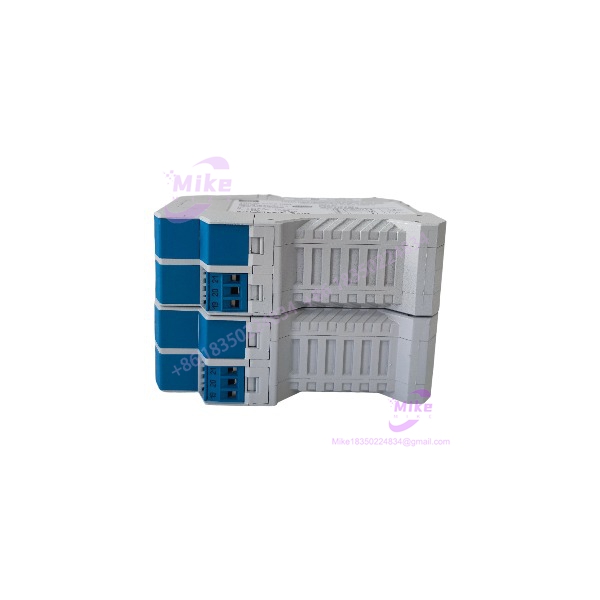
- Photograph every terminal and connector.
- Inspect for corrosion, contamination, cracked insulation, or evidence of overheating.
- Check that terminal screws and plugs have not been mechanically damaged.
- Compare the physical configuration with the customer’s existing unit.
2. Application Verification
Before connecting the , identify:
- The field transmitter or analog instrument.
- The required signal range.
- The field-device supply requirement.
- The receiving HIMax input/interface.
- Required electrical isolation.
- The applicable safety-system drawing.
Do not select the merely because the existing installation uses a “HIMA analog module.” Its specific interface function must match the original engineering design.
3. Bench Testing
- Use the HIMA-approved wiring arrangement.
- Verify supply requirements from the applicable manual before energizing.
- Check terminal continuity where appropriate.
- Use a calibrated current/voltage source to simulate the field signal.
- Confirm the isolated output/interface responds correctly.
- Monitor supply current and temperature during the test.
A Fluke-class calibrated multimeter and suitable loop simulator are appropriate maintenance tools, but the test setup must follow the actual HIMA circuit documentation.
4. Functional Simulation
Run controlled signal tests across the documented operating range:
- Normal low-range signal
- Mid-scale signal
- High-range signal
- Loss-of-signal condition
- Wiring/open-circuit condition where applicable
- Power interruption and restoration
- Isolation verification
Record both the input and corresponding system-side response.
5. Safety-System Verification
The should not be accepted solely because its analog output appears correct.
Verify:
- Correct safety-system channel assignment
- Correct scaling
- Correct alarm thresholds
- Correct diagnostic behavior
- Correct fail-state behavior
- Correct transmitter power
- Correct isolation
- Correct proof-test procedure
The complete safety function—not the by itself—determines the achieved safety integrity.
6. Final Preparation
Record:
- model
- HIMA serial number
- Hardware revision
- Test date
- Signal range tested
- Input/output measurements
- Isolation test result
- Physical condition
- Warranty status
Package the module in ESD-safe protective material and protect the terminal area against mechanical damage during international transport.
Field Engineer’s Pitfall Guide
❗ Do not mistake for a HIMax CPU or generic power-supply module.
HIMA’s official FM documentation specifically calls an “Analogue Isolator Power Supply.” That is the correct starting point for identification. Several reseller descriptions contradict this classification; they should not be used to determine application compatibility.
❗ Do not assume the analog signal range from the model number.
A 0/4–20 mA transmitter interface is common in process automation, but the exact electrical characteristics must be checked against the applicable HIMA data sheet and system drawing. Do not wire an unknown unit based solely on a reseller specification page.
❗ Hazardous-area approval does not make every installation automatically compliant.
HIMA’s current FM certificate identifies as Class I, Division 2, Groups A, B, C and D; T4A, with -20°C to +60°C ambient approval. Installation still has to follow the applicable approval conditions, enclosure requirements, wiring rules, and site hazardous-area classification.
Intent-Driven FAQ
What is the HIMA ?
The is an Analogue Isolator Power Supply used within HIMA’s HIMax safety-related system architecture. HIMA’s official certification documents explicitly use this product description.
Is a HIMax CPU?
No. HIMA’s certification lists the X-CPU 01 separately as the safety-related CPU module and identifies separately as an analogue isolator power supply.
What is the purpose of the ?
It provides the analog field-interface/isolation function required between instrumentation and the safety-related system. It should therefore be considered an instrumentation interface rather than the logic-solving element of the HIMax system.
Is suitable for hazardous areas?
HIMA’s current FM certificate lists for Class I, Division 2, Groups A, B, C and D; T4A, with an approved ambient range of -20°C to +60°C. The actual installation must still satisfy the applicable approval conditions.
Does have ATEX documentation?
Yes. HIMA’s system approval records identify TÜV 04 ATEX 7064 and TÜV 04 ATEX 7065X documentation associated with .
Is a HART module?
No. HIMA documentation separately identifies H6210 as the HART multiplexer, while is classified as the analogue isolator power supply. Do not interchange those two functions.
Can I replace with another analog isolator?
Not automatically. A generic signal isolator may reproduce the analog signal while failing to reproduce the required isolation, diagnostic, power, hazardous-area, or safety-system characteristics. Verify the complete HIMA engineering specification before substitution.
What should I verify when buying a used ?
Request:
- Clear HIMA nameplate photograph
- Exact model:
- Serial number
- Hardware revision
- Terminal photographs
- Functional analog-loop test
- Isolation-test evidence where available
- Physical condition
- Original documentation
- Exact warranty/return terms
- Confirmation of new, surplus, used, or refurbished condition
Buyer Verification Checklist
For , confirm all of the following before purchase:
- Exact model marking
- HIMA manufacturer identification
- Hardware revision
- Terminal configuration
- Applicable analog signal range
- Field-device power requirements
- Isolation requirements
- HIMax system compatibility
- Hazardous-area requirements
- Functional test evidence
- Serial number
- Warranty coverage
The important correction for this part is straightforward: is an HIMA Analogue Isolator Power Supply, not a digital-input module or HIMax CPU. HIMA’s own certification documents support that identification and also provide the current hazardous-location classification.





