


Description
GM International D5091S | SIL3 Relay Output Module Core Category
Dynamic Product Introduction
Interfacing safety-instrumented systems with high-risk field loads often introduces persistent flickering issues when standard control systems run routine diagnostic pulse tests. Honestly, the GM International D5091S solves this operational hurdle by incorporating a dedicated internal filtering circuit that allows DCS/PLC pulse testing without causing relay chatter or LED flicker. This single-channel module switches safety loops up to SIL 3 securely while ensuring complete galvanic isolation between inputs and field contacts (—though confirming your loop current requirements and safety logic configuration prior to wiring is mandatory). Compared to standard industrial relays, the GMI D5091S delivers certified functional safety compliance in a compact 12.5mm housing, maximizing cabinet space efficiency.
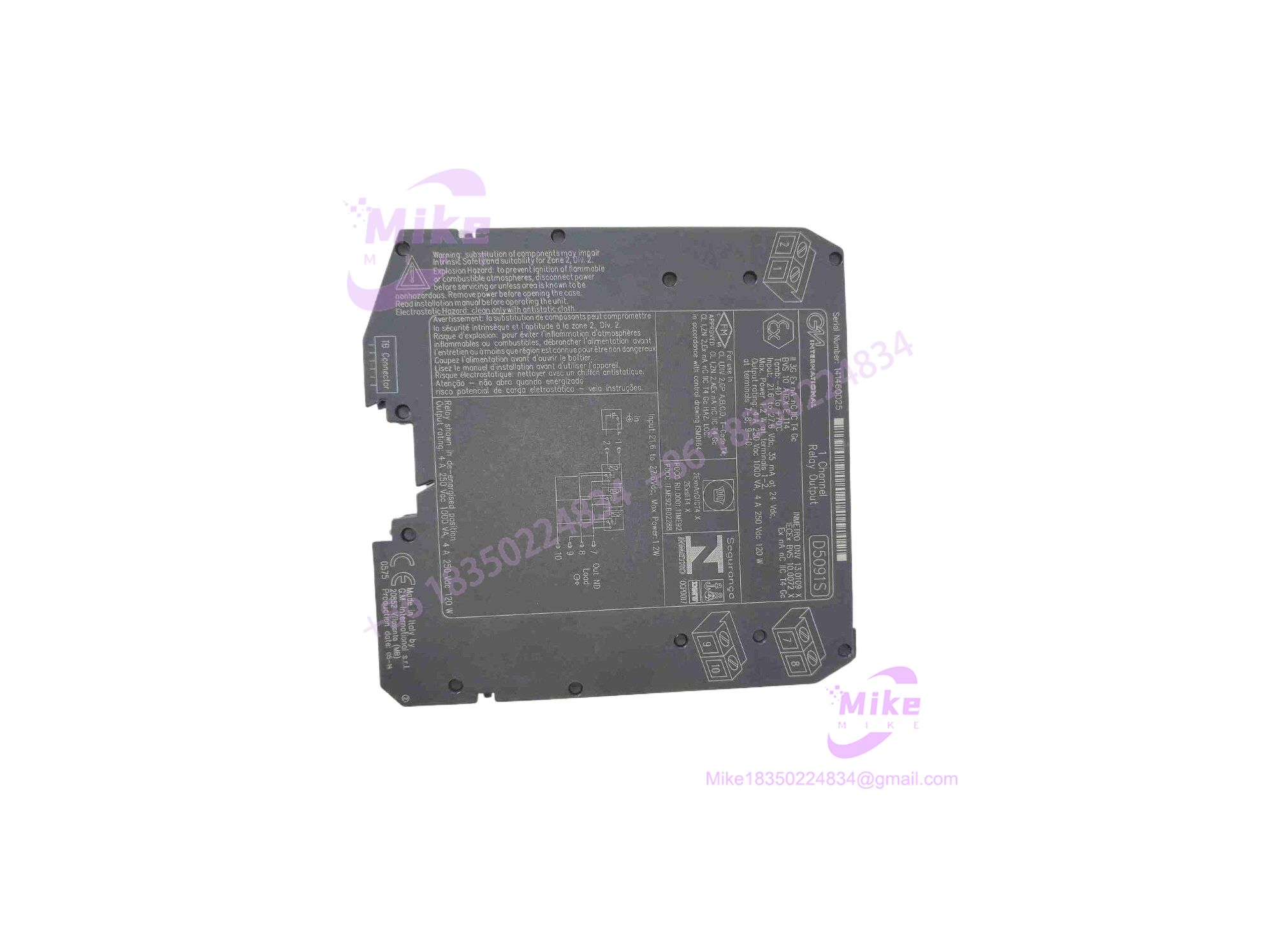
D5091S
Key Technical Specifications
| Specification | Parameter Value |
| Product Series | GM International D5000 Series |
| Safety Integrity Level | SIL 3 / SC 3 compliant (IEC 61508:2010) |
| Number of Channels | 1 Channel |
| Input Voltage | 24 VDC nominal (21.6 to 27.6 VDC), reverse polarity protected |
| Current Consumption | ~45 mA @ 24 VDC typical |
| Output Contacts | Voltage-free SPDT relay contacts (NO / NC configuration) |
| Contact Rating | 5A @ 250 VAC (1250 VA) / 5A @ 250 VDC (140 W resistive) |
| Inrush Current | Up to 6A max |
| Operating Temperature | -40°C to +70°C industrial standard |
| Mounting Style | 35 mm DIN-Rail or custom termination board |
Global Sourcing & Live-Test SOP (Transparency Core)
Procuring safety-critical interface modules requires strict functional auditing to verify that internal coil drivers, galvanic isolation barriers, and contact ratings are entirely uncompromised. For every inbound GM International D5091S unit, our inspection team logs serial numbers against global traceability ledgers and inspects plug-in screw terminals for thread wear or oxidation.
Once cleared, the module is mounted onto a live safety-instrumented test rig. Technicians apply a regulated 24VDC supply, simulate DCS/PLC pulse-testing patterns to verify flicker-free operation, cycle the SPDT output contacts under active resistive loads, and run a 24-hour thermal burn-in cycle. The unit is then cleaned, fitted with fresh desiccant, and sealed inside an anti-static moisture-barrier bag.
The Field Engineer’s Pitfall Guide
❗ Inductive Load Suppression Gaps: Switching inductive solenoids or valves without external flyback diodes or RC snubbers across the load will prematurely pit and weld the relay contacts. Always use appropriate arc suppression on inductive field devices.
❗ Exceeding Contact Current Limits: Pushing currents higher than the 5A rating or ignoring DC load breaking de-rating curves will ruin the gold-plated Ag alloy contacts. Always verify load characteristics against the instruction manual charts.
❗ Hot-Plugging Under Power: Inserting or extracting the D5091S terminal blocks while the loop is energized can cause electrical arcing or system faults. Always de-energize the 24VDC rail before servicing cabinet connections.
Intent-Driven FAQ
- Does the D5091S support pulse testing from modern safety PLCs?
Yes, it features a dedicated internal filtering circuit designed to absorb routine DCS/PLC diagnostic output pulses without causing contact chatter or LED flickering.
- Can this module be installed in hazardous plant locations?
Yes, the is rated for installation in Safe Areas as well as Zone 2 / Division 2 hazardous environments when housed properly.
- What type of warranty covers surplus safety relay modules?
Verified secondary-market inventory includes a comprehensive 1-year operational warranty backed by our pre-shipment bench-test verification logs.
- Is the configuration for Normally Energized or Normally De-energized loads adjustable?
Yes, the module accommodates various safety configurations through proper terminal selection and internal DIP-switch settings as detailed in the manual.
- How do I verify if a replacement unit has passed QA testing?
Look for serialized QA verification stickers, clean unmarred screw terminal blocks, and accompanying test reports included in the packaging.





