


Description
Foxboro FBM218 | HART Redundant Analog Output Module
Product Introduction
A redundant 4–20mA output loop is only as dependable as the hardware path behind it. The Foxboro FBM218 is designed for applications where a failed output module should not automatically become a process upset. It provides eight channel-isolated analog outputs and supports HART communication superimposed on the 4–20mA signal, while two FBM218 modules can operate as a redundant pair.
The current Schneider Electric specification identifies FBM218 as the HART Communication Redundant Output Module and assigns RH922VW as the current module part number. The redundant adapter is RH916QD. Schneider’s current documentation also lists the FBM218 under PSS 41H-2S218.
This makes the FBM218 particularly useful for Foxboro I/A Series installations where analog output availability, HART device access, and controlled failure behavior matter more than simply having eight current-output channels.
The output stage supports standard 4–20mA devices or HART-enabled devices. In HART service, the digital FSK communication is superimposed on the analog current loop rather than requiring a separate communication pair.
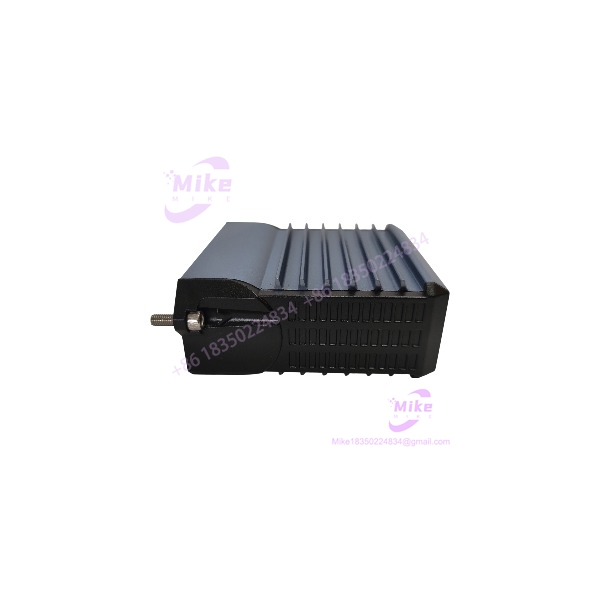
FBM218
Key Technical Specifications
- Module: Foxboro
- Module Function: HART Communication Redundant Output
- Channels: 8 output channels
- Analog Output: 4–20mA
- HART: HART 5, HART 6, and HART 7 compatible
- HART Communication: 1200 baud, asynchronous half-duplex
- HART Burst Mode: Not supported
- Output Accuracy: ±0.05% of span
- Maximum Output Load: 750Ω
- Output Resolution: 13 bits
- Maximum Output Rate: 20mA change in approximately 60ms
- Fieldbus: Redundant 2Mbps HDLC Fieldbus
- Fieldbus Paths: A/B redundant communication paths
- Power Supply: 24VDC, +5% / -10%
- Maximum Power Consumption: 7W
- Maximum Heat Dissipation: 5W
- Operating Temperature: -20°C to +70°C
- Storage Temperature: -40°C to +70°C
- Relative Humidity: 5–95%, non-condensing, G3 environment
- Approximate Module Weight: 284g
- Dimensions: 102 × 45 × 104mm; approximately 114mm including mounting lugs
- Field Connection: 25-pin male D-subminiature
- Termination Cable: Up to 30m
- Cable Type: Type 1
- Cable Materials: Polyurethane or LSZH
- Current Module Part Number: RH922VW
- Redundant Adapter: RH916QD
The current Schneider specification confirms the RH922VW and RH916QD identifiers, 284g module weight, 102 × 45 × 104mm dimensions, 30m maximum termination-cable length, and Type 1 cable arrangement.
Redundancy Architecture
The is not simply an eight-channel analog output card with a spare slot.
In a redundant installation, two modules operate together through the appropriate redundant adapter. One module functions as the active/master side while the other tracks the operating state. If the system detects a module failure, the failed side can be driven to its defined fallback condition while the healthy module maintains the required output.
For process-control applications, this architecture is important because the failure strategy is part of the I/O design itself. The appropriate fallback value should be selected according to the final control element and process safety philosophy rather than assuming that every loop should fail to the same state.
The also supports module replacement without disconnecting the field termination wiring, provided the installation and maintenance procedure permits that operation.
HART Communication Characteristics
The supports HART communication on the analog output loop.
Key characteristics include:
- HART 5/6/7 device communication
- Point-to-point master/slave operation
- Asynchronous half-duplex communication
- 1200 baud signaling
- FSK digital communication superimposed on the 4–20mA signal
- Approximately two HART messages per second
- HART burst mode not supported
- Dedicated communication capability associated with each output channel
Loop distance is not simply a matter of cable length. Available compliance voltage, total loop resistance, intrinsic-safety barriers, field-device requirements, and voltage drop all affect the usable HART communication distance.
That is why a bench test that works with a short patch cable does not automatically prove that a 3000m field loop will operate correctly.
Termination Assembly and Part-Number Identification
This is where procurement teams frequently get caught.
P0917XV is not the electronics module.
It is an older PVC termination assembly (TA) associated with installations. Schneider’s older PSS 31H-2Z18 documentation lists P0917XV and P0926EK as PVC termination options and P0926SP as a polyamide termination option.
The current specification identifies RH926SP as the current compression-style termination assembly arrangement. The current electronics module itself is RH922VW.
Therefore, when buying surplus hardware:
- = electronics module
- RH916QD = redundant adapter
- P0917XV = older PVC termination assembly
- RH926SP = current termination assembly specification
Do not list a physical P0917XV termination assembly as an module. The two components perform completely different functions.
The older Schneider documentation also specifies that the PVC TA is rated from -20°C to +50°C, while the polyamide TA is rated from -20°C to +70°C. That difference can matter in an enclosure exposed to elevated ambient temperature.
Global Sourcing & Live-Test SOP
For a used, surplus, or refurbished , identification should precede functional testing.
1. Inbound Verification
- Photograph the module label and complete part number.
- Record serial number and manufacturing information.
- Compare the hardware identity against the purchase order.
- Verify whether the shipment contains the electronics, redundant adapter, TA, or a complete assembly.
- Inspect the enclosure, connector, mounting hardware, and terminal interfaces.
- Check OEM documentation and traceability paperwork where available.
- Inspect labels for alterations, rework, or inconsistent typography.
2. Live Simulation
Use an appropriate Foxboro test rack or controlled I/O simulation environment.
Verify:
- Module power-up behavior
- Fieldbus communication
- Output-current generation
- Channel-by-channel output response
- 4–20mA loop behavior
- HART communication where test equipment and compatible devices are available
- Redundant-pair behavior where two modules are available
- Fallback behavior
- Module diagnostic reporting
A calibrated loop calibrator and a Fluke-class multimeter can be used to independently verify the output current. For HART validation, use an approved HART communicator or equivalent test equipment.
3. Diagnostics
Record:
- Firmware revision
- Module identity
- Diagnostic status
- Fieldbus communication status
- Channel faults
- Redundancy status
- HART communication status where applicable
Do not assume two visually identical modules have identical firmware behavior.
4. Final Preparation
For shipment:
- ESD-safe handling
- Protective connector coverage
- Moisture-resistant packaging
- Anti-static inner packaging
- Serial-number record
- Photographic condition record
- Test report where testing has actually been completed
A seller should not claim that an has passed a 24-hour heat run, HART communication test, or redundancy test unless that specific test was actually performed and documented.
Field Engineer’s Pitfall Guide
❗ Do not confuse with the Compact .
The standard and Compact belong to different physical implementations. The standard current module is RH922VW; do not substitute a Compact part number merely because the functional description looks similar.
❗ Do not confuse the TA part number with the electronics module.
P0917XV identifies an older PVC termination assembly. If your purchase order calls for an module, a box containing only P0917XV is not a substitute for RH922VW.
❗ Check the termination assembly temperature rating.
Older PVC termination hardware has a more restrictive temperature rating than the current polyamide arrangement. A module that is suitable for a -20°C to +70°C environment does not automatically make every connected TA suitable for that same ambient range.
Intent-Driven FAQ
Q: What is the Foxboro used for?
A: It is an I/A Series 200 HART Communication Redundant Output Module providing eight isolated 4–20mA output channels with HART communication capability.
Q: What is the current part number?
A: Schneider Electric’s current specification identifies the electronics module as , with RH916QD used as the redundant adapter.
Q: Is the module?
A: No. is an older PVC termination assembly associated with installations. The electronics module is a separate component.
Q: Does support HART?
A: Yes. It supports HART communication superimposed on the 4–20mA analog output signal, including HART 5, 6, and 7 operation.
Q: Can be used redundantly?
A: Yes. Redundant operation is one of its primary functions. Two modules can operate as a redundant pair through the appropriate redundant adapter.
Q: What is the maximum output load?
A: The specified maximum output load is 750Ω.
Q: Is the still relevant for legacy Foxboro systems?
A: Yes. It remains directly relevant to installed I/A Series and EcoStruxure Foxboro DCS architectures. Schneider currently publishes PSS 41H-2S218 for the , while older PSS 31H-2S218 documentation identifies the earlier generation.
Q: What should I verify before buying a used ?
A: Verify the exact module part number, serial label, firmware revision, connector condition, Fieldbus communication, output-current behavior, HART operation when required, and—if redundancy is required—the availability and compatibility of the redundant adapter and termination hardware.





