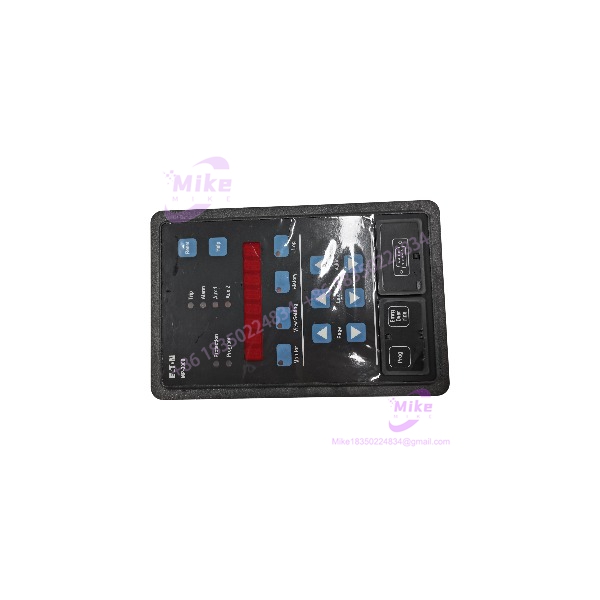
Description
Eaton MEDC BG2EDC1FR | Explosion-Protected Manual Call Point
Product Introduction
When a hydrocarbon leak or runaway chemical exothermic reaction threatens an offshore platform, emergency activation systems must perform without hesitation. The Eaton MEDC BG2EDC1FR is not a standard commercial break-glass box; it is a heavy-duty, explosion-protected manual call point engineered to command critical life-safety trips in Zone 1 and Zone 2 hazardous areas.
—though your mileage may vary depending on loop monitoring architectures and external termination configurations—expect rugged, impact-resistant performance designed to withstand salt spray, UV degradation, and extreme temperature fluctuations. It mounts directly onto bulkheads or structural skids, offering immediate physical access while maintaining strict intrinsic safety or flameproof integrity.
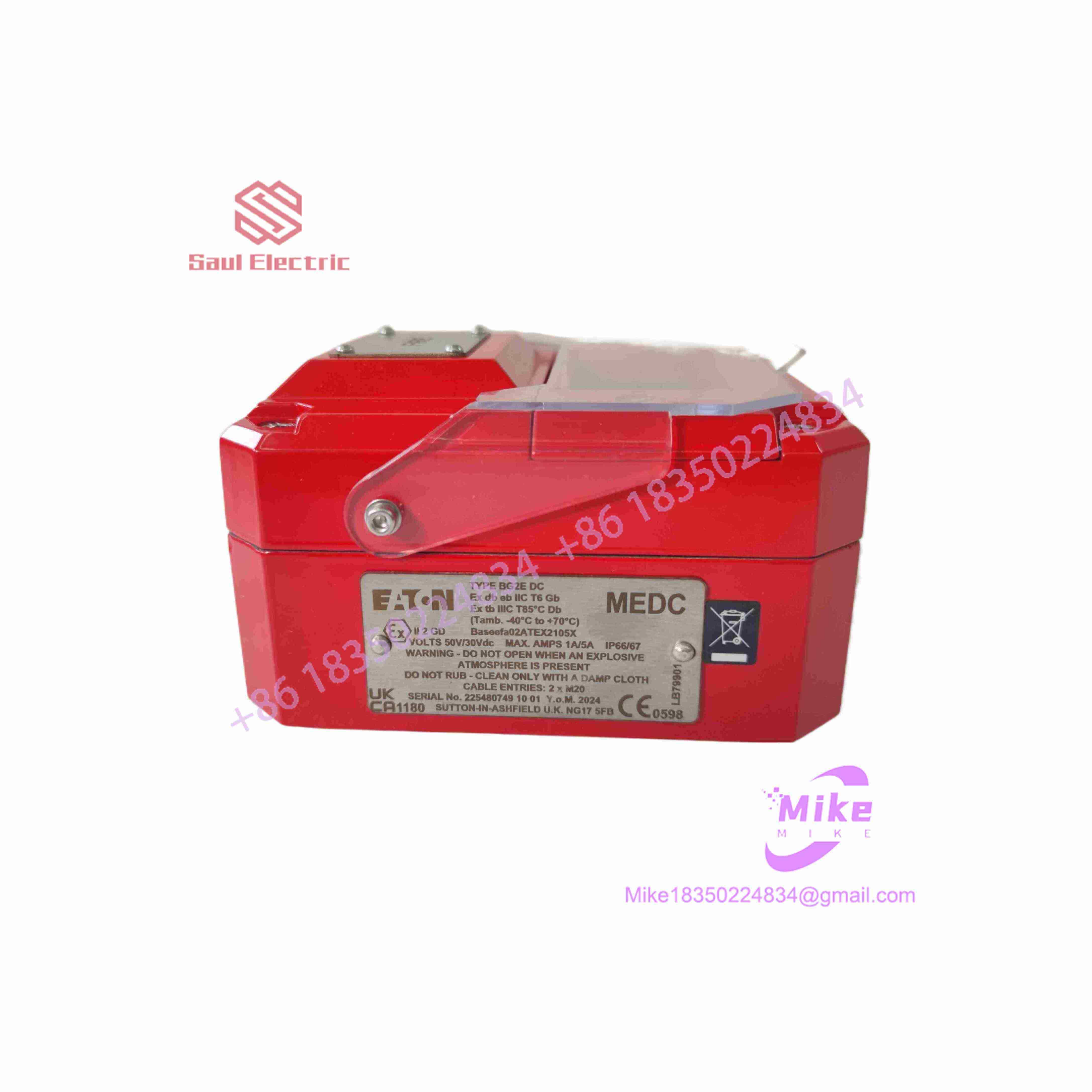
BG2EDC1FR
Key Technical Specifications
| Parameter | Specification |
| Enclosure Material | Anti-static, UV-resistant glass-reinforced polyester (GRP) |
| Finish | Epoxy painted safety red |
| Ingress Protection | IP66 and IP67 (EN/IEC 60529) |
| Certifications / Ratings | ATEX Approved – Ex II 2GD (Ex de) / Baseefa certified |
| Operating Temperature | -40^\circC to +70^\circC (–40^\circF to 158^\circF) |
| Cable Entries | Standard 2 \times M20 bottom entries |
| Switch Configuration | Switch only variant (Option 1 configuration) |
| Protective Accessories | Fitted polycarbonate lift flap (‘F’ spec) |
Application Scenarios & Pain Points
- Offshore Production Platforms: North Sea drilling rigs exposed to high winds and aggressive salt-laden air rely on the corrosion-resistant GRP housing of this call point to prevent rust-induced structural failure.
- Refinery Hydrocracker Units: Placed strategically near pump skids, the flameproof construction safely contains internal sparks, preventing ignition in volatile Class I, Division 1 or Zone 1 spaces.
- Chemical Processing Plants: Mitigates nuisance activations from heavy weather or accidental personnel bumps through its fitted polycarbonate lift flap, ensuring trips occur only during real emergencies.
QA & Live Testing SOP (Trust Signal)
We evaluate life-safety hazard equipment under stringent quality and verification protocols prior to deployment:
- Enclosure Integrity Inspection: Inspected for GRP surface defects, correct red epoxy coating depth, and the proper seating of retained stainless steel cover screws.
- Ingress & Gasket Verification: Rubber perimeter seals and O-rings are checked for elasticity to ensure full maintenance of IP66/IP67 environmental protection.
- Switch Contact Continuity Test: The internal microswitch mechanism is cycled and tested with a multi-meter to confirm low contact resistance and positive snap-action make/break transitions.
- Ex-Rating & Nameplate Audit: Serial numbers, ATEX certification codes, and terminal block torque limits are verified against factory compliance documents.
- Protective Packaging: Packed in anti-shock material to prevent stress fractures on the frangible glass element and the external lift flap during transit.
Field Engineer’s Pitfall Guide
- ❗ Cable Entry Gland Mismatch: Using non-certified cable glands or failing to properly torque M20 thread adapters will immediately void the Ex de explosion protection rating of the enclosure.
- ❗ Over-Tightened Terminal Screws: Avoid excessive torque on the internal terminal strip blocks; stripping the screw threads inside a hazardous-area certified device requires complete unit replacement.
- ❗ Glass Replacement Misalignment: When replacing a broken glass pane after a test or event, ensure the mechanical trip arm rests correctly against the microswitch actuator lever to prevent a permanent open/closed loop fault.
Intent-Driven FAQ
Is the BG2EDC1FR certified for use in Zone 1 hazardous areas?
Yes. The unit carries ATEX Ex de certification, making it fully approved for deployment in hazardous Zone 1 and Zone 2 explosive atmospheres.
What does the “FR” suffix stand for in the part number?
The code denotes specific factory-configured build options: “F” indicates that a protective polycarbonate lift flap is fitted, and “R” specifies the standard red painted GRP finish.
Does this specific model include internal monitoring resistors?
No. The configuration code indicates a “Switch Only” model (Option 1), meaning it contains raw clean switch contacts without pre-wired end-of-line or in-line resistors.
Can this call point withstand outdoor marine environments?
Yes. The anti-static glass-reinforced polyester (GRP) body is highly resistant to ultraviolet radiation, salt water corrosion, and heavy industrial cleaning agents.
How do you perform a routine functional test on-site?
Maintenance teams can use a specialized key-operated test facility located on the unit to simulate glass breakage and test system response without needing to physically shatter the glass element.