


Description
Galil DMC-1832 | PCI Bus Multi-Axis Servo & Stepper Controller
Dynamic Product Introduction
Upgrading or maintaining multi-axis motion control systems in industrial test rigs and automated manufacturing machinery requires robust hardware that integrates seamlessly with existing host PC environments. Honestly, the Galil Motion Control DMC-1832 solves this challenge directly by serving as a high-performance 3-axis motion controller card built on the reliable DMC-1800 PCI architecture. This board handles coordinated linear/circular interpolation, PID filter compensation, and precise trajectory generation reliably without command lag or tracking drift (—though verifying your exact PCI slot voltage compatibility, terminal breakout board cabling, and encoder feedback wiring beforehand is crucial). Compared to older ISA-bus alternatives, an authentic Galil DMC-1832 ensures faster data transfer speeds, superior reliability, and direct drop-in replacement for legacy industrial workstations.
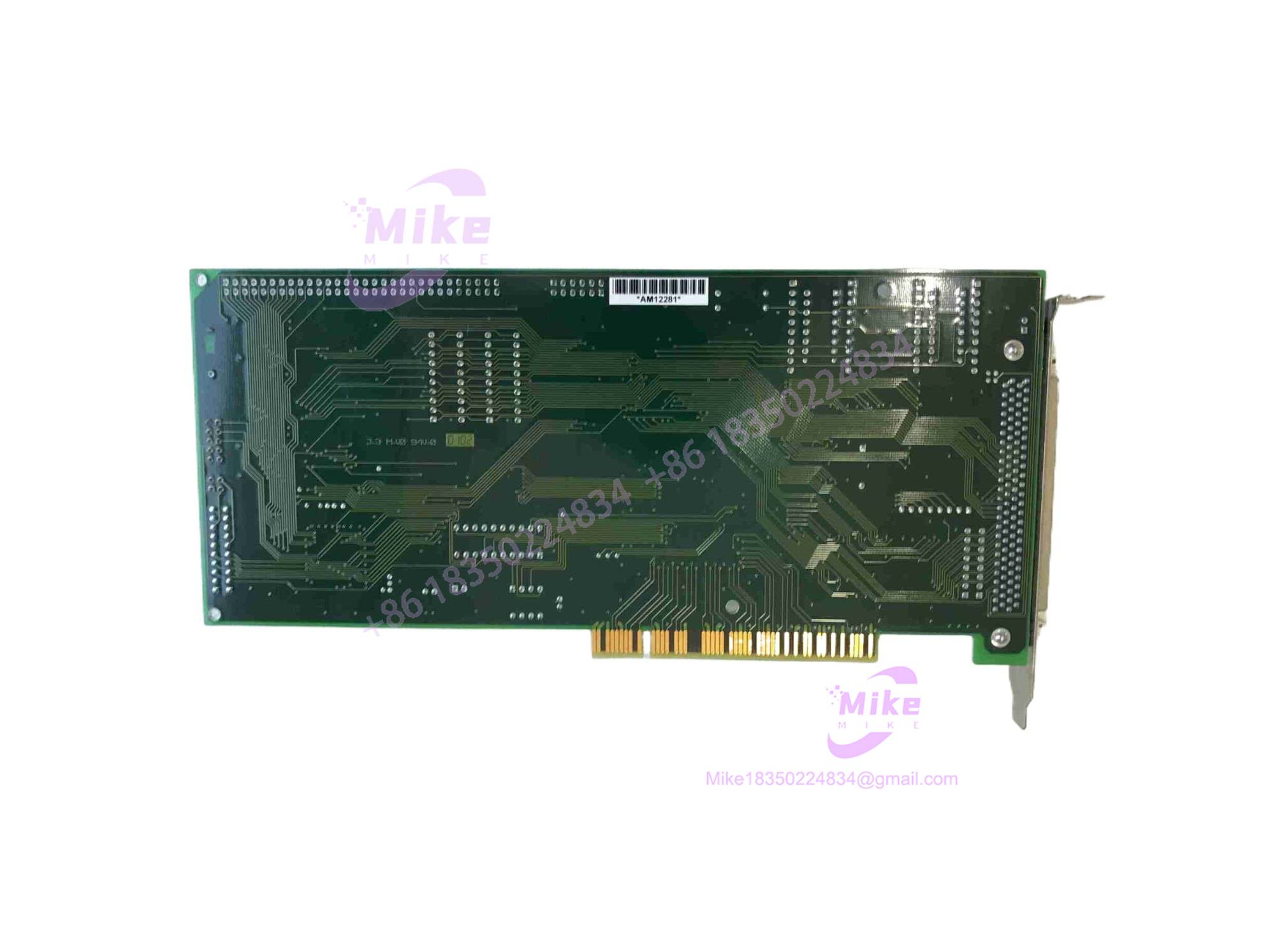
DMC-1832
Key Technical Specifications
| Specification | Parameter Value |
| Product Series | Galil DMC-1800 PCI Motion Controller Line |
| Model Designation | DMC-1832 (3-Axis Motion Controller Board) |
| Axis Control Capacity | Up to 3 fully independent or coordinated axes (servo or stepper) |
| Processor Architecture | High-speed digital signal processor (DSP) core |
| Host Interface | PCI bus communication standard (plug-and-play PC integration) |
| Feedback & I/O | Quadrature encoder inputs, DAC analog command outputs, and discrete digital I/O |
| Programming Language | Galil command language (mnemonic instruction set) |
Global Sourcing & Live-Test SOP (Transparency Core)
Acquiring secondary-market legacy motion controller boards requires rigorous verification to ensure internal microprocessors, analog-to-digital converters, and gold-plated PCI edge connector fingers remain uncompromised by age or storage conditions. For every inbound Galil DMC-1832 unit, our audit team logs serial numbers against global traceability ledgers, inspects gold PCI edge fingers for oxidation or wear, and checks internal printed circuit boards for thermal stress or electrostatic vulnerability.
Once cleared, the controller is mounted onto a dedicated Galil test bench utilizing an industrial PCI backplane. Technicians apply nominal power, verify communication responsiveness across the PCI bus, test encoder pulse counting and analog command output channels across all 3 axes, and execute diagnostic motion routines. The unit is then cleaned, fitted with anti-static packaging, and securely prepared for deployment.
The Field Engineer’s Pitfall Guide
❗ PCI Bus Slot Voltage Mismatch: Ensure your industrial PC motherboard’s PCI slot voltage tier (such as 5V vs. 3.3V keying) matches the specific hardware revision of the DMC-1832 board to prevent electrical damage.
❗ Edge Connector Contamination: Inserting cards with oxidized or dust-covered PCI edge fingers into system slots can cause intermittent communication dropouts; always clean pins gently before installation.
❗ Improper Encoder Grounding: Failing to properly ground encoder shield drains to the designated terminal chassis can introduce electrical noise, resulting in position tracking errors or motor jitter.
Intent-Driven FAQ
- What is the primary function of the Galil ?
It functions as a 3-axis motion controller board designed to provide high-precision closed-loop position and velocity control for industrial servo or stepper motor systems.
- What host communication bus does the utilize?
It is engineered for standard PCI bus architecture, allowing direct integration into industrial PC backplanes.
- What type of warranty covers verified surplus Galil controllers?
All tested inventory includes a comprehensive 1-year operational warranty backed by our pre-shipment bench test logs.
- Can I replace a damaged without re-programming?
Yes, provided you transfer or upload your original Galil command motion program and PID tuning parameters to the replacement board.
- How do I verify if a replacement unit has been bench-tested?
Look for serialized QA certification labels, clean connector pins, and complete test documentation included with the hardware package.





