
Description
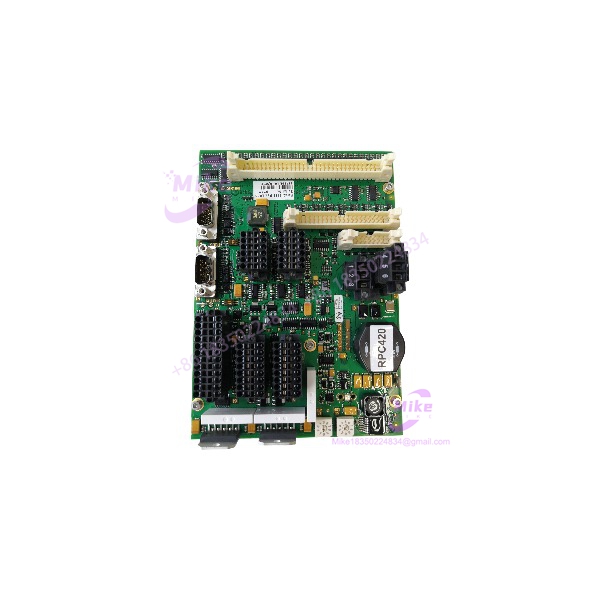
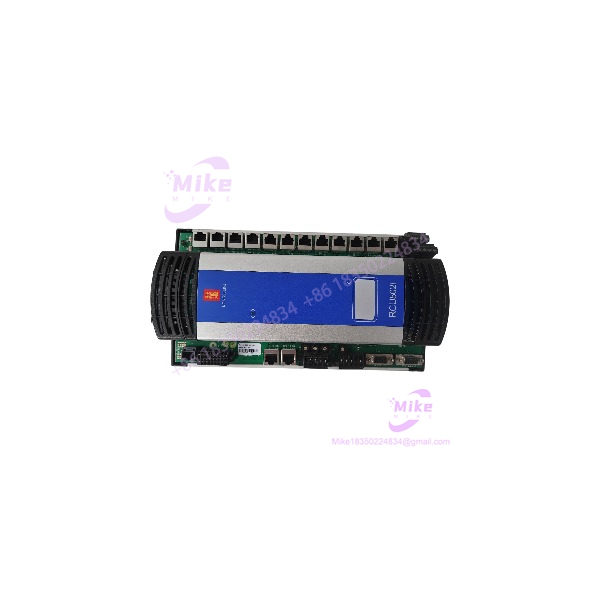
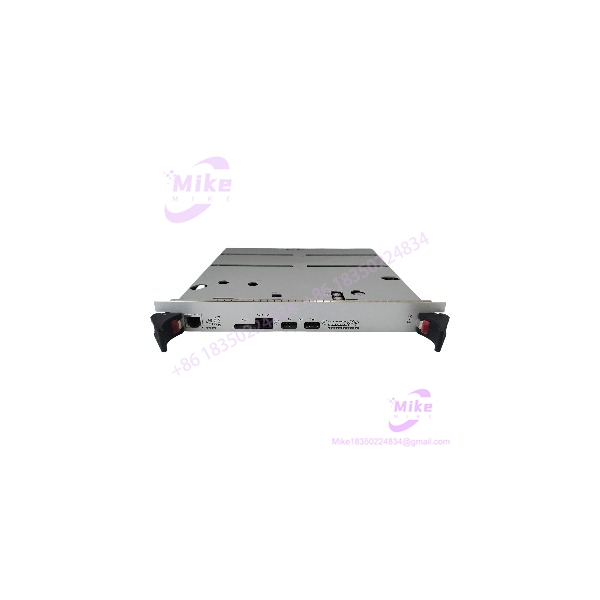
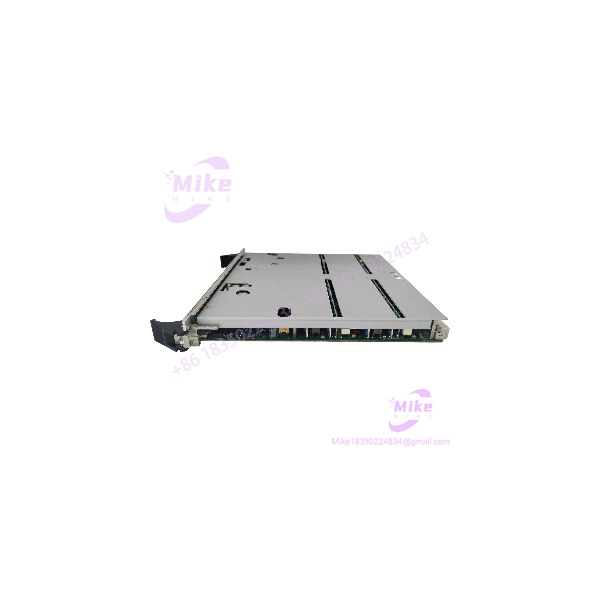
KONGSBERG Maritime TRX32 Acoustic Transceiver 303088
Dynamic Product Introduction
Nothing degrades offshore Dynamic Positioning (DP) station-keeping faster than lost acoustic transducer elements inside a HiPAP transceiver rack during deepwater ROV or subsea construction operations. Because Kongsberg’s spherical multi-element hull transducers rely on tightly synchronized multi-channel beamforming to resolve seabed transponder bearing and range, even a single degraded transmit/receive blade compromises acoustic signal-to-noise ratio and triggers DP reference dropouts. Engineered specifically for the Kongsberg X81 transceiver chassis, the Kongsberg TRX32 303088 packs 32 independent acoustic transmit drivers and 32 low-noise receiver front-ends onto a single rack-pluggable circuit board.
Unlike legacy analog sonar cards that suffer from inter-channel phase drift and require manual potentiometer tuning, this multi-frequency transceiver board pairs a massive 42,900 µF onboard capacitor discharge bank with deterministic 20 MHz clock synchronization (CLK20MHZ and decimation clock inputs). By generating clean, high-energy multi-frequency interrogation pulses and digitizing returning seabed transponder echoes directly at the transceiver rack, the TRX32 303088 enables up to eight boards to operate in parallel inside one X81 unit—supporting 256-element spherical beamforming without starving the topside APOS workstation of real-time positioning data.
TRX32
Key Technical Specifications
- Part Number / Model: TRX32 / Part Number 303088 (including hardware revision suffixes such as
303088G) - OEM Manufacturer & Origin: Kongsberg Maritime AS (Made in Norway)
- Compatible Subsea Systems: Kongsberg HiPAP 501, HiPAP 451, HiPAP 351, and HiPAP 101 Acoustic Positioning Systems
- Chassis & Slot Architecture: Installed inside the Kongsberg X81 Transceiver Unit (supports up to 8 x TRX32 boards per X81 chassis)
- Acoustic Channel Capacity: 32 Transmit (TX) channels + 32 Receive (RX) channels
- Energy Storage Capacitor Bank: 11 x 3900 µF electrolytic capacitor array (42,900 µF total pulse energy reserve)
- Synchronization & Timing Inputs: External Trigger,
CLK20MHZmaster clock,TXENABLE, and Decimation Clock inputs - Host Communication Interface: Integrated Ethernet port with front-panel
LINK,SPEED, andACTdiagnostic LEDs - Onboard Protection Fuses: F1 (12 V, 4 A, 250 V) and F2 (6 V, 4 A, 250 V)
- Configuration & Diagnostics: Front-panel
SW1/SW2switches plus dedicated Power and I/O status LEDs - Environmental Protection: Marine-grade conformal-coated PCB rated for harsh offshore salt-fog and high-humidity environments (-25°C to +70°C operating range)
- Mounting Form Factor: Rack-pluggable Eurocard-style PCB assembly with mechanical injector/ejector latches
Global Sourcing & Live-Test SOP (Transparency Core)
Buying an untested HiPAP transceiver card off the grey market is a massive offshore liability—aging electrolytic capacitors in the 42,900 µF discharge bank dry out over time, resulting in weak acoustic transmit pulses that pass a quick power-on LED check in port and fail at 2,000 meters water depth. Every Kongsberg TRX32 303088 in our inventory clears a strict four-stage marine electronics validation protocol before dispatch:
- Inbound Verification: Receiving engineers inspect the marine conformal coating across all fine-pitch DSP/FPGA pins under UV lighting, verify authentic Kongsberg Maritime Norway barcode labels (
303088/ revision letter), and test all eleven 3900 µF bulk discharge capacitors with an ESR/capacitance meter to eliminate units with dried-out electrolyte or bulging vents. - Live Simulation: We seat the TRX32 303088 into an authentic Kongsberg X81 transceiver test rack supplied with synchronized
CLK20MHZtiming signals,TXENABLEgating, and a 32-channel dummy transducer load network. - Diagnostics: Using a calibrated Fluke oscilloscope and Ethernet packet analyzer, engineers verify 12 V and 6 V rail regulation across fuses
F1andF2, trigger multi-frequency transmit bursts across all 32 TX channels to confirm uniform pulse amplitude and capacitor recharge recovery, inject low-level simulated transponder echo waveforms across all 32 RX inputs to check receiver gain flatness, and run a 24-hour thermal burn-in at 50°C. - Final Prep: After passing full 32-channel transmit/receive and thermal verification, technicians inspect the front-panel
SW1/SW2switches and ejector latches, record exact hardware revision codes on the QA traveler sheet, and seal the TRX32 303088 inside a heavy-duty static-shielding ESD barrier bag with marine-grade desiccant.
The Field Engineer’s Pitfall Guide
❗ Failing to Match Front-Panel SW1 / SW2 Slot & Address Switches Before Insertion Inside an X81 transceiver unit housing up to eight TRX32 303088 boards, each card’s slot position and channel group assignment are defined by its onboard/front-panel SW1 and SW2 configuration switches. Honestly, I have seen vessel ETOs slide a spare straight out of the anti-static bag into Slot 4 during a DP survey without copying the switch settings from the faulted board—causing an immediate IP/bus conflict that knocked out two adjacent transceiver blades inside the X81 rack. Always photograph and match SW1 and SW2 switch positions down to every toggle before powering up the rack.
❗ Overlooking Hardware Revision Suffixes (303088 vs. 303088G) & Board Firmware CompatibilityKongsberg Maritime produced multiple hardware revisions of the (including 303088 and 303088G) across the lifecycle of the HiPAP 101/351/451/501 product line. Mixing incompatible board revisions or mismatched transceiver firmware inside the same X81 chassis can introduce phase-delay offsets between transducer elements, degrading spherical beamforming accuracy. Always confirm the exact revision letter printed on your existing X81 cards and verify transceiver software compatibility via the APOS service interface.
❗ Hot-Swapping a TRX32 While TXENABLE Is Active (Transducer & Fuse Damage) With 42,900 µF of onboard energy storage charging the high-voltage transmit stage, pulling or seating a TRX32 303088 while the HiPAP system is actively pinging puts severe inductive arcing stress across the rear backplane pins and frequently blows the onboard F1 (12 V 4 A) or F2 (6 V 4 A) fuses. Always place the HiPAP transceiver into standby/ping-off mode and isolate rack power per Kongsberg’s X81 maintenance procedure before unlatching the ejector handles.
Intent-Driven FAQ
How many TRX32 303088 boards are installed inside a single Kongsberg HiPAP transceiver unit? A standard Kongsberg X81 transceiver chassis accommodates up to 8 pieces of the TRX32 303088 transceiver board (providing up to 256 total transmit/receive channels for full spherical-array models like the HiPAP 501, while smaller arrays such as the HiPAP 351 or 101 populate fewer slots).
Will replacing a single faulted TRX32 303088 require recalibrating my vessel’s HiPAP hull-mounted transducer alignment?No—provided the replacement TRX32 303088 matches your existing hardware revision and SW1/SW2 switch configuration. Mechanical installation offsets (roll, pitch, heading alignment) are stored inside the topside APOS operator station configuration files, though running a quick acoustic noise/element health check in APOS after installation is standard offshore practice.
How do I diagnose whether a missing transducer sector in APOS is caused by the TRX32 board or the subsea transducer head? Swap the suspect TRX32 303088 board with an adjacent known-good slot inside the X81 transceiver rack (remembering to swap the SW1/SW2 switch settings so each card matches its new slot address). If the dead 32-channel sector follows the board to the new slot, the TRX32 303088 PCB is faulted; if the dead sector stays on the same transducer element group, the fault lies in the hull penetrator cable or subsea transducer array.
Are the onboard fuses (F1 and F2) on the TRX32 303088 field-replaceable?Yes, the TRX32 303088 incorporates two board-mounted protective fuses (F1: 12 V 4 A 250 V; F2: 6 V 4 A 250 V). However, if either fuse blows repeatedly upon power-up, it typically indicates a shorted transmit MOSFET driver or failed bulk capacitor in the 11 x 3900 µF energy bank, requiring full board replacement.
What is the current lifecycle status and availability of the Kongsberg TRX32 303088?While Kongsberg Maritime supports newer HiPAP 502/352/102 generations, legacy HiPAP 501, 451, 351, and 101 systems remain widely deployed across active DP drilling rigs, survey vessels, and pipe-lay ships—making factory-new X81 spares subject to extended OEM lead times from Norway. Capacitor-tested, 32-channel-verified surplus TRX32 303088 boards are maintained in stock by specialized marine automation suppliers for rapid 24-hour global port dispatch with a 1-year warranty.