Description
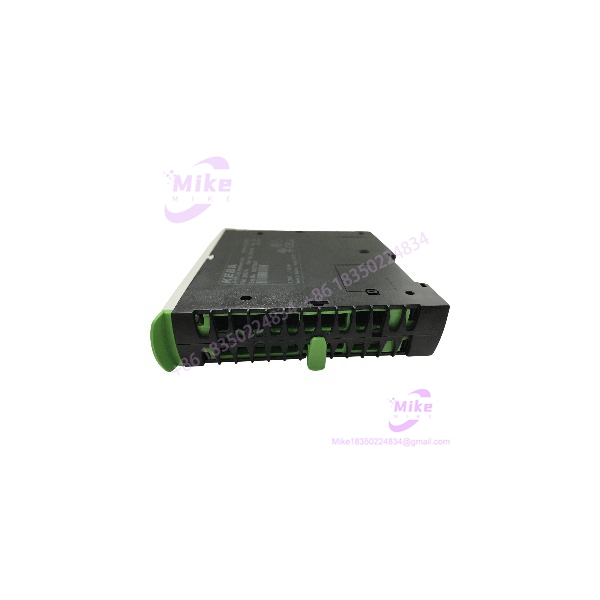
KEBA CU313 | Automation Control CPU
Dynamic Product Introduction
Specifying a motion controller for highly synchronized kinematics requires raw calculation speed, not just standard I/O processing. The KEBA CU313 simply outperforms older hardware revisions by utilizing an embedded x86 architecture alongside real-time EtherCAT mastering. In field deployments, this unit dramatically condenses the latency between sensor feedback and axis adjustment (—though mounting clearance in shallow cabinets remains a persistent annoyance). Upgrading from legacy topologies to the KEBA CU313 yields microsecond-level synchronization, effectively eliminating the jitter that ruins injection molding and high-speed CNC tolerances.
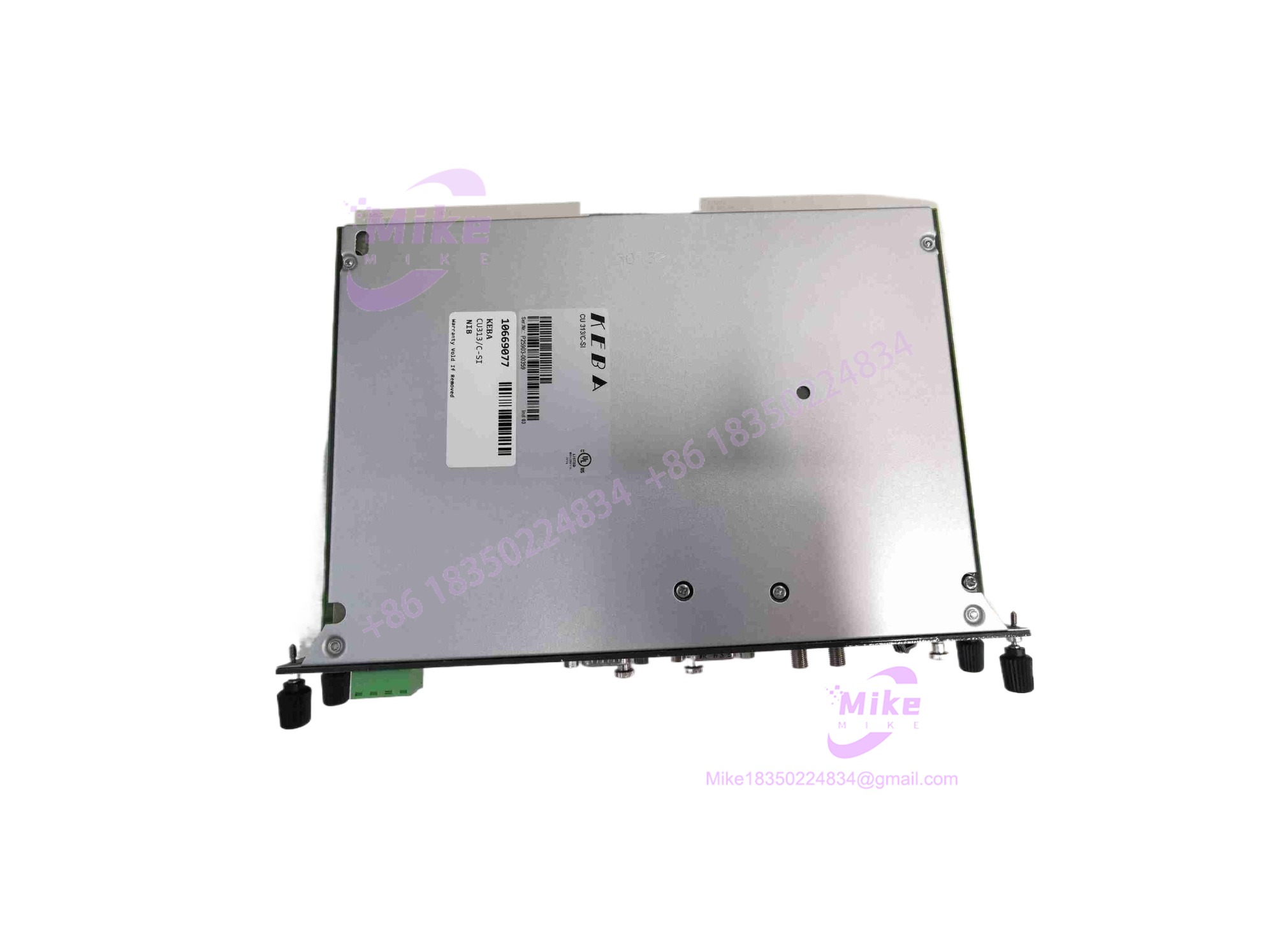
CU313
Key Technical Specifications
| Specification | Parameter Value |
| Processor Architecture | Intel Atom (x86 Real-Time) |
| Minimum Cycle Time | 250 µs task cycle |
| System Bus Interface | EtherCAT, CANopen |
| Storage Medium | Industrial CompactFlash |
| Network Interfaces | 2x Ethernet (10/100/1000 Base-T) |
| Peripheral Ports | 2x USB 2.0 |
| Power Requirements | 24 VDC (galvanically isolated) |
| Cooling Method | Passive fanless heat sink |
| Status Indication | 7-segment diagnostic display & LEDs |
| Operating Temperature | +5°C to +55°C |
Global Sourcing & Live-Test SOP (Transparency Core)
Validating surplus European motion controllers demands zero guesswork on the test bench. Before a KEBA CU313 enters our active inventory, we pull raw customs import logs and verify hardware serials against OEM lot records.
Next, the module hits our diagnostics grid. We mount it onto a live KeControl baseplate, hook up a Fluke 87V to monitor the 24V rail stability, and establish an EtherCAT handshake with virtual servo drives. After confirming the processor isn’t throttling under a 24-hour heat run, we format the memory sectors. The unit is then wrapped in static-dissipative film and logged for immediate dispatch.
The Field Engineer’s Pitfall Guide
❗ CompactFlash Topology Errors: Booting the KEBA CU313 with an unformatted or incorrectly partitioned CompactFlash card will halt the CPU at the bootloader phase. I’ve seen shift supervisors lose an entire weekend of production because a technician slapped an off-the-shelf commercial CF card into the slot without installing the proper KeStudio runtime kernel.
❗ EtherCAT Node Addressing Skew: Migrating to this controller often requires topology map adjustments in your engineering software. If you neglect to match the physical slave MAC addresses with the new hardware profile, the system will blind-fault upon startup.
❗ Thermal Spacing Ignorance: The passive heat sink on this unit relies heavily on vertical convection. Stacking wire ducts too close to the upper vents blocks airflow, eventually triggering internal thermal shutdowns and erratic logic execution during peak summer shifts.
Intent-Driven FAQ
- Do I need a proprietary CF card to run the KEBA CU313?
You strictly need industrial-grade flash memory formatted with the correct real-time OS partitions; commercial variants will fail prematurely due to high read/write cycles.
- Is this CPU interchangeable with older KeControl C2 modules?
No, physical dimensions and internal bus architectures differ significantly between the C2 and C3 generations, demanding a complete baseplate and configuration swap.
- How do I recover a faulted boot sequence on the KEBA ?
Connect to the diagnostic serial port using a terminal emulator, review the hexadecimal fault codes on the 7-segment display, and verify the 24V supply isn’t dipping below 19.2VDC under load.
- Are both Ethernet ports strictly for EtherCAT?
Typically, one port is dedicated as the EtherCAT master for deterministic motion, while the secondary Gigabit port handles factory network TCP/IP traffic and HMI visualization.
- What exactly does the 1-year warranty cover?
It covers complete hardware functionality, including internal bus communicators, physical interfaces, and memory sectors, verified through our thermal and logic load testing before shipment.