

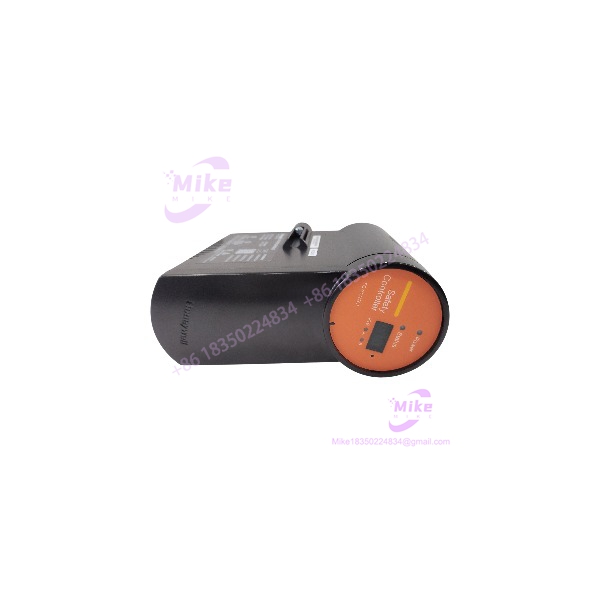
Description
Honeywell FC-SCNT01 | S300 Safety Controller Module
Dynamic Product Introduction
The FC-SCNT01 is not a conventional PLC CPU that you can drop into a generic control rack. It is a Safety Manager SC S300 safety controller, and its real value is tied to the complete Honeywell safety architecture around it. Honeywell’s certification documentation identifies FC-SCNT01 as the SC S300 Safety Controller SIL3, with documented controller/software combinations and associated FC-RUSIO-3224 and FC-PDIO01 safety I/O modules.
For procurement teams maintaining an installed Safety Manager SC system, that distinction matters. The controller is part of a certified safety platform, so the correct question is not simply “Does the module power up?” The correct question is whether the controller revision, Safety Manager SC release, application, I/O configuration, and redundant-controller arrangement are all compatible.
There is also a very practical lifecycle consideration. Honeywell introduced FC-SCNT02 as the successor to FC-SCNT01. Honeywell specifically states that FC-SCNT02 has increased memory, is pin-to-pin and backward compatible with FC-SCNT01, and can be used as an FC-SCNT01 spare, including online replacement on supported releases.
That makes an original FC- useful as a like-for-like legacy spare, but it should be purchased with a clear understanding of the installed Safety Manager SC revision and the available migration path.
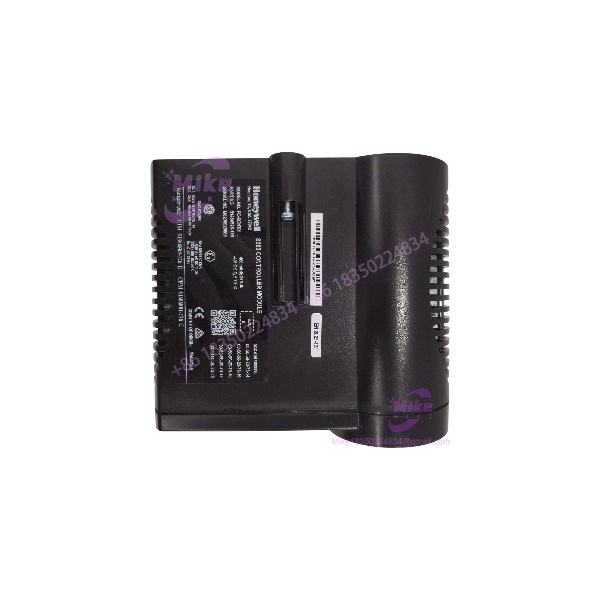
FC-SCNT01
Key Technical Specifications
- Model: FC-
- System: Honeywell Safety Manager SC
- Controller Family: SC S300
- Product Description: SC S300 Safety Controller SIL3
- Controller Role: Safety application/control processor for the Safety Manager SC architecture
- Safety Level: SIL 3-certified safety-system application hardware
- Supported Safety I/O: FC-RUSIO-3224 Universal Safety I/O and FC-PDIO01 Safety Digital I/O are documented with FC- in Safety Manager SC releases.
- Controller Interface Architecture: Designed for the dedicated Safety Manager SC S300 architecture rather than generic PLC backplanes.
- Redundant Architecture: FC- can be used in redundant Safety Manager SC controller configurations; Honeywell’s FC-SCNT02 documentation specifically confirms interoperability with an existing FC- in a redundant SMSC controller.
- Documented Software Compatibility: FC- appears in Honeywell Safety Manager SC R210.2 supported-hardware documentation.
- Documented Certified Revisions: Honeywell/TÜV documentation records multiple valid FC- controller configurations, including 200.x, 201.1 and 201.2 software/CRC combinations with associated safety I/O firmware.
- Replacement Controller: FC-SCNT02
- Replacement Relationship: FC-SCNT02 is documented by Honeywell as pin-to-pin and backward compatible with FC- and capable of online replacement on supported Safety Manager SC releases.
Important: Do not rely on generic distributor specifications claiming arbitrary Ethernet, PROFIBUS, Modbus, HART, I/O-point counts, CPU speed, or memory figures unless they can be traced to the applicable Honeywell documentation for the exact FC- revision. Those numbers are frequently copied between unrelated Honeywell product families.
Global Sourcing & Live-Test SOP
1. Inbound Verification
Treat FC- as safety-system hardware, not ordinary surplus PLC inventory.
On receipt, record:
- Exact FC- marking
- Manufacturer identification
- Hardware revision
- Serial number
- Firmware/software revision where accessible
- Connector condition
- Housing and locking features
- Evidence of previous installation
- Storage damage, corrosion, contamination, or electrostatic handling damage
For a high-value spare, photograph the identification label before installation. The objective is simple: establish exactly what revision entered inventory before anyone installs it into a live safety system.
Honeywell’s certification documentation demonstrates why revision tracking matters: different FC- releases are associated with specific controller and I/O firmware/CRC combinations.
2. Live Simulation
A proper acceptance test should use an authentic Safety Manager SC test environment appropriate to the target installation.
Verify at minimum:
- Controller initialization
- Controller diagnostic state
- Safety Manager SC software recognition
- Application download/restore behavior
- Communication with the intended Safety Manager SC infrastructure
- FC-RUSIO-3224 and/or FC-PDIO01 communication where applicable
- I/O status and diagnostic reporting
- Redundant-controller synchronization where applicable
- Controlled transition between normal and fault conditions
Do not improvise a generic PLC bench test and call that a safety qualification. A processor that boots successfully can still be incompatible with the target Safety Manager SC release or application.
3. Diagnostics
The test record should capture:
- Startup diagnostics
- Controller status
- Hardware fault indications
- Software/application compatibility
- I/O communication
- Redundancy status
- Diagnostic/event logs
- Any firmware mismatch messages
Honeywell documentation identifies FC- as supported hardware within Safety Manager SC releases, while later releases introduced FC-SCNT02 as the successor. That makes software-release verification part of incoming inspection—not an installation-day surprise.
4. Final Preparation
Before shipment or storage:
- Record firmware and hardware revision
- Record serial number
- Apply ESD-safe packaging
- Protect the connector/interface area
- Include the verified test report
- Identify the tested Safety Manager SC release
- Record whether the unit was tested standalone or in a redundant controller arrangement
For a safety-system spare, traceability is worth more than a generic “tested OK” sticker.
Field Engineer’s Pitfall Guide
❗ 1. Do Not Treat FC- as a Generic PLC CPU
This is an SC Safety Controller. Its compatibility is defined by the Honeywell Safety Manager SC architecture, software release, safety application, and associated I/O.
Honeywell’s R210.2 documentation explicitly lists FC- together with FC-TCNT11, FC-RUSIO-3224, FC-PDIO01, FC-PUIO01 and their associated termination hardware.
A field engineer once described this type of spare as “just another controller module.” That is exactly the wrong procurement mindset. The surrounding certified architecture is part of the product.
❗ 2. Firmware and Software Revision Can Decide Whether the Spare Is Actually Useful
Do not buy an FC- solely because the front label matches.
Honeywell’s certification records show specific FC- controller revisions together with corresponding FC-RUSIO-3224 and FC-PDIO01 versions and CRC values.
Before installation, compare:
- Safety Manager SC release
- Controller firmware
- Safety I/O revisions
- Safety Builder/application version
- Existing controller configuration
- Redundant-controller arrangement
If the target system has already moved forward in its lifecycle, an FC- may be the more practical spare strategy.
❗ 3. Do Not Assume FC- Is Merely a Different Label
This is a useful exception to the normal “newer number = incompatible” rule.
Honeywell explicitly states that FC- replaces FC-, is pin-to-pin and backward compatible, can function as FC-, and can replace FC- online on supported releases. Honeywell also states that FC- is supported from Safety Manager SC R200.2 and higher.
However, that does not mean every FC- feature is automatically available on every old system. For example, Honeywell introduced FC- with increased memory specifically for DNP3 outstation functionality in Safety Manager SC R212.1.
Intent-Driven FAQ
What is the Honeywell FC-?
The FC- is the SC Safety Controller for Honeywell Safety Manager SC. Honeywell/TÜV documentation identifies it as an SIL3 safety controller and records it as valid Safety Manager SC hardware.
Is FC- a PLC processor?
Not in the conventional sense. It performs controller functions, but it belongs specifically to the Safety Manager SC safety architecture. Treating it as a generic PLC CPU can lead to incorrect assumptions about I/O, firmware, communications, and replacement compatibility.





