


Description
HIMA F6217 | HIQuad Safety Analog Input Module
Dynamic Product Introduction
A safety system is only as reliable as the measurement chain feeding it. If pressure, temperature, or level signals are inaccurate, the controller may make the correct decision based on incorrect information.
The HIMA F6217 is a safety-related analog input module designed for acquiring process measurement signals inside HIMA safety controller systems. It supports current and voltage measurement inputs commonly used with transmitters in industrial process applications.
Unlike standard PLC analog input cards, the F6217 is designed for safety applications where signal integrity, diagnostics, and predictable fault response are required. The module supports 8 analog channels with 12-bit conversion resolution and safety isolation features for demanding SIS environments.
For legacy HIMA installations, maintaining a tested F6217 spare can reduce recovery time when a measurement channel failure affects a safety function. Replacing the module requires verification of transmitter type, scaling parameters, cable termination, and safety configuration.
In field maintenance, I have seen technicians replace analog modules successfully at the hardware level but fail during commissioning because the transmitter range was different — a 4–20 mA pressure transmitter configured as 0–10 V will never produce a valid safety signal.
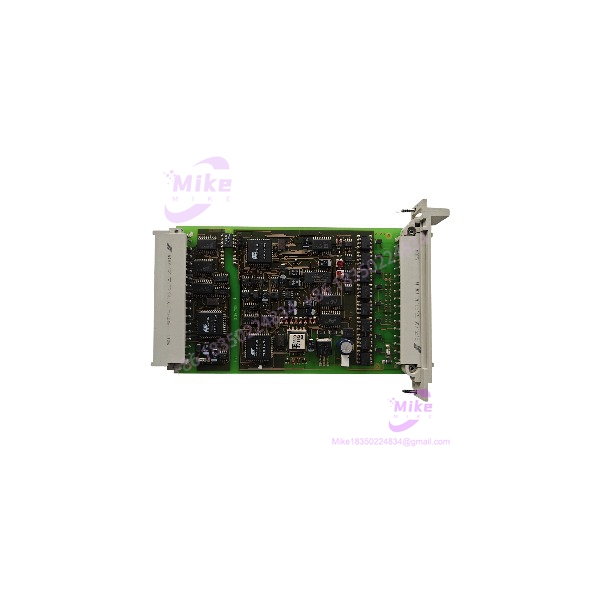
F6217
Key Technical Specifications
- Model: F6217
- Manufacturer: HIMA Paul Hildebrandt
- Module Type: Safety-related analog input module
- Application: Safety Instrumented Systems (SIS)
- Input Channels: 8 analog input channels
- Input Types:
- 0/4–20 mA current input
- 0–5 V / 0–10 V voltage input
- Resolution: 12-bit A/D conversion
- Input Voltage Range: 0–5.5 V nominal measurement range
- Maximum Input Voltage: 7.5 V
- Input Current Range: 0–22 mA through shunt resistor configuration
- Maximum Input Current: 30 mA
- Measurement Update Time: 50 ms
- Safety Time: Less than 450 ms
- Input Resistance: Approximately 100 kΩ
- Basic Accuracy: 0.1% at 25°C
- Operating Power:
- 5 VDC: approximately 80 mA
- 24 VDC: approximately 50 mA
Global Sourcing & Live-Test SOP (Transparency Core)
Safety analog modules require deeper testing than normal I/O hardware. A module can power up correctly while still having unstable conversion channels or incorrect scaling behavior.
The goal is to verify the complete measurement path.
Inbound Verification
Each incoming HIMA F6217 should receive:
- Exact model confirmation
- Hardware identification recording
- Serial number documentation
- Connector inspection
- Housing inspection
- PCB condition review
Inspection points:
- Front connector condition
- Backplane interface
- Terminal contacts
- Signs of overheating
- Storage damage
The input configuration must match the original application. A voltage input version and current input transmitter circuit are not interchangeable without proper wiring changes.
Live Simulation
A practical validation setup should include:
- Compatible HIMA safety rack
- Engineering workstation
- Precision signal simulator
- 24 VDC supply
- Calibrated measurement equipment
Test sequence:
- Install the module.
- Confirm controller communication.
- Apply simulated analog signals.
- Verify engineering values.
- Check diagnostic response.
Simulation points:
- 4 mA low-scale input
- 12 mA midpoint input
- 20 mA high-scale input
- Voltage input verification
- Fault condition testing
Diagnostics
Recommended equipment:
- Fluke industrial multimeter
- Precision current source
- Voltage calibrator
- HIMA engineering tools
Diagnostic checks:
- Channel scaling
- A/D conversion stability
- Input fault detection
- Communication status
- Safety diagnostic messages
The multimeter confirms the signal exists. It does not confirm the controller interprets the signal correctly.
Final Preparation
Before shipment:
- Record firmware/hardware identification where available.
- Document channel test results.
- Protect connectors.
- Use ESD-safe packaging.
- Maintain traceability records.
For SIS spare parts, test history is often as valuable as the physical module itself.
The Field Engineer’s Pitfall Guide
❗ Do not replace without confirming transmitter signal type.
A 4–20 mA transmitter loop and a voltage transmitter connection require different termination methods. I have seen shutdown investigations delayed because the replacement module was correct but the field scaling was wrong.
❗ Do not ignore unused channel termination requirements.
Unused analog inputs may require proper termination depending on configuration. Floating channels can create diagnostic alarms or unstable readings.
❗ Do not overlook safety configuration after replacement.
The hardware replacement does not automatically restore the validated application. Channel assignments, scaling values, and fault reactions must match the original project.
Intent-Driven FAQ
What is the HIMA used for?
The is a safety analog input module used to acquire process measurement signals such as transmitter outputs in HIMA safety systems.
How many channels does the provide?
The provides 8 analog input channels with safety-related processing capability.
Does the support 4–20 mA transmitters?
Yes. The module supports current inputs including 0/4–20 mA configurations through the appropriate input arrangement.
Can I directly replace a failed ?
Only after checking:
- Input signal type
- Channel assignment
- Safety project configuration
- Wiring termination
- Controller compatibility
A plug-in replacement does not replace validation.
Is the suitable for SIL3 applications?
The is documented as a safety-related analog input module tested according to AK6/SIL3 requirements when used within the appropriate certified system architecture.
Why would an show incorrect process values after installation?
Common causes include:
- Incorrect transmitter range
- Wrong scaling parameters
- Wiring mismatch
- Signal grounding problems
- Configuration differences
What should be tested before installing a used ?
Recommended checks:
- Channel accuracy
- Current/voltage input response
- Diagnostic behavior
- Backplane communication
- Safety application compatibility
Procurement verdict: The is a safety-related analog acquisition module used where measurement integrity directly affects SIS decisions. It should be sourced with the same discipline applied to any safety lifecycle component.
Before installation, verify input configuration, transmitter compatibility, channel scaling, HIMA rack compatibility, diagnostic behavior, and documented test results to avoid unnecessary safety-system downtime.





