


Description
HIMA 984200004 | A1 DIG ELOP II Control Unit, New Surplus
Architect’s Product Breakdown
The HIMA 984200004, designated under the A1 DIG ELOP II architecture, serves as a critical logic and control asset within safety-instrumented automation frameworks. Its primary operational mandate is the fault-tolerant acquisition of binary field conditions and the deterministic execution of safety interlocks. By combining dual-channel processing principles with robust galvanic isolation, it ensures that transient noise or single-point component failures do not compromise safety-critical trips or emergency shutdowns.
Deploying or replacing this safety controller requires absolute verification of backplane slot assignments and firmware revisions. Technicians must inspect field-wiring terminal blocks for secure insertion and verify that system configuration parameters match the specific safety loop requirements. Careless handling or mismatched hardware revisions can trigger internal diagnostic faults, locking the safety node into a safe state and halting connected process operations.
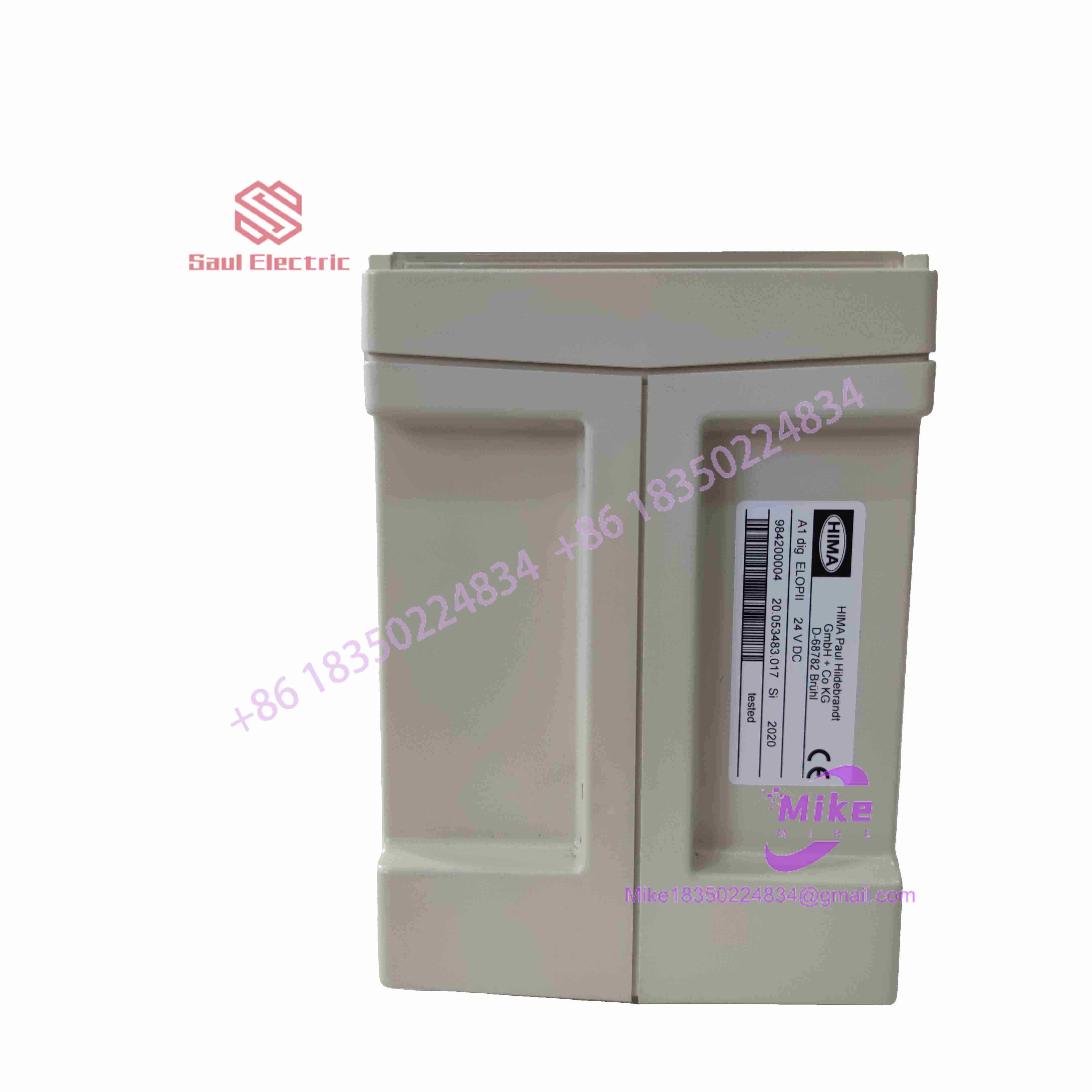
984200004
Key Technical Specifications
| Parameter | Specification |
| Manufacturer | HIMA |
| Part Number / Material Number | 984200004 |
| Module Designation | A1 DIG ELOP II Control Unit |
| Product Family | Safety Instrumented Systems (SIS) / Control Components |
| Operating Voltage | 24 VDC |
| Binary Inputs | 32 Channels |
| Binary Outputs | 16 Channels |
| Mounting Type | Industrial Rack / Chassis Backplane Slot |
| Operating Temperature | 0°C to +60°C |
| Weight | Approx. 10.0 kg (22.05 lbs) |
Field Engineer’s Pitfall Guide (Unique Value)
- Backplane Pin Damage: Forcing the module into a rigid safety rack without proper alignment can bend sensitive backplane pins, causing intermittent bus communication dropouts or unresolvable watchdog faults.
- Static Discharge Sensitivity: The high-density surface-mount components inside safety logic boards are extremely vulnerable to electrostatic discharge. Always utilize a calibrated ESD wrist strap during handling.
- Floating 24VDC Reference Grounds: Failing to reference the external 24VDC power supply cleanly to the system chassis ground can induce common-mode noise across the 32 binary input channels, leading to sporadic state flickering.
QA & Testing SOP (Transparency)
- Visual & Origin Verification: Units are inspected under magnification for original HIMA branding, uncompromised conformal coating, and clean gold-plated edge connectors.
- Test Bench Simulation: The control unit is mounted into a dedicated HIMA test chassis, running continuous power-on diagnostic routines to verify internal processor health and rail stability.
- I/O Functional Verification: Automated test fixtures cycle signals across all 32 binary inputs and 16 binary outputs, confirming optical isolation integrity and switching speed.
- Anti-Static Packaging: Post-testing, units are sealed inside multi-layer moisture-barrier static-shielding bags and packed with high-density structural foam to prevent transit shock.
Technical FAQ
- Can this control unit be hot-swapped in a live safety rack? No. Safety instrumented systems typically require a controlled shutdown or specific de-energization procedure to prevent tripping downstream emergency shutdown loops during module extraction.
- What causes a persistent module error light immediately following installation? This is usually driven by an incomplete backplane seating, an unacknowledged hardware configuration mismatch, or a discrepancy in system software generation files.
- Is this module backward compatible with older system racks? Compatibility depends strictly on the hardware revision index and system backplane bus specifications; always verify cross-reference tables before swapping legacy parts.
- What warranty is provided with a surplus unit? Units carry a standard 12-month replacement warranty backed by comprehensive multi-channel bench testing.





