


Description
GE DS200CPCAG1ABB | Mark V Contactor Pilot Board, In Stock
Architect’s Product Breakdown
The GE DS200CPCAG1ABB functions as a dedicated Contactor Pilot Card (CPCA) within the legacy Mark V Speedtronic turbine control architecture. Its core responsibility involves bridging control logic commands with high-power field actuation by stepping down and rectifying incoming 115 VAC power to 105 VDC, ensuring contactors pull in cleanly and hold securely without chatter. The board integrates heavy-duty power relays, protective rectifiers, and filtering capacitors directly on a conformal-coated printed circuit board designed to survive harsh industrial environments.
Because the Mark V platform is long obsolete, locating a drop-in replacement with exact hardware revision parity is critical to maintaining system stability. Minor differences in board population or trace layouts can trigger cabinet wiring mismatches or diagnostic alarms in the master controller. Engineers swapping this module must verify the physical jumper and terminal configurations against the original installation drawings to prevent operational faults during startup sequences.
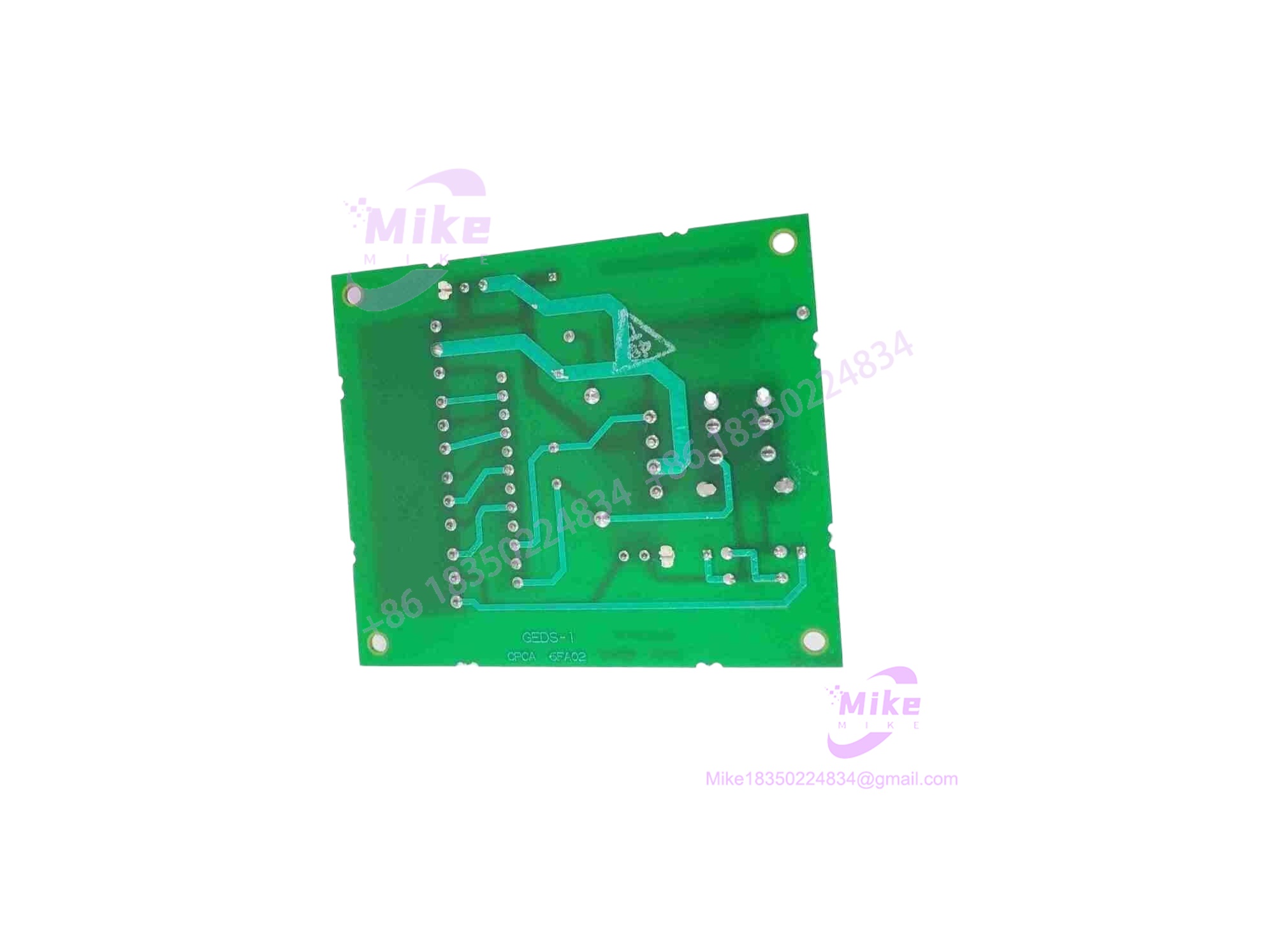
DS200CPCAG1ABB
Key Technical Specifications
| Parameter | Specification |
| Series | GE Mark V Speedtronic |
| Module Type | Contactor Pilot Card (CPCA) |
| Input Voltage | 115 VAC (nominal conversion target) |
| Output / Coil Voltage | 105 VDC (holding voltage for contactors) |
| On-Board Relay | 24VDC, rated up to 15A |
| Connectivity | 1x 12-pin connector, 2x 2-pin connectors |
| Terminal Blocks | 4 terminal blocks (supporting up to 12 signal wires) |
| Board Dimensions | Approximately 4.0 inches x 3.5 inches (10.2 cm x 8.8 cm) |
| Environmental Protection | Standard conformal coating against humidity and corrosion |
Field Engineer’s Pitfall Guide
- WARNING: High-Profile Relay Damage. The on-board power relay is tall and protrudes significantly from the PCB surface. Sliding the board blindly into a tight cabinet rack can easily fracture the relay housing or snap solder joints against adjacent metal chassis partitions.
- WARNING: Voltage Drop and Rectification Failures. Aging electrolytic capacitors on surplus or vintage boards can drift in capacitance, causing insufficient holding voltage on the 105 VDC rail and resulting in intermittent contactor dropouts under load.
- WARNING: Terminal Torque Fractures. Over-tightening the small terminal block screws on legacy boards can strip the block housing or crack the surrounding PCB trace laminate, forcing a complete rewiring job.
- Field Anecdote: I watched a commissioning team burn four hours tracking down a persistent turbine trip loop because a replacement pilot card was shoved into a rack too quickly, bending a pin on the 12-pin connector and causing an intermittent feedback fault on the control bus.
QA & Testing SOP
- Visual & Origin Verification: Inspect the PCB under magnification for trace damage, capacitor bulging, and verify original GE manufacturing labels and revision codes.
- Live Test Bench Environment: Mount the card onto a dedicated Mark V test fixture powered by regulated isolation transformers.
- Diagnostics & Load Testing: Energize the input circuits to verify proper AC-to-DC rectification, check the 105 VDC holding output, and cycle the onboard 15A relay under simulated load conditions.
- Anti-Static Packaging: Seal the hardware in high-shielding anti-static bags and package with thick structural foam to protect protruding relays and connectors during transit.
Technical FAQ
Can I use this board in a Mark VI or Mark VIe control system?
No. The DS200CPCAG1ABB is strictly engineered for the legacy Mark V Speedtronic platform and utilizes proprietary backplane pinouts and terminal geometries incompatible with newer GE architectures.
Does this board retain firmware or configuration memory?
No. The CPCA board is a hardware-driven interface module; it does not store programmable control logic or non-volatile firmware parameters locally. All execution logic is handled at the core controller level.
What causes contactors to chatter when this board is energized?
Chattering usually stems from degraded filtering capacitors or sagging AC input voltage failing to sustain the clean 105 VDC output required to keep the heavy-duty contactor armature pulled in solidly.





