Description
Eaton MTL F860-CA | Fieldbus Power System IOTA Carrier
Dynamic Product Introduction
Fieldbus power problems are rarely caused by the field instrument itself. A weak power architecture, incorrect segment loading, or failed carrier assembly can interrupt communication across multiple devices at once.
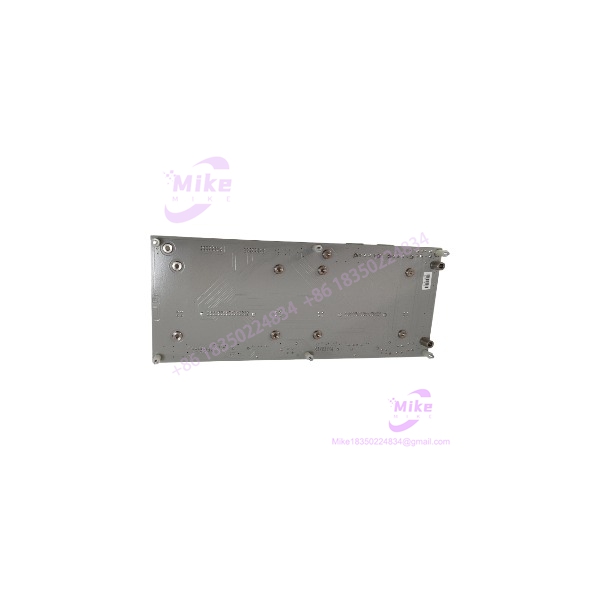
The Eaton MTL F860-CA is the carrier assembly used in the MTL F860 redundant fieldbus power system. It provides the mechanical mounting structure and electrical termination interface for two F801 or F802 power modules, creating an eight-segment fieldbus power solution.
The F860-CA is not an intelligent controller. There is no firmware, PLC logic, or application program inside this assembly. Its importance comes from maintaining the physical integrity of the fieldbus power architecture — segment connections, power module mounting, termination, and rack integration.
Compared with standalone fieldbus power conditioners, the MTL F800 architecture separates the passive carrier from the active power modules. This design reduces unnecessary electronics in the carrier itself, improving long-term maintainability (though the complete fieldbus system still depends on correct power module selection and segment loading).
In field replacements, engineers often focus on the F801/F802 modules and overlook the carrier. That can create unnecessary troubleshooting because damaged terminals, incorrect mounting, or degraded connections inside the IOTA assembly can affect the entire fieldbus segment.
F860-CA
Key Technical Specifications
- Model: F860-CA
- Manufacturer: Eaton MTL
- Product Family: MTL F800 Fieldbus Power System
- Product Type: IOTA carrier / termination assembly
- System Application: Redundant Foundation Fieldbus H1 power distribution
- Supported Power Modules:
- F801: 21.5–24 VDC, 350 mA per segment
- F802: 28–30 VDC, 500 mA per segment
- Fieldbus Segment Capacity: 8 segments
- Network Compatibility:
- IEC 61158-2
- ISA-S50.02
- FOUNDATION Fieldbus H1
- Profibus PA
- FIM IOTA Connections: 16-way multipin connectors using FCAB cables
- Mounting Compatibility: Honeywell Series C I/O mounting channel
- Ingress Protection: IP20 with suitable enclosure protection
- Weight: Approximately 0.92 kg for the carrier assembly
- Operating Environment: Safe-area installation
- Termination: Automatic fieldbus termination arrangement when using supported power modules
Global Sourcing & Live-Test SOP (Transparency Core)
For surplus Eaton MTL F860-CA inventory, testing requires a different approach from electronic modules.
The F860-CA is a passive carrier. The focus is mechanical integrity, electrical continuity, and compatibility with the active F801/F802 modules.
Inbound Verification
Each incoming should receive:
- Exact model verification
- Serial/label recording where available
- Housing inspection
- Terminal inspection
- Connector inspection
- Mounting hardware check
Inspection points:
- Power bus connections
- Field wiring terminals
- Multipin connectors
- Mounting screws
- Signs of overheating or corrosion
Verify that the carrier matches the intended F860 architecture. The is designed specifically as the unpopulated IOTA carrier for systems.
Live Simulation
A practical validation setup should include:
- Compatible F801 or F802 power modules
- 24 VDC supply source
- Fieldbus test segment
- Known-good field devices
- Fieldbus diagnostic equipment
Test sequence:
- Install F801/F802 modules.
- Confirm mechanical seating.
- Verify power distribution.
- Check segment output.
- Confirm fieldbus communication.
Validation checks:
- Segment voltage measurement
- Trunk continuity
- Connector integrity
- Terminator function
- Alarm path verification where configured
Diagnostics
Recommended equipment:
- Fluke multimeter
- Fieldbus analyzer
- Insulation test equipment
- Visual inspection tools
Diagnostic checks:
- Segment voltage stability
- Power module connection
- Bus continuity
- Field wiring integrity
- Connector resistance
Because the contains no control firmware, diagnostic attention should focus on the physical signal path rather than software revision.
Final Preparation
Before shipment:
- Record model information.
- Document inspection results.
- Protect terminals and connectors.
- Package against mechanical shock.
- Maintain inventory traceability.
For fieldbus infrastructure components, preventing connector damage during storage is just as important as the electrical test.
The Field Engineer’s Pitfall Guide
❗ Do not replahe without checking the installed power modules.
The carrier works together with and modules. Mixing incorrect power modules can change segment voltage and current capability. I have seen fieldbus faults traced back to incorrect power module combinations rather than network devices.
❗ Do not assume a passive carrier cannot fail.
A damaged terminal connection or degraded multipin interface can create intermittent communication faults. One loose connection can affect multiple field instruments.
❗ Do not ignore mounting orientation and mechanical installation.
he installation documentation specifies vertical mounting orientation for proper operating conditions. Incorrect cabinet installation can affect thermal performance.
Intent-Driven FAQ
What is the EatTL used for?
The is the passive IOTA carrier assembly used in the MTL redundant fieldbus power system. It provides the mounting and connection structure for / fieldbus power modules.
Dohe contain firmware?
No. The is a passive hardware carrier. It does not contain a processor, application logic, or firmware.
How many fieldbus segments dohe support?
he supports an eight-segment fieldbus power architecture when equipped with the appropriate power modules.
What power modules work wihe ?
The carrier is designed for:
- 21.5–24 VDC, 350 mA modules
- 28–30 VDC, 500 mA modules
Can I replan directly?
Usually, yes, if the replacement matches:
- system architecture
- Mechanical mounting requirements
- Installed / modules
- Field wiring arrangement
he used with hazardous-area field devices?
The family is a fieldbus power system used in industrial process applications. The specific hazardous-area suitability depends on the complete architecture, installed modules, barriers, and certification requirements.
What should be tested before installing ed ?
Recommended checks:
- Terminal inspection
- Connector inspection
- Mechanical integrity
- Power module seating
- Fieldbus segment voltage
- Communication verification
Procurement verdict: The is a lifecycle-support component for existing MTL F800 fieldbus power installations. It is not a programmable device, but its mechanical and electrical integrity directly affects fieldbus availability.
For replacement sourcing, verify carrier compatibility, instalFF802 modules, Honeywell Series C mounting requirements, fieldbus topology, and segment loading calculations before installation.