
Description
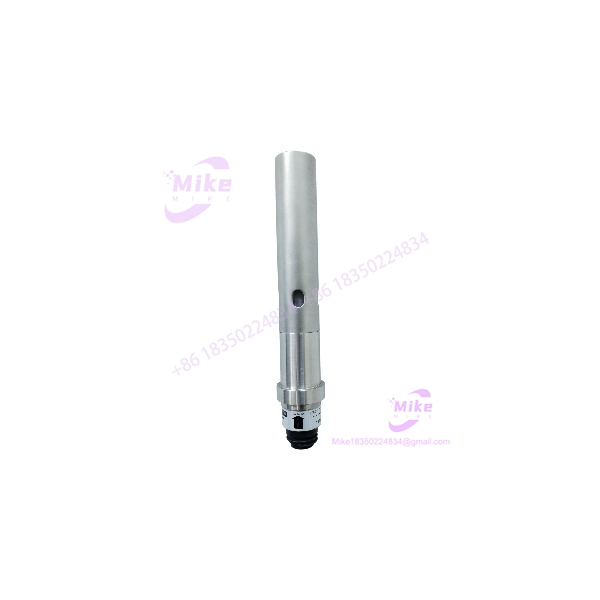
Yokogawa SC41-SP34 | 4-Electrode Stainless Steel Sensor Specs & Manual
Dynamic Product Introduction
Process water quality drops and scaling fouling on two-electrode conductivity sensors frequently corrupt calibration curves, forcing instrument techs into constant re-zeroing cycles. Honestly, when a boiler feed line or wastewater effluent stream drifts off spec because of polarization effects at the electrode surface, process automation loops start dumping expensive treatment chemicals unnecessarily.
The Yokogawa SC41-SP34 eliminates electrode polarization errors by utilizing a true 4-electrode measuring architecture. Designed to interface directly with Yokogawa FLXA21, SC202, and SC450G analytical transmitters, this SC41-SP34 sensor provides precise linear measurement across both low-conductive rinse water and high-salinity process liquids. In field deployments, swapping a fouled or degraded probe with a verified SC41-SP34 restores accurate temperature-compensated conductivity readings without requiring modifications to existing pipe saddles or flow-through fittings.
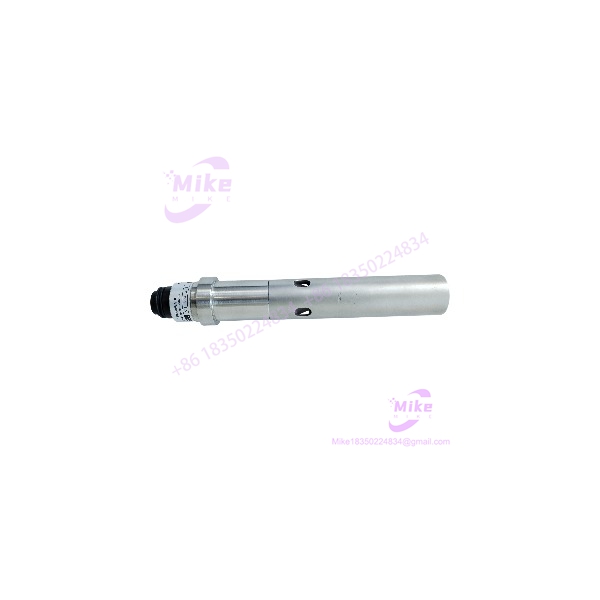
SC41-SP34
Key Technical Specifications
- Cell Constant: Nominal k = 10.0 cm⁻¹ (suitable for wide-range applications from 10 µS/cm to 200 mS/cm)
- Electrode Material: Stainless Steel (316L) / Titanium option
- Body Material: Stainless Steel (316L) with PEEK isolators
- Temperature Sensing Element: Integrated Pt1000 RTD for automatic temperature compensation
- Process Connection: 3/4-inch NPT male thread (pipe or immersion insertion)
- Maximum Operating Pressure: 10 bar (145 psi) at 20°C
- Maximum Operating Temperature: -20°C to +130°C (-4°F to 266°F)
- Cable Connection: Fixed integral cable or VarioPin waterproof connector header
- Ingress Protection: IP68 / NEMA 6P fully submersible rating
Global Sourcing & Live-Test SOP (Transparency Core)
Procuring replacement analytical sensors demands a rigorous verification methodology to guarantee cell accuracy. Inbound shipments of the SC41-SP34 undergo strict customs documentation tracing and serial number audits against Yokogawa factory lot records.
Once checked in, every SC41-SP34 sensor moves to our wet-chemistry calibration bench. Technicians connect the probe to an authentic Yokogawa SC transmitter and immerse the sensor head in NIST-traceable conductivity standard solutions (1,413 µS/cm and 12.88 mS/cm). We conduct a 24-hour thermal cycle while recording Pt1000 RTD resistance curves and current loop output stability. After cell constants and temperature response curves are logged, the sensor tip is cleaned, fitted with a protective cap, and vacuum-sealed in anti-static packaging before dispatch.
The Field Engineer’s Pitfall Guide
❗ Cell Constant & Matrix Mismatch: Swapping an existing k=0.1 cm⁻¹ probe with a k=10.0 cm⁻¹ SC41-SP34 without updating the cell constant in the transmitter configuration menu will cause measurement errors off by two orders of magnitude. I once spent four hours troubleshooting a CIP wash system because a technician installed a replacement probe without updating the analyzer’s cell multiplier factor.
❗ Overtightening NPT Threads: Excessive torque applied to the 3/4-inch NPT stainless steel threads during pipe installation can distort internal PEEK insulation seals, creating micro-leaks that ruin the Pt1000 element. Always use PTFE tape or thread sealant and hand-tighten plus 1.5 turns max with a wrench.
❗ Ground Loop Interferences: Installing the SC41-SP34 probe in ungrounded plastic piping without a solution ground rod creates electrical potential offsets that drift measurement readings. Always verify shield grounding and solution earth continuity at the transmitter terminals before performing a two-point calibration.
Intent-Driven FAQ
Will I need to recalibrate my Yokogawa analyzer after installing a new SC41-SP34? Yes, while the SC41-SP34 ships with factory cell constant data printed on the sensor tag, you must enter the exact k-factor into your transmitter and perform a single-point air-zero calibration for optimal accuracy.
Can the SC41-SP34 be installed directly in high-temperature steam lines? The SC41-SP34 supports process temperatures up to 130°C continuously, but for superheated steam condensate applications above 150°C, high-temperature specialized sensors should be used instead.
Are surplus SC41-SP34 sensors provided with factory calibration certificates? Stock availability includes factory-sealed units in original boxes (NOS) with original inspection sheets as well as bench-tested surplus units. Every SC41-SP34 we distribute undergoes wet-bench calibration testing prior to dispatch.
What causes erratic temperature readings on the transmitter after sensor replacement? Erratic temperature values indicate a broken Pt1000 RTD wire, a loose shield terminal, or moisture ingress inside the VarioPin connector head. Always check resistance across the Pt1000 leads with a multimeter (should read ~1090 ohms at 23°C).
What warranty coverage is included with a replacement SC41-SP34 sensor? Our secondary-market and surplus SC41-SP34 sensors come with a comprehensive 12-month operational warranty covering cell structural integrity, internal RTD functionality, and measurement stability under standard industrial process conditions.