Description
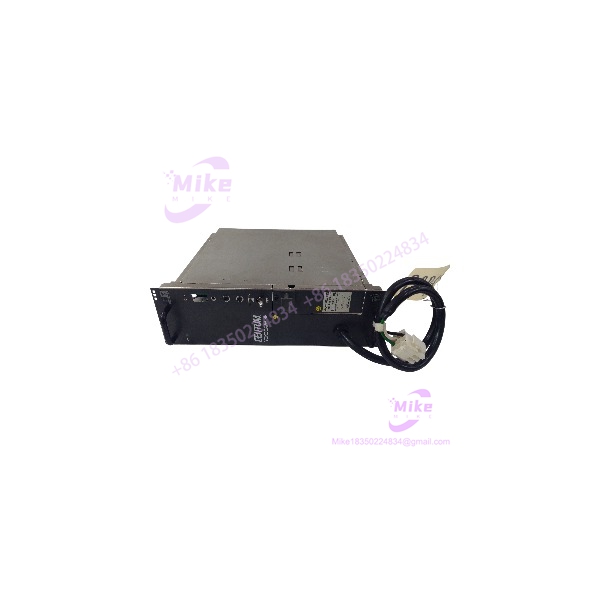
Yokogawa PW301 | CENTUM VP / CS3000 System Power Supply Module
Dynamic Product Introduction
When a primary power supply module fails inside a Yokogawa CENTUM control node, the entire rack risks dropping offline unless a redundant backup takes over instantly. Finding a replacement power supply that maintains strict voltage regulation under heavy electrical transients is critical to preventing spurious plant trips. The Yokogawa PW301 power supply module functions as a core energy distribution unit engineered specifically for CENTUM VP and CS3000 rack architectures.
Designed to accept standard plant power inputs, the PW301 steps down and regulates voltage to deliver stable, low-noise DC power across the node backplane. (Honestly, maintaining clean power rails prevents subtle communication errors between processor cards and remote I/O modules that are notoriously difficult to troubleshoot.) Featuring support for dual-redundant power configurations and hot-swappable replacement, the PW301 ensures continuous uptime for continuous process control cells—though long-term reliability depends heavily on keeping cabinet cooling fans unblocked.
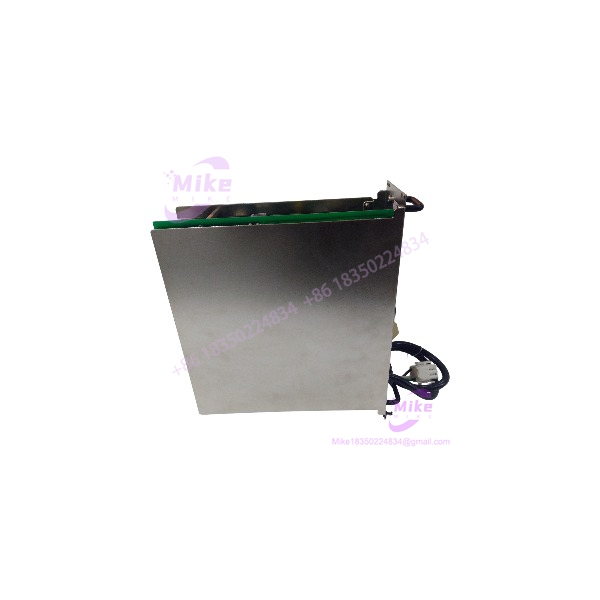
PW301
Key Technical Specifications
- Manufacturer & System Platform: Yokogawa CENTUM VP / CS3000 / ProSafe-RS Architecture
- Module Part Number Variations: PW301 / PW301-10 / -20
- Primary Input Voltage: Standard industrial AC/DC supply voltages depending on node configuration
- Regulated Output Rails: Primary logic 5 VDC rail and auxiliary 24 VDC loop power supply
- Redundancy & Load Sharing: Dual-module parallel operation support for active N+1 redundant power schemes
- Diagnostic Features: Front-panel status LEDs for Power OK, Input Error, and Overload conditions
- Backplane Interface: Heavy-duty edge connector designed for secure rack slot mounting
- Operating Ambient Temperature: 0°C to +50°C (32°F to 122°F) continuous operational envelope
- Enclosure Protection Rating: IP20 modular industrial rack chassis
Global Sourcing & Live-Test SOP (Transparency Core)
Sourcing secondary-market or surplus DCS power supplies requires rigorous electrical validation before installing components into active control loops. Every Yokogawa PW301 unit passing through our inventory undergoes a strict five-stage bench test protocol:
- Inbound Verification: Serial numbers, model suffixes (e.g., -10 or -20), and PCB revision tags are matched against Yokogawa manufacturing records. We inspect terminal blocks for mechanical wear, check backplane connector pins for gold plating integrity, and scan internal electrolytic capacitors for thermal aging.
- Live Simulation: The PW301 module is racked into an authentic CENTUM node test bench powered by a variable utility line supply.
- Diagnostics & Load Regulation: Electronic dummy loads are applied simultaneously across all output rails. Using a Fluke 87V digital multimeter and an oscilloscope, we confirm that output voltage regulation stays within strict ±1% tolerances and peak-to-peak AC ripple remains under factory millivolt limits at 100% full load.
- Redundancy Switchover Test: In dual-rack setups, primary power is cut to verify that a redundant partner module assumes total load sharing instantaneously without dipping backplane logic voltages.
- Final Prep: Terminal screws are secured, calibration test data sheets are attached, and the PW301 is sealed inside anti-static moisture-barrier packaging.
The Field Engineer’s Pitfall Guide
❗ Exceeding Backplane Current Budgets with High-Density I/O Cards: While the PW301 provides ample power for standard node configurations, packing a rack with high-density digital and analog I/O cards or HART-enabled field transmitters can push the supply near its thermal limit. Exceeding rated capacity causes foldback current limiting, leading to mysterious CPU brownouts.
❗ Hot-Swapping Without Verifying Redundant Partner Status: Although the PW301 supports hot-swapping in redundant chassis arrangements, pulling a failed supply without verifying that the adjacent partner module reads “ONLINE / READY” on your CENTUM engineering station will instantly drop the node backplane and trip process loops.
❗ Neglecting Periodic Dust Clearance on Ventilation Grills: Mounting the PW301 in tightly sealed enclosures without checking cabinet filter cleanliness traps internal heat. Over time, elevated operating temperatures dry out internal electrolytic smoothing capacitors, resulting in sudden output voltage sags.
Intent-Driven FAQ
Q: Can the PW301 module operate as a standalone single power supply, or must it be used in pairs? It can operate entirely as a standalone single power supply in non-redundant node chassis. However, matching it with a second PW301 module in adjacent slots establishes an active N+1 redundant power configuration for high-availability loops.
Q: What do the front-panel status LEDs indicate on the PW301? The LED indicators provide immediate visual health diagnostics: a green Power OK light indicates normal voltage output across all rails, while unlit or red indicators point to an input line failure, internal fuse blowout, or thermal overload trip.
Q: Is the PW301 compatible across both CENTUM CS3000 and CENTUM VP systems? Yes. The PW301 power supply series is engineered for seamless cross-generation compatibility within Yokogawa node chassis families, though you should always verify exact suffix codes (e.g., -10 vs -20) against your hardware manual.
Q: Does the PW301 require software configuration or programming? No. The PW301 is a pure hardware power conversion and distribution module. It operates independently of the control software, requiring no firmware downloads or software address assignments.
Q: What should I check first if a newly installed PW301 fails to output backplane power? First, measure the incoming primary voltage at the terminal connections to ensure it falls within operational tolerances. Next, verify that the module is firmly pushed home into the backplane edge connector and that the module’s internal input fuse has not blown due to an upstream transient surge.