


Description
Watlow Anafaze CLS208 | 8-Loop Temperature and Process Controller Core Category
Dynamic Product Introduction
Complex thermal processing applications often require scaling up zone control without expanding physical panel footprints or wiring complicated nests of single-loop controllers. The CLS208 solves this high-density thermal challenge by doubling loop capacity, packing eight independent PID control loops into the same robust chassis design as its smaller counterparts. Rather than forcing engineers to coordinate multiple physical devices, this CLS208 unit manages local loop execution, alarm monitoring, and multi-zone thermal profiles simultaneously while centralizing communication back to the supervisory station.
Maintaining legacy heat-treating ovens, multi-zone extrusion lines, or semiconductor processing machinery without undergoing a costly control system redesign relies heavily on sourcing reliable, drop-in hardware like the CLS208. Whether replacing a failing unit in an active panel or supporting mature thermal architectures, it delivers stable, synchronized loop execution.
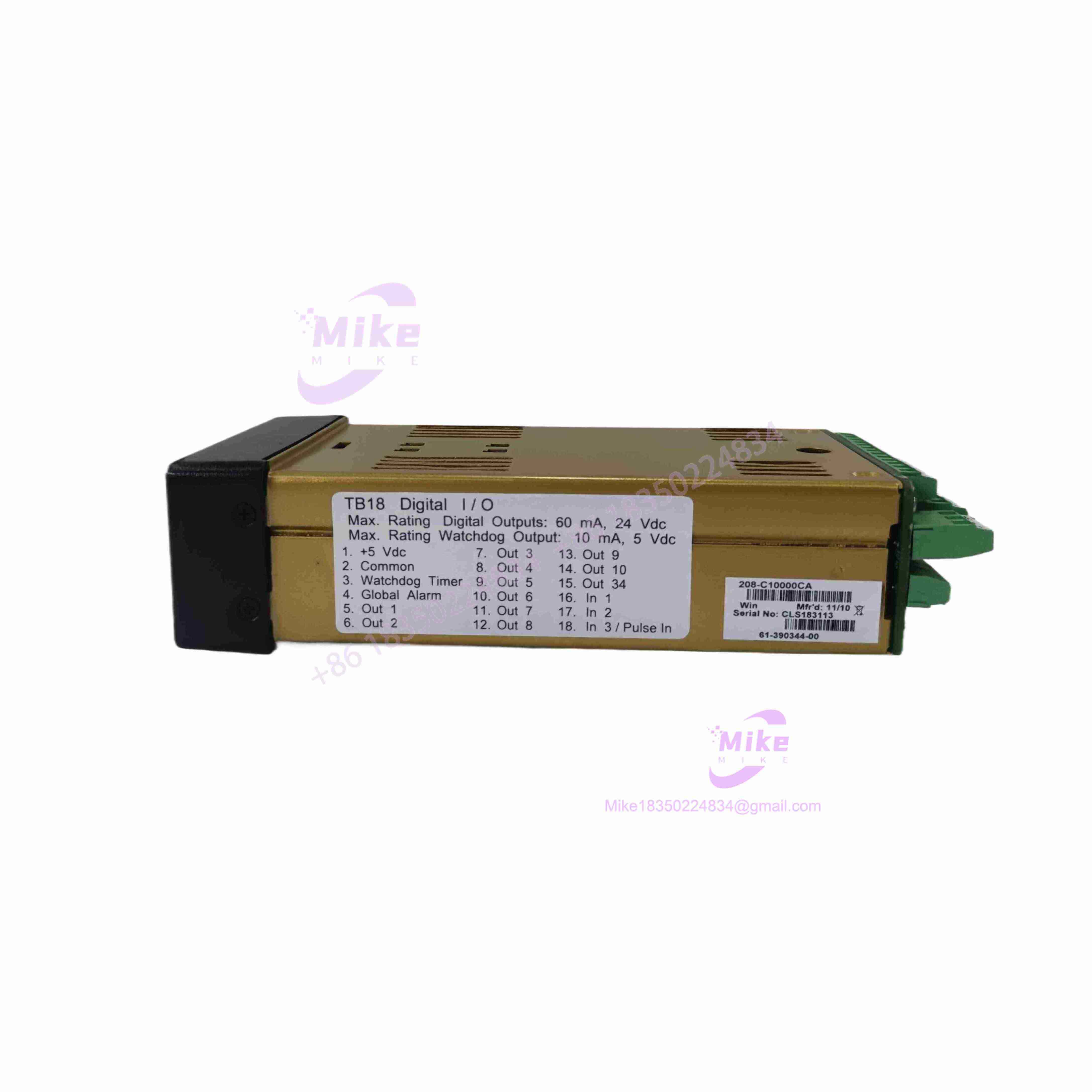
CLS208
Key Technical Specifications
| Core Parameter | Technical Specification |
| Number of Control Loops | 8 independent PID control loops |
| Input Types | Thermocouple (J, K, T, E, R, S), RTD (100 \Omega platinum), voltage, and current |
| Control Outputs | Time proportioning, DC voltage, current, or mechanical relay (dependent on installed option cards) |
| Communication Interface | RS-485 serial port supporting Anafaze or Modbus protocol |
| Display / Interface | Front-panel LED display with multi-zone status tracking and keypad input |
| Power Supply Requirements | 100 to 240 VAC, 50/60 Hz (or 24 VDC auxiliary variants) |
| Operating Temperature | 0 °C to 50 °C (32 °F to 122 °F) |
| Mounting Style | Panel mount enclosure (standard industrial cutout) |
| Part Number | CLS208 |
Global Sourcing & Live-Test SOP (Transparency Core)
Acquiring obsolete multi-loop controllers from secondary-market inventory requires rigorous verification of analog input precision and communication stability across all active channels. Every pre-owned CLS208 unit undergoes an uncompromising evaluation routine:
- Inbound Verification: Technicians inspect the panel-mount housing for structural integrity, examine rear terminal blocks for corrosion, and verify serial identification plates against original Watlow Anafaze production records.
- Live Simulation: The is mounted to a specialized testing bench, connected to a regulated power supply, and hooked up to a calibrated multi-channel thermocouple simulator.
- Diagnostics: Engineers inject known millivolt and resistance values across all eight input channels to verify temperature conversion accuracy, test PID switching speeds across every output tier, and validate RS-485 command polling integrity. Units undergo a thermal burn-in cycle to expose latent component drift.
- Final Prep: Internal volatile memory is cleared of custom user configurations, a calibration QA sticker is applied, and the unit is sealed inside an antistatic moisture-barrier bag.
The Field Engineer’s Pitfall Guide
- ❗ Thermocouple Ground Loop Interferences: Running unshielded thermocouple extension wire parallel to high-voltage AC motor cables near the introduces electrical noise that causes erratic PV jumping across multiple zones. (—though proper single-point shield grounding solves the issue instantly.) I’ve seen plant technicians chase phantom temperature spikes for days when the root cause was an ungrounded shield wire shared across a high-density bus.
- ❗ RS-485 Polarity Reversal: Reversing the positive and negative data lines on the serial terminal strip will cause complete communication dropouts across your entire SCADA polling network.
- ❗ High-Density Output Option Board Mismatches: Assuming all units share identical output hardware configurations can lead to wiring errors across eight distinct channels; always verify whether your specific unit utilizes relay, DC pulse, or analog current output option cards before landing field wires.
Intent-Driven FAQ
Will swapping a faulty controller erase my tuning parameters and setpoints?
Yes, if volatile memory is lost or if the unit is unpowered for an extended period without a healthy backup battery. Custom PID tuning constants, alarm thresholds, and loop configurations should be backed up using configuration software before hardware replacement.
Can I communicate with this 8-loop controller using standard Modbus protocol?
Depending on the specific firmware version and communication board option installed, the supports serial communication protocols like Anafaze ASCII or Modbus, allowing integration into third-party human-machine interfaces (HMIs).
What sensor types are compatible with the eight input channels on the ?
The controller accepts a wide range of industrial sensors, including standard thermocouples (such as J and K types) and 100-ohm platinum RTDs, configurable via front-panel programming or software commands.
How do I handle an occasional sensor break error (S.Brk) on the display for upper-tier loops?
An S.Brk error indicates an open circuit on a primary sensor input. Inspect the thermocouple wire, terminal connections, and sensor probe integrity for physical breaks or loose clamping screws on the specific loop channel flagged.
What kind of warranty covers surplus or pre-owned Watlow Anafaze units?
Reputable industrial automation suppliers back verified secondary-market controllers with a dependable 1-year operational warranty covering internal microprocessor health, power regulation, and multi-channel input signal processing circuitry.
Are you configuring all eight loops on this controller for synchronous multi-zone heating, or are you splitting them across independent thermal processes?





