


Description
Photonetics GN Nettest 3646HE1540 | Tunics-OM Tunable Laser Source
Product Introduction
When characterizing dense wavelength division multiplexing (DWDM) components or optical amplifiers, signal drift or broad linewidths will instantly compromise test data integrity. The Photonetics GN Nettest 3646HE1540 is not a standard fixed-wavelength source; it is a precision tunable laser module engineered specifically for the Tunics-OM optical test ecosystem. It acts as a stable, high-purity optical signal generator designed for rigorous laboratory and production environments.
Built around a precision external-cavity laser design, this module sweeps seamlessly across the 1500 nm to 1570 nm spectrum while maintaining strict output power stability. It handles sensitive optical testing—withstanding ambient bench operating conditions up to 40^\circC—without degrading side-mode suppression or wavelength accuracy. If you are maintaining legacy optical test racks or replacing a failed laser module, this unit slides straight into compatible mainframe chassis slots.
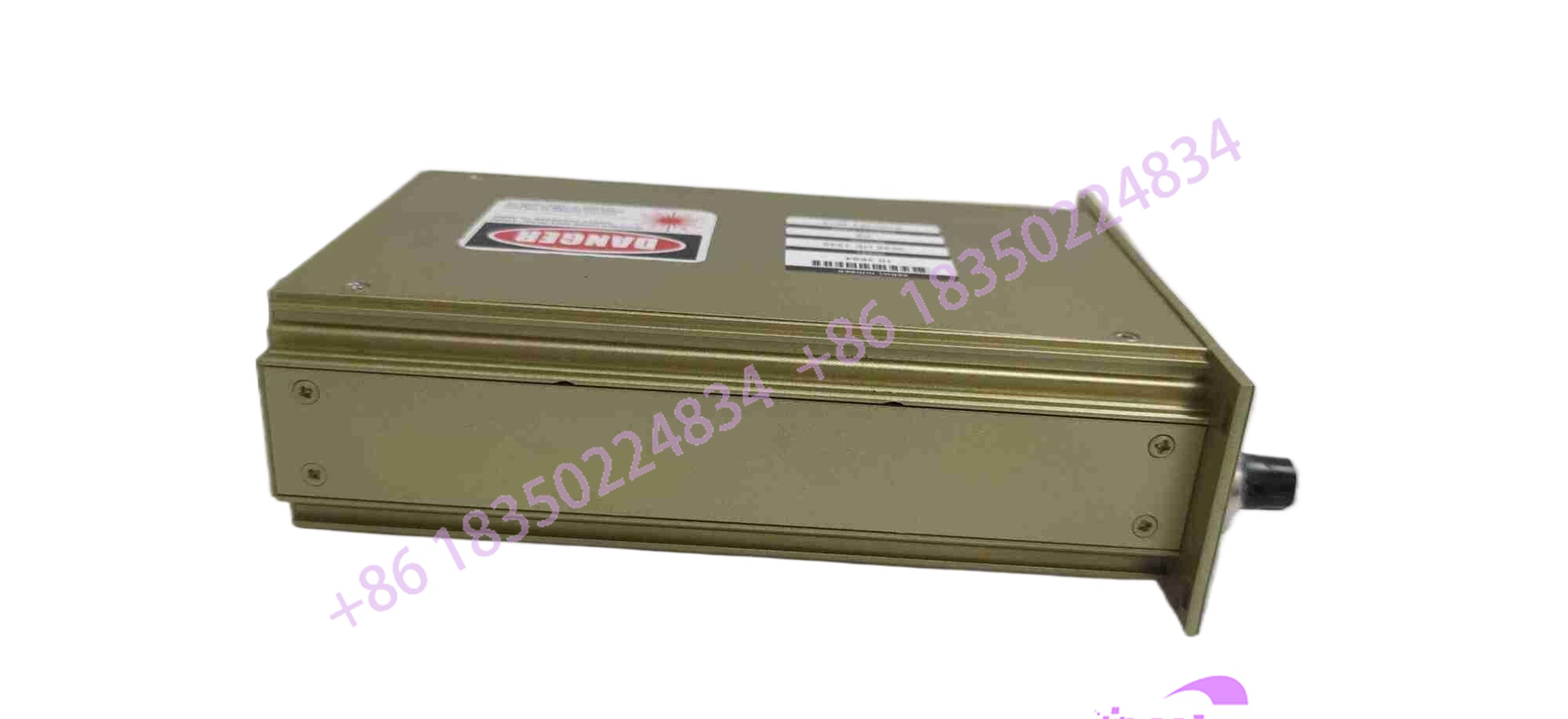
3646HE1540
Key Technical Specifications
| Parameter | Specification Metric |
| Device Category | Tunable Laser Source (TLS) Module |
| System Compatibility | Photonetics / GN Nettest Tunics-OM Platform |
| Wavelength Tuning Range | 1500 nm to 1570 nm (Option P6 variants up to 1520–1570 nm) |
| Wavelength Resolution | 0.01 nm typical |
| Optical Output Level | 0 dBm standard (Up to +6 dBm for Option P6) |
| Optical Power Stability | \pm 0.01 dB |
| Compatible Fiber Type | Standard Single-Mode Fiber (SMF-28) |
| Operating Temperature | 15^\circC to 40^\circC laboratory environment |
| Interface Architecture | Mainframe-controlled plug-in module slot |
Application Scenarios & Pain Points
- DWDM Component Characterization: Testing multi-channel optical multiplexers and filters requires continuous, repeatable wavelength sweeps. The 3646HE1540 provides fine 0.01 nm resolution steps, eliminating the blind spots common with fixed-wavelength sources.
- Erbium-Doped Fiber Amplifier (EDFA) Testing: Amplifier gain profiling demands absolute power stability over extended testing cycles. The module’s \pm 0.01 dB power stability prevents baseline drift during long test sequences.
- Fiber Optic Cable Plant Loss Profiling: Telecommunication labs verifying insertion loss across legacy single-mode fiber links rely on the clean, narrow-linewidth spectral output of this laser source to avoid chromatic dispersion errors.
QA & Live Testing SOP (Trust Signal)
We don’t warehouse precision optical equipment without verifying output power and wavelength accuracy; every 3646HE1540 unit goes through our optical bench test protocol:
- Visual & Optical Connector Audit: Inspected under magnification for cleanliness on the internal optical pigtail and front bulkhead connectors, ensuring zero back-reflection or physical contamination.
- Dynamic Mainframe Integration: Slotted into a live Tunics-OM test mainframe to verify proper communication handshakes, module recognition, and internal mechanical tuning integrity.
- Power & Wavelength Sweep Verification: Connected to a calibrated Optical Spectrum Analyzer (OSA) and optical power meter to confirm that the laser sweeps cleanly across the 1500–1570 nm range while hitting specified output levels (0 dBm / +6 dBm).
- Protective Packaging: Sealed inside anti-static shielding and suspended in custom high-density structural foam to protect the delicate optical cavity from shock during transit.
Field Engineer’s Pitfall Guide
- ❗ Optical Connector Cleanliness: Never connect a dirty jumper cable to the module bulkhead. Microscopic dust particles on the physical contact face will burn under laser power, permanently pitting the output receptacle.
- ❗ Mainframe Power Sequencing: Always power down the host Tunics chassis completely before inserting or extracting the 3646HE1540 module to prevent electrical bus spikes from damaging onboard control logic.
- ❗ Electrostatic Discharge (ESD) Handling: Avoid touching exposed pins on the rear module interface; always use proper ESD grounding protocols when handling optical subassemblies.
Intent-Driven FAQ
Is the Photonetics 3646HE1540 compatible with all Tunics-OM mainframes?
Yes. It is designed to slide directly into compatible Photonetics and GN Nettest Tunics-OM chassis architectures, though you should verify that your mainframe firmware supports this specific wavelength band configuration.
Does this module require an external controller or software?
It relies on the host Tunics-OM mainframe for power, command processing, and user interface controls, though it can be automated remotely via standard instrument command sets.
What causes a “Laser Fault” or tuning error upon startup?
Usually, this indicates that the internal mechanical cavity is failing to lock, the laser is overheating due to blocked chassis ventilation, or the safety interlock loop is open. Allow the unit to thermalize and check your chassis airflow.
Can this laser source handle polarization-sensitive testing?
While it outputs standard single-mode light (SMF-28 compatible), maintaining specific polarization states downstream requires an external polarization controller, as standard modules do not feature integrated PM-fiber outputs unless specified by a custom factory option.
What kind of warranty covers this surplus optical module?
Every unit is backed by our comprehensive replacement guarantee, supported by multi-point optical bench testing to verify output power and tuning accuracy prior to shipment.





