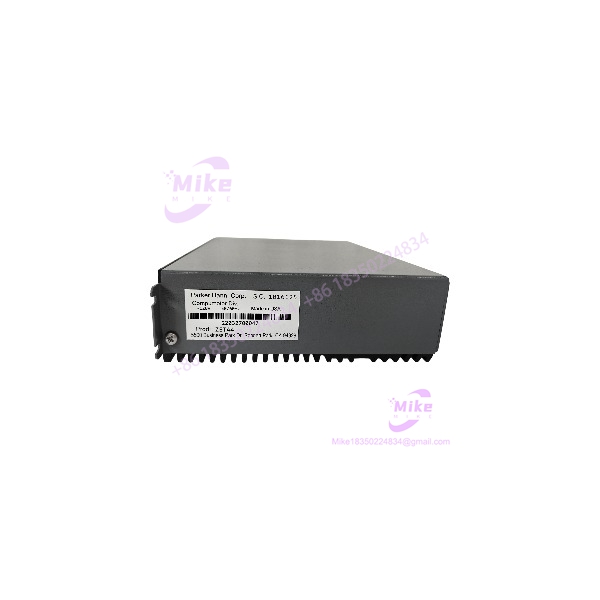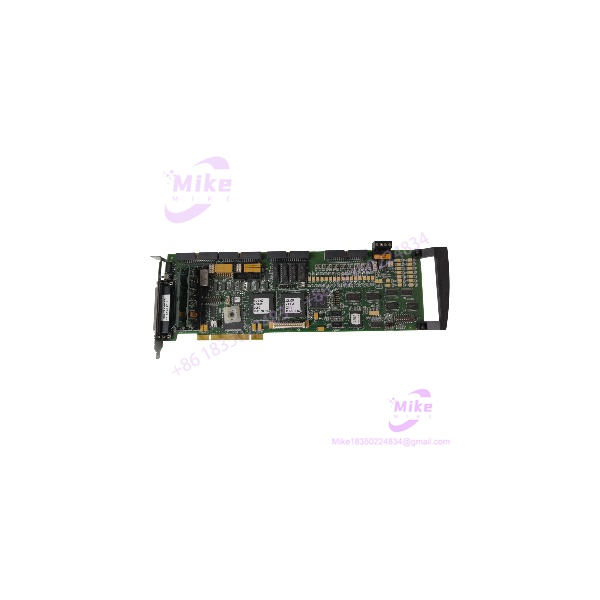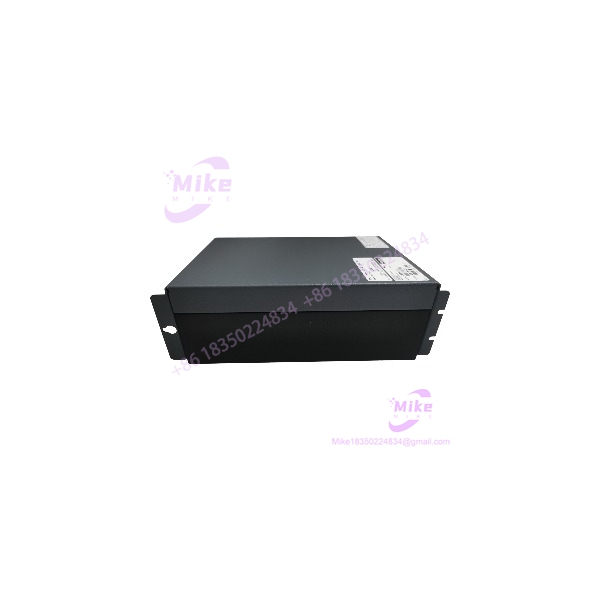
Description
Parker ZETA6104 | Direct Replacement 4A Microstepping Drive
Dynamic Product Introduction
In automated assembly lines, precision positioning stages, and indexing machinery, step motor resonance and mid-band instability can lead to lost steps, high audible noise, and long settling times. Standard open-loop stepper drives often require oversizing the motor just to prevent stalls during velocity ramps. The Parker Compumotor ZETA6104 solves these microstepping performance limits by integrating Parker’s Active Damping™ and Electronic Viscosity™ circuitry directly into a single-axis drive/indexer unit.
Powered directly by standard 120 VAC line power, the ZETA6104 houses a 6000 Series motion controller alongside a 4.0 A_{pk} microstepping amplifier. It provides programmable motion trajectories, conditional branching, and variable storage stored within non-volatile memory. (Honestly, offloading complex trajectory execution to the ZETA6104 via simple RS-232/485 serial commands frees up your main PLC or IPC while dramatically smoothing out low-speed motor operation.) Built with flexible I/O ports for homing, limit switches, and position capture, the ZETA6104 delivers exceptional torque and accuracy—though maintaining optimal performance requires setting the onboard DIP switches to match motor current and inductance.
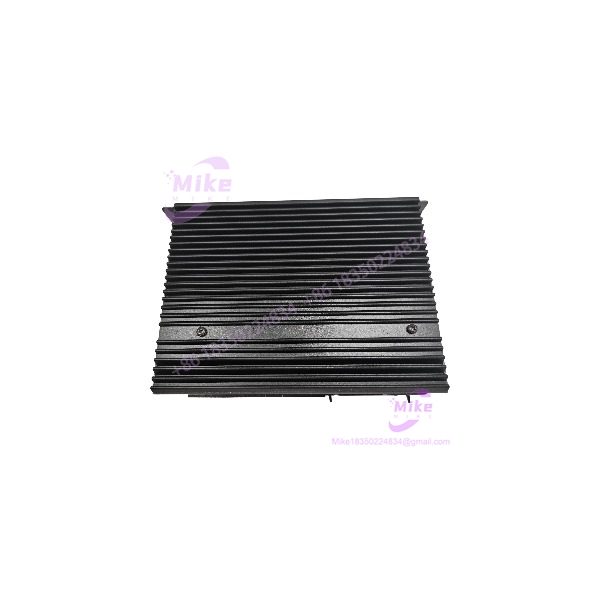
ZETA6104
Key Technical Specifications
- Manufacturer & Controller Series: Parker Hannifin (Compumotor) / ZETA 6000 Platform
- Part Number: ZETA6104
- AC Input Power: 95–132 VAC single-phase, 50/60 Hz
- Amplifier Output Current: Continuous 2.8 A_{rms} (4.0 A_{pk})
- Microstep Resolution: Selectable up to 50,800 steps/revolution
- Onboard Controller: Built-in 6000 Series command language processor with 150 KB non-volatile program memory
- System I/O:
- 16 General-Purpose Programmable Inputs
- 8 General-Purpose Outputs + 1 Auxiliary Output
- 2 Fast Trigger Inputs (sub-millisecond position capture/registration)
- Dedicated Home, Positive Limit, and Negative Limit inputs
- Feedback Interface: Differential or single-ended incremental encoder input (supports stall detect and position maintenance)
- Communication Ports: RS-232C (COM1) and configurable RS-232C/RS-485 (COM2)
- Operating Ambient Temperature: 0°C to +45°C (32°F to 113°F)
Global Sourcing & Live-Test SOP (Transparency Core)
Procuring secondary-market or legacy Parker motion control hardware requires rigorous bench verification before installing units back into production lines. Every ZETA6104 drive/indexer passing through our inventory undergoes a strict five-stage qualification process:
- Inbound Visual & Switch Verification: Part number tags, board revision silk screens, and DIP switch settings (motor current, address, autobaud) are verified against factory standards. We inspect terminal blocks, cooling heatsinks, and internal capacitors for thermal stress.
- Power-Up & Diagnostic Check: The ZETA6104 is connected to a 120 VAC power source. Front-panel diagnostic LEDs (Power, Drive Fault, Step, etc.) are monitored to verify proper internal boot-up and power-on self-tests.
- Serial Communication Test: Using Motion Architect or a terminal emulator via RS-232 (and RS-485 mode), communications are established to query drive status (
TEST,TAS,TIN) and verify non-volatile program memory read/write functions. - Motion & Active Damping Bench Test: The drive is connected to a compatible 2-phase hybrid stepper motor and incremental encoder. Automated motion scripts execute rapid acceleration profiles, homing sequences, and low-speed sweeps to confirm that Active Damping™ and Electronic Viscosity™ correctly eliminate system resonance.
- I/O & Safety Loop Validation: Trigger inputs, limit switches, and output relays are exercised to ensure opto-isolators operate within specifications.
- Final Prep: Non-volatile memory is cleared of custom user test code, DIP switches are returned to baseline defaults, and the ZETA6104 is vacuum-sealed inside anti-static moisture-barrier packaging.
The Field Engineer’s Pitfall Guide
❗ Mismatched Motor Current Settings via DIP Switches: Operating the ZETA6104 with internal DIP switches set to a current higher than the motor’s rated capacity will rapidly overheat the stepper windings, burning out insulation. Always calculate the motor’s continuous peak current and adjust the drive’s motor current DIP switches accordingly before applying high voltage.
❗ Confusing the Standard 120VAC ZETA6104 with the 240VAC Model: Standard ZETA6104 models operate strictly on 95–132 VAC. Applying 230/240 VAC to a standard 120V ZETA6104 unit will instantly destroy the internal power supply section. Always verify if your unit is a standard ZETA6104 (120V) or a ZETA6104-240 (wide-range 95–264 VAC) prior to wiring.
❗ Incorrect AUX-P / IN-P Sinking and Sourcing I/O Wiring:The general-purpose inputs and outputs on the ZETA6104 are optically isolated. Failing to properly connect the IN-P or OUT-P power pull-up reference terminals to +5VDC or an external 5–24VDC power supply will cause programmable inputs or outputs to remain inoperative.
Intent-Driven FAQ
Q: What is the primary difference between a standard ZETA Drive (e.g., ZETA4) and the ZETA6104? The standard ZETA drive is purely a power amplifier that accepts external Step and Direction pulse commands. The ZETA6104 is an integrated drive and controller (indexer) that contains an onboard processor running Parker’s 6000 programming language, allowing it to run standalone motion routines without requiring an external indexer card.
Q: What software do I use to program and configure the ZETA6104?The ZETA6104 is programmed using Parker’s Motion Architect™ software (or standard terminal software like HyperTerminal) to send 6000 Series commands. Parker also provides DLL libraries for custom Windows applications.
Q: Can the ZETA6104 operate closed-loop with an encoder?Yes. While the ZETA6104 drives two-phase stepper motors, connecting an optional quadrature encoder allows the internal 6000 controller to execute Stall Detect and Position Maintenance algorithms to correct for position deviations.
Q: What is the purpose of Active Damping on the ZETA6104?Active Damping™ is an electronic control circuit within the ZETA drive that increases system damping ratios up to 0.5. This suppresses mid-band resonance, allows higher acceleration rates, reduces acoustic noise, and maximizes usable motor torque.
Q: How do I change the secondary serial port (COM2) from RS-232 to RS-485?The COM2 port configuration is changed by opening the drive cover and adjusting internal hardware jumpers (such as JU6) or setting onboard DIP switches according to the ZETA6104 Installation Manual.