

Description
NEC FC-9801F | 32-Bit Industrial Computer
Dynamic Product Introduction
Replacing an FC-9801F is not the same job as replacing a modern industrial PC. The real problem is usually not processor performance—it is preserving an old software and hardware environment that was designed around the NEC PC-9800 architecture. The NEC FC-9801F was introduced in October 1992, with model 1 and model 2 configurations, and NEC officially ended production in August 1998 and maintenance in August 2004.
That makes the FC-9801F a legacy continuity component, not a candidate for a casual PC upgrade. The platform is associated with an i386SX 20 MHz processor and approximately 1.6 MB standard memory, expandable to about 14.6 MB according to historical hardware references.
In a production environment, that distinction matters. A modern x86 computer may be thousands of times faster, yet still fail the replacement test if the original application expects PC-9800 hardware behavior, legacy expansion cards, particular disk interfaces, or DOS-era software timing. When the objective is keeping an existing machine operational, matching the original FC-9801F configuration can be considerably less disruptive than redesigning the control architecture.
NEC documentation also identifies dedicated accessories and expansion hardware for the FC-9801F family, including FC-9801F-HD1, FC-9801F-HD2, FC-9801F-RF1, FC-9801F-RF1K, FC-9801F-RF2, and the FC-9801F-01/02 expansion boards.
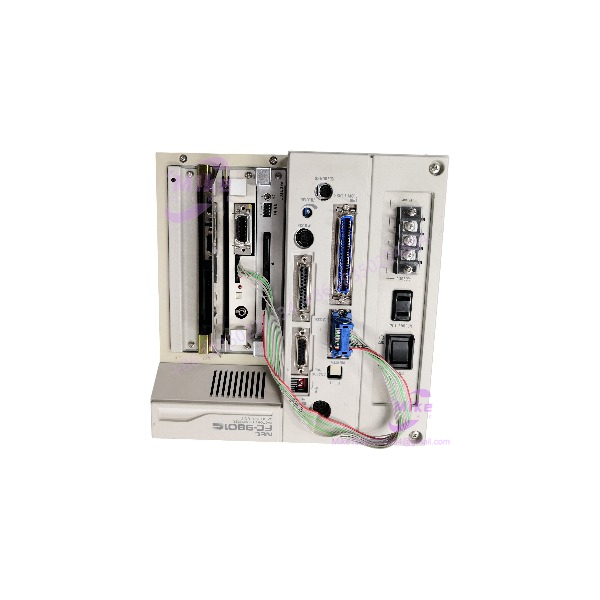
FC-9801F
Key Technical Specifications
- Manufacturer: NEC
- Model: FC-9801F
- Configuration: Model 1 / Model 2
- Product class: NEC factory computer / industrial computer
- CPU: i386SX, 20 MHz class
- Standard memory: Approximately 1.6 MB
- Maximum memory: Approximately 14.6 MB, depending on installed memory configuration
- System architecture: NEC PC-9800 compatible factory-computer architecture
- Expansion: Dedicated expansion slots for legacy industrial and system boards
- Storage options: FC-9801F-series SCSI hard-disk and RAM-file options were available
- Related storage: FC-9801F-HD1, 100 MB SCSI; FC-9801F-HD2, 720 MB SCSI
- RAM-file options: FC-9801F-RF1, FC-9801F-RF1K, and FC-9801F-RF2
- Production status: Discontinued
- OEM maintenance: NEC lists August 2004 as the end of maintenance for FC-9801F/1 and FC-9801F/2.
One procurement warning: do not treat every FC-9801F listing as electrically or mechanically identical. Model 1 and model 2 should be matched against the failed unit’s identification plate, installed expansion hardware, storage configuration, and software environment before purchase.
Global Sourcing & Live-Test SOP
For a discontinued NEC FC-9801F, provenance and functional testing matter more than cosmetic condition.
Inbound Verification
First, I would record the chassis model, model suffix, serial number, board markings, and installed expansion cards before applying power. The serial and identification information should be compared against the seller’s photographs and procurement documentation.
The historical accessory ecosystem is also checked. NEC specifically lists FC-9801F-specific storage and expansion hardware, including the FC-9801F-HD1, FC-9801F-HD2, FC-9801F-RF1K/RF2, and FC-9801F-01/02 boards. A unit containing unexpected modern replacement hardware deserves additional scrutiny.
Live Simulation
The correct test is not simply “power LED comes on.”
A proper incoming inspection should include:
- AC input and power-supply inspection
- POST / startup verification
- Memory recognition
- Floppy-drive operation where fitted
- Hard-disk detection where fitted
- Expansion-board recognition
- Keyboard and display operation
- Serial-port communication where the installed application requires it
- Extended operating test under representative load
For a legacy production computer, the most valuable test is running the actual application environment or a verified system image—not installing a contemporary operating system and declaring the hardware good.
Diagnostics
Use a calibrated multimeter to check supply rails and investigate abnormal ripple or voltage drift. Inspect electrolytic capacitors, connectors, fans, socketed ICs, battery-backed memory devices, and SCSI cabling.
Where a serial-controlled instrument is involved, validate the actual baud rate, parity, stop bits, and handshake behavior. Do not assume a modern USB-to-serial adapter is equivalent to the original interface.
Final Prep
Before shipment, record:
- BIOS / system configuration where applicable
- Installed memory
- Storage type and capacity
- Expansion-board configuration
- Serial-port settings
- Boot behavior
- Any known application dependencies
The unit should then be packaged in ESD-safe material with mechanical protection around the chassis and storage devices.
Honestly, with a machine this old, “tested” needs to mean something specific. A unit that merely reaches a startup screen is not equivalent to one that has successfully booted its intended application and completed an extended operating test.
The Field Engineer’s Pitfall Guide
❗ Firmware / Software Environment Mismatch
Do not apply the modern-PLC mindset of simply loading a newer firmware image. The FC-9801F belongs to an older PC architecture where application compatibility, DOS environment, drivers, memory configuration, and expansion hardware can determine whether the machine actually performs its intended job.
I’ve seen legacy production systems lose days because a replacement computer technically booted but could not execute the original control application correctly.
❗ Storage Configuration Is Part of the Replacement
A matching chassis does not automatically mean a matching storage system.
NEC documented dedicated FC-9801F storage options, including 100 MB and 720 MB SCSI configurations. Replacing the computer while retaining an incompatible disk controller, cable arrangement, or disk image can turn a straightforward hardware swap into a recovery project.
Before removing the original unit, document the disk type, controller board, cable routing, termination, and boot configuration.
❗ Model 1 / Model 2 Must Be Verified
The designation FC-9801F alone is not enough for a high-confidence replacement.
NEC lists both FC-9801F/1 and FC-9801F/2 as separate factory-computer configurations. Check the exact suffix and installed hardware before ordering.
A seemingly identical chassis can contain a different drive configuration or expansion arrangement. If the machine is part of semiconductor equipment, inspection equipment, or an automated production station, photograph every installed board before the swap.
Intent-Driven FAQ
Is the NEC FC-9801F still manufactured?
No. NEC records the FC-9801F/1 and FC-9801F/2 as discontinued in August 1998, with maintenance ending in August 2004. Current procurement therefore depends on surplus, used, refurbished, or recovered inventory rather than normal OEM production.
Can I replace an FC-9801F with a modern industrial PC?
Technically, sometimes. Operationally, that is a different project.
If the existing application depends on PC-9800 hardware, legacy expansion cards, DOS software, proprietary interfaces, or specific disk behavior, a modern PC requires software and hardware migration work. If production continuity is the immediate objective, a tested FC-9801F replacement is usually the lower-risk path.
Will an FC-9801F replacement preserve my existing program?
Only if the original storage media or system image is preserved and the replacement hardware supports the same software environment.
Do not assume the program resides entirely on the computer motherboard. Backup the original disk before removing the failed computer whenever the storage device remains readable.
Can I hot-swap the FC-9801F?
No. Treat the FC-9801F as a conventional powered-down industrial computer unless the specific installation documentation explicitly provides another procedure.
Disconnect AC power, allow the power supply to discharge, document cabling, and use ESD precautions before removing expansion boards or internal storage.
Can I use a standard modern hard drive?
Do not assume compatibility. The original platform used legacy storage technologies, and NEC documented FC-9801F SCSI storage options.
If the existing disk is still functional, cloning or imaging it before replacement is generally preferable to experimenting with a new storage device during a production outage.
Is the FC-9801F suitable as a new control-system computer?
Not for a new system design unless there is a very specific legacy-compatibility requirement.
The FC-9801F is best viewed as a maintenance and continuity component for existing equipment. For a greenfield control architecture, modern industrial PCs or PLC/DCS platforms offer far better supportability and lifecycle options.
What warranty should I expect when buying a surplus FC-9801F?
Warranty coverage is determined by the individual seller and should be stated in writing before purchase. For this discontinued platform, ask specifically whether the warranty covers POST/startup, display output, storage operation, expansion-card functionality, and return shipping, rather than accepting a vague “tested” statement.
For procurement, I would also request photographs of the actual FC-9801F, its identification label, installed expansion cards, storage configuration, and startup screen before releasing a purchase order.





