

Description
MOXA ICF-1280I-M-ST-T | PROFIBUS Fiber Optic Converter
Product Introduction
Long copper PROFIBUS runs can introduce distance limitations and expose communication networks to electrical interference. The MOXA ICF-1280I-M-ST-T converts PROFIBUS DP signals to multimode optical fiber, extending the communication path while adding galvanic isolation between the PROFIBUS interface and the converter’s internal circuitry.
This specific model uses ST multimode fiber connectors and is rated for -40°C to 75°C operation. It supports PROFIBUS data rates up to 12 Mbps, automatic baudrate detection, redundant fiber ring capability, and dual power inputs. For industrial maintenance teams, the ICF-1280I-M-ST-T is a network-interface component—not an Ethernet media converter. Confirm fiber type, connector, optical path budget, and redundancy topology before selecting it as a replacement.
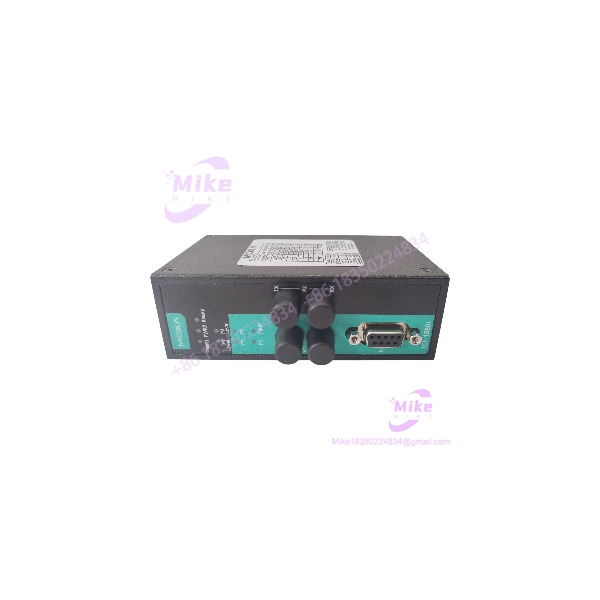
ICF-1280I-M-ST-T
Key Technical Specifications
- Model: ICF-1280I-M-ST-T
- Manufacturer: MOXA
- Device Category: Fieldbus-to-fiber converter
- Supported Protocol: PROFIBUS DP
- Copper Interface: 1 female DB9 PROFIBUS port
- Supported Baud Rates: 9,600 bps to 12 Mbps
- Baudrate Detection: Automatic
- Fiber Interface: 100BaseFX optical interface
- Fiber Type: Multimode
- Fiber Connector: ST, dual connectors
- Optical Wavelength: 820 nm
- Transmit Output: -14 dBm
- Receiver Sensitivity: -28 dBm
- Optical Link Budget: 14 dB
- Typical Fiber Distance: Up to 4 km, subject to fiber quality and link conditions
- Redundancy: Supports redundant fiber ring architecture
- Isolation: 2 kV built-in galvanic isolation
- Power Input: 12–48 VDC
- Power Inputs: Dual, for redundant power supply arrangements
- Input Current: 370 mA at 12–48 VDC
- Protection: Overload current protection
- Housing: Metal
- Ingress Protection: IP30
- Dimensions: 39 × 115 × 70 mm (1.54 × 4.53 × 2.76 in)
- Weight: Approximately 225 g (0.49 lb)
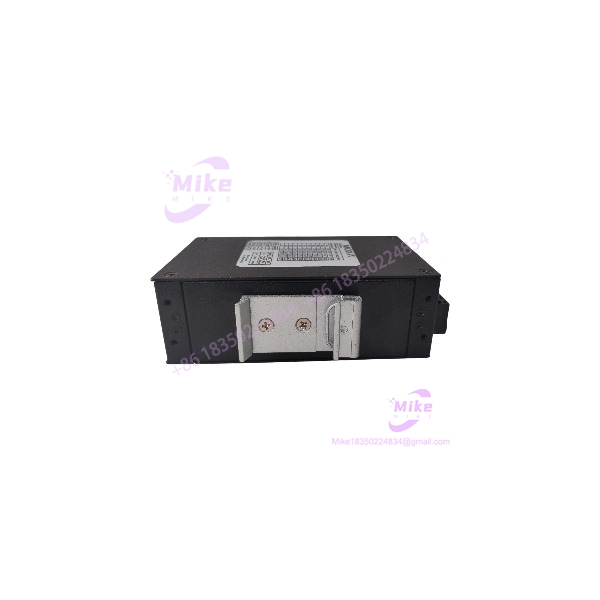
- Mounting: DIN rail
- Operating Temperature: -40°C to 75°C (-40°F to 167°F)
- Relative Humidity: 5–95%, non-condensing
- MTBF: 1,870,854 hours, per MOXA’s stated calculation standard
- Warranty: MOXA lists a 5-year product warranty; warranty coverage for surplus or resold inventory depends on the seller and applicable terms
Specifications are based on MOXA’s official ICF-1280I Series documentation. The “-T” model suffix identifies the wide-temperature version; “M-ST” specifies multimode fiber with ST connectors.
Global Sourcing & Live-Test SOP
A fiber converter may power up while its optical link or PROFIBUS interface remains impaired. Procurement verification should establish the unit’s identity and test its communication path under controlled conditions.
Incoming Verification
- Confirm the complete ICF-1280I-M-ST-T model number on the product label.
- Inspect the housing, DB9 connector, ST fiber ports, power terminals, and DIN-rail mounting clip.
- Check for cracked housing, corrosion, damaged optical connectors, or evidence of overheating.
- Verify that the unit is the wide-temperature “-T” variant, not the standard-temperature -M-ST.
- Confirm whether power supplies, fiber cables, or other accessories are included.
Authenticity & Traceability
- Photograph the MOXA label, model number, and serial/date-code markings.
- Record condition as new surplus, used, or refurbished.
- Compare identifying details with MOXA product documentation.
- Do not describe used or refurbished inventory as factory sealed.
Functional & Communications Test
- Apply a suitable 12–48 VDC supply and verify startup indicators.
- Where supported by the test setup, verify both power inputs independently.
- Connect a compatible PROFIBUS DP test device or network.
- Confirm communication at a supported baud rate.
- Test the optical path using compatible multimode ST fiber and a suitable remote converter.
- Verify optical link status and PROFIBUS data exchange.
- Record test baud rate, fiber type, test distance, and observed diagnostics.
- Do not claim redundant-ring operation was tested unless a ring configuration was actually used.
Extended Run & Test Record
- Perform an extended powered run where test facilities permit.
- Record actual test duration, supply voltage, communication results, and any limitations.
- Document the optical and PROFIBUS functions verified.
- Do not claim a 24-hour heat run unless completed and recorded.
ESD-Safe & Optical Packaging
- Use protective packaging suitable for industrial electronics.
- Keep ST optical connectors clean and capped during storage and shipment.
- Protect the DB9 interface and power terminals from impact.
- Secure the converter against movement during transit.
Field Engineer’s Pitfall Guide
- ❗ Match multimode ST fiber—not just “fiber optic.” The -T is a multimode ST model. It is not interchangeable with single-mode or SC-connector variants without checking the complete optical path and connector requirements. MOXA specifies a typical multimode distance of 4 km; actual reach depends on the fiber and link budget.
- ❗ Do not mistake PROFIBUS for Ethernet. The DB9 port is for PROFIBUS DP. The “100BaseFX” designation refers to the optical interface technology; this device is not a general-purpose Ethernet-to-fiber converter. Confirm the network protocol and wiring before connecting it.
- ❗ Verify the temperature suffix and power arrangement. The “-T” version is rated for -40°C to 75°C. The device accepts 12–48 VDC and provides dual power inputs, but redundant power requires suitable independent sources and correct wiring. Confirm actual panel conditions and supply arrangement before installation.
Intent-Driven FAQ
Q1: WA used for?
It converts PROFIBUS DP signals from copper to multimode optical fiber, helping extend the network and isolate the copper interface.
Q2: What does “M-ST-T” mean in the model number?
“M” identifies multimode fiber, “ST” identifies the optical connector type, and “T” identifies the wide-temperature version rated for -40°C to 75°C.
Q3: What is the maximum supported PROFIBUS baud rate?
The series supports PROFIBUS DP data rates from 9,600 bps to 12 Mbps, with automatic baudrate detection.
Q4: e transmit over fiber?
MOXA specifies a typical multimode distance of up to 4 km. Actual distance depends on fiber characteristics, connector condition, and optical link budget.
Q5: Does this converter support redundant fiber rings?
Yes. The series supports redundant fiber ring configurations. Confirm the intended topology and compatible network design before commissioning.
Q6: Can I use this unit for Ethernet-to-fiber conversion?
No. It is a PROFIBUS DP-to-fiber converter. Its optical interface should not be mistaken for a general-purpose Ethernet connection.
Q7: What should I verify before ordering a replacement?
Confirm the exact model suffix, multimode ST fiber, operating-temperature requirement, PROFIBUS baud rate, power-input arrangement, condition classification, test coverage, included accessories, and written warranty terms.





