


Description
MECS CS-1000A | Wafer Robot Control System Unit
Dynamic Product Introduction
Semiconductor fabrication, metrology, and cleanroom environments demand uncompromising precision and absolute reliability from wafer transfer robotics. When legacy tool automation controllers experience internal card failures, communication dropouts, or power supply degradation, integrating a verified MECS CS-1000A control system restores absolute motion accuracy to your wafer handling loop.
Engineered natively for Asyst/MECS robotic material handling architectures, this advanced controller manages complex multi-axis trajectories and vacuum/atmospheric handoffs without tracking lag. Deploying a fresh CS-1000A unit ensures seamless tool communication handshakes, stable motor driver execution, and prolonged uptime across critical fabrication lines.
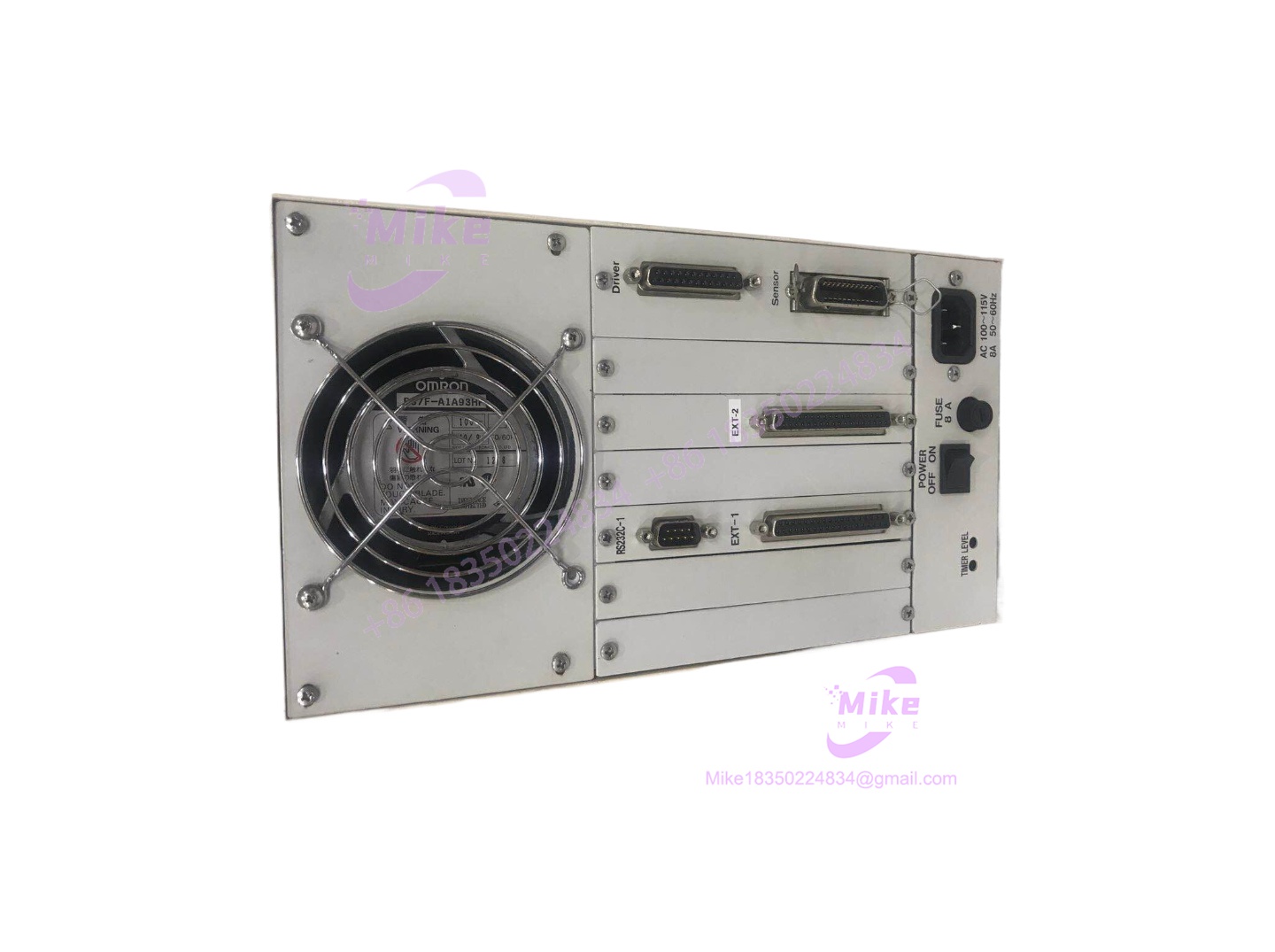
CS-1000
Key Technical Specifications
| Core Parameter | Technical Specification |
| Product Model | CS-1000A Control System |
| Manufacturer | MECS / Asyst Technologies |
| System Compatibility | UTW, UTX, and UTV series wafer transport robots (e.g., UTW2000HG, UTXN1310) |
| Internal Architecture | GS-100 rack framework utilizing CPU2000, CONT-1000A1, and CW-1000 controller cards |
| Input Power Requirements | 115 VAC standard operational profile |
| Communication Support | RS-232C, EXT expansion slots, and host tool discrete I/O lines |
| Operating Environment | Cleanroom and semiconductor equipment integration thresholds |
| Enclosure Format | Industrial rack-mount controller chassis with modular card slots |
Global Sourcing & Live-Test SOP (Transparency Core)
Acquiring legacy or obsolete semiconductor automation hardware through secondary markets requires an exhaustive verification workflow to safeguard delicate cleanroom equipment from catastrophic failure.
- Inbound Verification: Incoming CS-1000A chassis batches undergo high-magnification optical checks of internal backplane pins, card-edge connectors (CPU2000, CW-1000, UMSD), and tamper-evident security seal logs.
- Live Simulation: Technicians mount the controller onto a dedicated test bench coupled to a compatible wafer transport robot mechanism (such as a UTW series arm) and powered via regulated 115 VAC mains.
- Diagnostics: Engineers execute full-scale motion sweeps, validating encoder position feedback linearity, safety interlock loops, communication port handshakes, and running a 24-hour thermal soak chamber test.
- Final Prep: Hardware units receive comprehensive firmware revision logging, protective port capping, and vacuum sealing inside heavy-gauge moisture-barrier ESD shielding bags.
The Field Engineer’s Pitfall Guide
❗ Internal Board Dislodgement Risk: Transporting or sliding the CS-1000A chassis without securing internal card locks can cause modular boards (like the CPU2000 or CONT-1000A1) to unseat from the backplane, resulting in boot failures. Always inspect internal seating before powering up.
❗ Incorrect Robot Mapping Files: Swapping a controller chassis without backing up or transferring the specific robot calibration and geometry profile parameters (teaching points, arm length configurations) can cause destructive collision errors inside the process chamber.
❗ Hot-Plug Power Hazards: Connecting or disconnecting motor drive cables or internal communication harnesses while the controller is energized will fry sensitive logic gates on the driver boards. Always power down completely and verify zero energy state.
Intent-Driven FAQ
Will swapping this CS-1000A controller erase my robot’s teaching coordinates?
Motion parameters, calibration data, and alignment profiles are frequently tied to non-volatile memory or storage structures within the controller stack. Backing up existing configurations or swapping your original memory cards/boards into the replacement unit is strongly advised to preserve precise wafer placement coordinates.
Are these units original factory sealed or surplus stock?
Sourced inventory pools span fully certified, tested surplus and refurbished semiconductor-grade hardware that undergoes strict bench-level validation under simulated robot loads prior to dispatch.
Which robot models are typically driven by the CS-1000A?
The CS-1000A system is engineered to command a wide variety of Asyst/MECS atmospheric and vacuum wafer handling robots, including popular variants from the UTW and UTX series lines.
What tools are required to maintain or service this controller?
Standard cleanroom-compatible precision hand tools (such as metric and standard hex drivers) are used to access internal card racks and secure external cable connections.
What kind of warranty accompanies a replacement CS-1000A system?
All supplied units carry a comprehensive 1-year operational warranty covering internal board health, power supply regulation, and communication port stability.
Are you integrating this CS-1000A controller into an active semiconductor processing tool or keeping it on hand as a critical cleanroom hot-spare?





