


Description
Lam 810-102361-222 | Chamber MUX PCB Assembly
Dynamic Product Introduction
Multiplexing high-density telemetry data across multiple vacuum chambers without introducing signal crosstalk is a persistent engineering hurdle in advanced semiconductor processing tools. When a multiplexer board degrades under continuous thermal load, signal switching delays quickly manifest as corrupt sensor feedback or severe communication jitter between the tool host and localized node controllers. The Lam 810-102361-222 Chamber MUX board is engineered specifically to route and switch complex analog and digital sensor streams with extreme timing precision across high-performance etch platforms.
Unlike basic distribution cards, this multiplexer assembly incorporates specialized analog switching arrays and dedicated ground plane isolation designed to suppress electromagnetic interference inside dense electronics racks. Upgrading to or swapping in a fully verified 810-102361-222 eliminates channel switching dropouts, resolves intermittent data synchronization faults, and restores flawless telemetry routing across critical processing cycles.
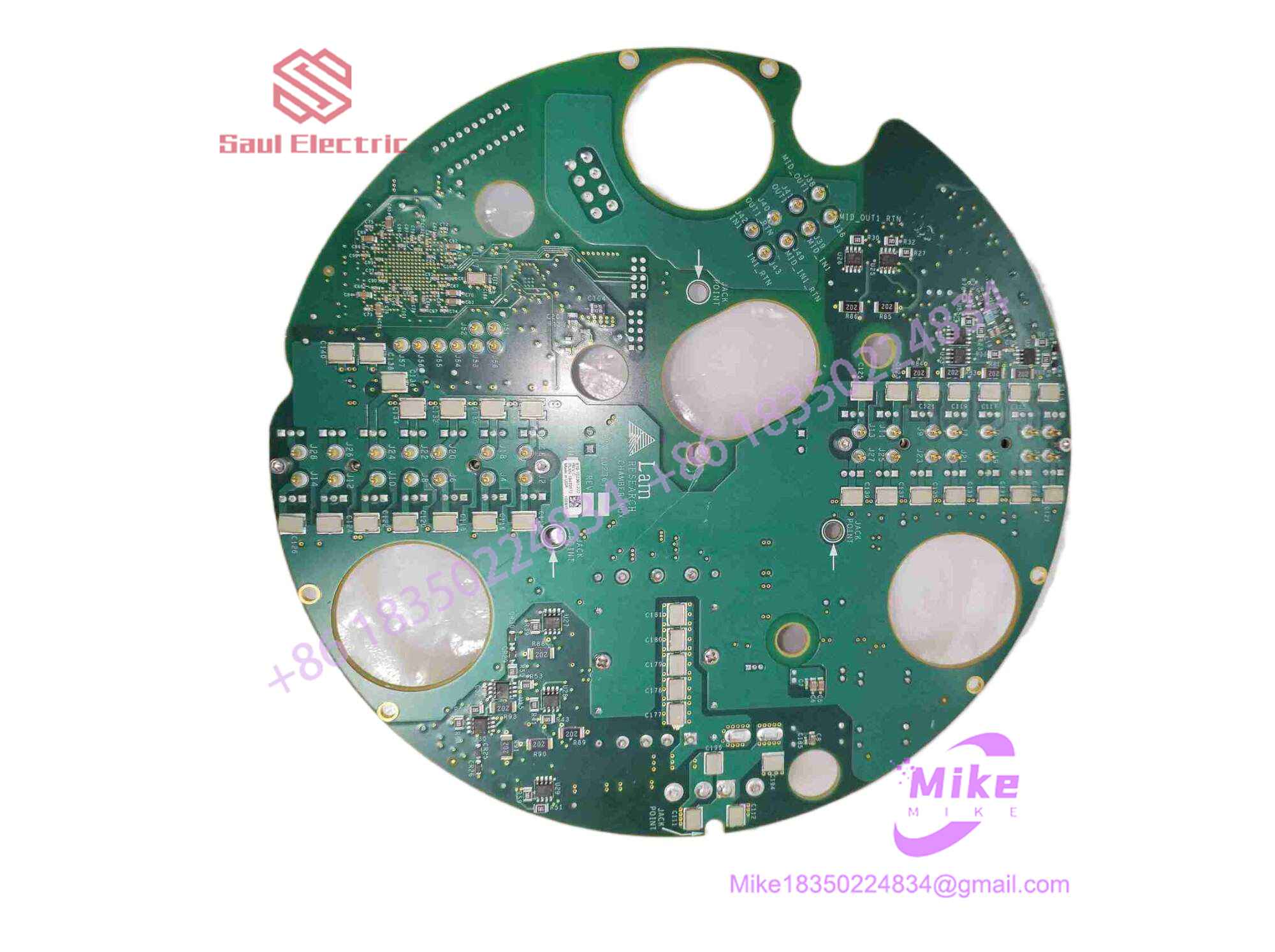
810-102361-222
Key Technical Specifications
| Parameter | Specification / Threshold |
| Part Number | 810-102361-222 (Assoc. Assembly: 855-102361-222) |
| Board Classification | Chamber MUX (Multiplexer) PCB Assembly |
| OEM Manufacturer | Lam Research Corporation |
| Tool Platform Compatibility | Lam Exelan, Kiyo, Vector Plasma Etch Systems |
| Board Architecture | Multi-layer PCB with isolated analog/digital switching planes |
| Power Distribution | Standard backplane regulated rails (+24V, +5V, ±15V) |
| Interface Array | High-density gold edge fingers & multi-pin interface headers |
| Chassis Mounting | Standard card cage slot insertion with secure locking hardware |
| Operating Temp Range | 10°C to 50°C (Internal electronic bay ambient rating) |
| Protective Treatment | Full industrial conformal coating against chemical outgassing and moisture |
Global Sourcing & Live-Test SOP (Transparency Core)
Deploying a critical multiplexer board into an active semiconductor tool requires absolute verification. Every incoming 810-102361-222 passes through a rigorous four-stage quality assurance protocol before entering inventory:
- Optical Inspection & Trace Audit:
- High-magnification microscopic analysis of edge fingers, switching IC pins, and passive components to catch micro-cracks, bridging, or thermal fatigue.
- Authentication of OEM markings and tracking revision stamps against historical build data.
- Continuity & Power Rail Bench Testing:
- Automated multi-point resistance mapping across all power and ground distribution planes to ensure zero internal layer shorts.
- Bench power-up sequence to verify regulator stability and check for clean DC output ripples.
- Active Card Cage Simulation & Thermal Run:
- Insertion into a dedicated Lam card cage test fixture under operational load conditions.
- Executing rigorous multi-channel switching loops and real-time signal multiplexing checks during a 24-hour thermal burn-in run at 45°C.
- Final Decontamination & ESD Sealing:
- Residue-free solvent cleaning of all gold edge contact fingers.
- Vacuum sealing inside a heavy-duty anti-static shielding bag with fresh desiccant and an ESD humidity indicator.
The Field Engineer’s Pitfall Guide
- ❗ Backplane Pin Damage from Angular Insertion: The high-density edge connector on the MUX board demands straight, uncompromised alignment. Forcing the board into a card cage slot at an angle can bend backplane pins or scrape gold plating off the card fingers—always verify the guide rails capture the board evenly before applying seating pressure.
- ❗ Firmware and Tool Software Mismatches: Never drop a replacement 810-102361-222 into a tool without verifying the host software version. Moving across minor dash revisions can require a corresponding software or configuration patch to prevent boot communication errors or unmapped register flags.
- ❗ Hot-Swapping Fatalities: Never attempt to insert or extract this multiplexer board while the rack chassis is powered on. Live extraction causes severe voltage transients across shared bus lines, instantly frying delicate analog switching gates and corrupting adjacent system controllers.
Intent-Driven FAQ
What systems utilize the Lam 810-102361-222 Chamber MUX board?
This board is deployed primarily across advanced Lam plasma etch platforms (such as Exelan, Kiyo, and Vector systems), where it manages high-speed signal multiplexing and data routing between chamber sensors and the central control architecture.
Can I replace an older revision MUX board directly with this -222 variant?
Generally, incremental dash revisions within the same family represent minor component optimizations or manufacturing updates and are drop-in compatible. However, always review your tool’s release notes to confirm software baseline alignment.
What are the common symptoms of a failing Chamber MUX board?
Typical indicators include chronic sensor data dropouts, channel switching timeouts, communication jitter with the tool host, or a complete failure of the board to pass its boot-up diagnostic self-test.
Is the 810-102361-222 field-repairable at the component level?
No. Component-level repair of high-frequency multiplexer boards is strongly discouraged. Manual soldering can alter trace impedance characteristics and compromise the protective conformal coating, leading to unstable performance in production environments.
What warranty coverage is included with certified surplus units?
All fully tested and refurbished 810-102361-222 boards are backed by a comprehensive 1-year replacement warranty. If the unit experiences hardware failure or signal dropouts under normal operating conditions within 365 days of receipt, it qualifies for an immediate advance replacement or repair service.





