

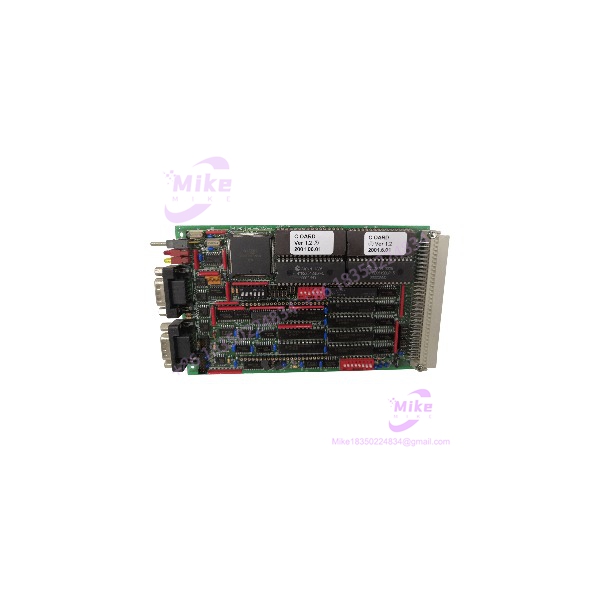
Description
HUMO HC-6002-2 | Industrial Control Module
Product Introduction
The HUMO HC-6002-2 is a legacy electronic module associated with HUMO Laboratory equipment. Current industrial parts inventories independently identify the exact HC-6002-2 as a HUMO Laboratory module, while secondary-market records also identify it as HUMO HC6002 / HC-6002-2.
This is a part where disciplined identification matters more than filling a product page with guessed specifications. Public documentation for the exact HC-6002-2 is scarce, and the available market records do not establish a reliable processor, supply voltage, I/O count, signal range, communication protocol, or firmware revision. One reseller publishes an extensive VME-card specification set, but I could not corroborate those figures against independent documentation; those numbers should therefore not be treated as OEM specifications.
For maintenance buyers, the practical value of an HC-6002-2 is its potential role as a replacement for an existing HUMO system board. In a legacy laboratory or semiconductor-equipment environment, exact board revision and machine compatibility can matter more than nominal electrical characteristics (especially when the original documentation is no longer readily available).
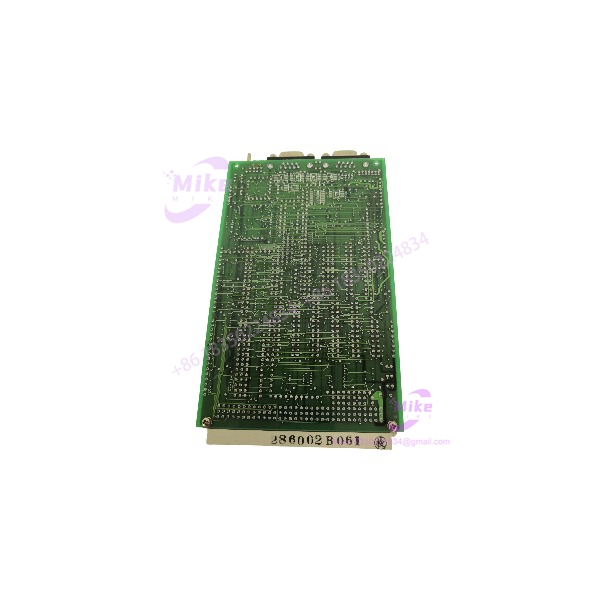
HC-6002-2
Key Technical Specifications
- Manufacturer: HUMO Laboratory
- Part Number: HC-6002-2
- Alternate Market Formatting: HC6002 / HC-6002-2
- Product Category: Industrial control / laboratory equipment electronics
- Hardware Type: Electronic module / circuit-board assembly
- Application: Legacy HUMO Laboratory equipment
- System Compatibility: Must be confirmed against the original host system
- PCB Revision: Verify from the physical board
- Firmware: Verify from the physical board or host equipment
- Processor: Not reliably verified from public documentation
- Memory: Not reliably verified
- I/O Channel Count: Not reliably verified
- Input/Output Signal Range: Not reliably verified
- Supply Voltage: Not reliably verified
- Communication Protocol: Not reliably verified
- Connector Pinout: Must be verified against the original hardware
- Operating Temperature: Not reliably verified for the exact OEM unit
The exact identification is supported by industrial component inventories that list “HC-6002-2 / HUMO LABORATORY HC-6002-2 MODULE / HUMO LABORATORY.” Another inventory separately lists the HC-6202-2 as a 4-line ACI PCB, which is useful evidence that similarly numbered HUMO boards exist and should not be confused with the HC-6002-2.
Identification and Compatibility
Do not confuse HC-6002-2 with HC-6202-2.
The latter appears in equipment-parts inventories as a 4 Line ACI PCB / 306202B010, while the requested part is specifically HC-6002-2. The two designations are close enough that an incorrect warehouse pick or e-commerce listing can easily occur.
For a replacement order, compare:
- Complete part number
- PCB revision
- Connector arrangement
- Board dimensions
- Component population
- Mounting hardware
- Host-machine model
- Existing software/firmware revision
- Any machine-specific configuration memory
If the customer’s original board is available, photographs of both sides are often the fastest way to eliminate an incorrect variant.
Global Sourcing & Live-Test SOP
1. Inbound Verification
Before applying power to a used HC-6002-2:
- Photograph the front and rear of the PCB.
- Record the complete part number.
- Record PCB revision and serial number.
- Photograph every connector and terminal.
- Check for missing components.
- Inspect electrolytic capacitors for leakage or swelling.
- Inspect edge connectors for oxidation.
- Check solder joints around mechanically stressed connectors.
- Look for corrosion, contamination, or evidence of liquid exposure.
- Compare the board physically against the customer’s original unit.
Do not rely on an e-commerce title alone. Current market records use both HC6002 and HC-6002-2, so the physical marking should be the controlling identification.
2. Electrical Pre-Test
Because a reliable OEM electrical specification was not located, do not connect the board to an arbitrary bench supply.
First establish:
- Host-system supply voltage
- Connector polarity
- Power-entry pins
- Ground/reference connections
- Required backplane or carrier board
- Any external supply rails
- Required termination or interface hardware
Use a current-limited supply during first energization when the correct voltage has been independently established.
3. Visual and Static Checks
Before live testing:
- Check supply rails for obvious shorts.
- Check for burned resistors or semiconductor packages.
- Inspect connector solder joints.
- Check removable components for correct seating.
- Verify jumpers or DIP switches against the customer’s original board.
- Check for corrosion underneath connectors and sockets.
For a legacy board, a Fluke multimeter is useful for basic resistance and continuity checks, but continuity alone does not establish functional operation.
4. System-Level Test
The preferred test is inside the correct HUMO host equipment.
Verify:
- Board initialization
- Host recognition
- Normal diagnostic state
- Communication with associated controller hardware
- Expected signal processing
- Machine sequence behavior
- Alarm behavior
- Stable operation after repeated power cycles
If the board is sold as tested working, document exactly what was tested. “Powers on” is not equivalent to “functionally tested.”
5. Extended Run
Where the correct equipment is available, run the module long enough to expose intermittent faults.
Monitor:
- Board temperature
- Supply-current stability
- Communication errors
- Unexpected resets
- Diagnostic alarms
- Connector intermittency
- Analog or digital signal stability, where applicable
Record the test date and serial number with the results.
6. Final Preparation
Before shipment:
- Photograph the tested board.
- Record the exact revision.
- Record test configuration.
- Protect the PCB in an ESD-safe bag.
- Protect edge connectors and exposed pins from impact.
- Use anti-static packaging for international shipment.
Field Engineer’s Pitfall Guide
❗ 1. Do not invent the electrical specification from a reseller listing
One secondary seller describes the HC-6002-2 as a VME-format board with specific dimensions, 16-bit A/D conversion, ±10 V inputs, DB9 interfaces, and other parameters. Those details are not corroborated by the other independent HC-6002-2 records I found, so they should not be treated as confirmed OEM specifications.
For procurement, the original machine documentation and physical board should take precedence.
❗ 2. HC-6002-2 and HC-6202-2 are not interchangeable by number similarity
The HC-6202-2 is separately identified as a 4-line ACI PCB in semiconductor-equipment parts records. Do not approve it as a replacement merely because both numbers begin with HC-6.
❗ 3. A tested board still needs host-system verification
Secondary-market records show the HC-6002-2 being advertised as tested, but that does not establish compatibility with every HUMO installation. A board can pass a seller’s bench test and still fail during initialization because of revision, configuration, backplane, or machine-software differences.
Intent-Driven FAQ
What is the HUMO HC-6002-2?
The HUMO HC-6002-2 is a legacy industrial/laboratory electronics module associated with HUMO Laboratory equipment. Independent component inventories specifically identify it as a HUMO Laboratory HC-6002-2 module.
Is HC-6002-2 a PLC module?
It should not be marketed as a conventional Mitsubishi, Siemens, Allen-Bradley, or other standardized PLC module. The available evidence identifies it simply as a HUMO Laboratory module, and public documentation is insufficient to establish a standard PLC backplane or programming environment.
Is HC-6002-2 a VME card?
One reseller claims a VME-bus form factor, but that claim could not be independently corroborated from the other sources reviewed. I would not publish “VME” as a confirmed specification unless the physical board or OEM documentation confirms it.
What equipment uses the HC-6002-2?
Public sources do not provide enough reliable information to name a specific host machine or equipment model. It is associated with HUMO Laboratory industrial/laboratory electronics, but the exact machine compatibility should be established from the customer’s original board and equipment documentation.
Is the HC-6002-2 still manufactured?
The part appears primarily in legacy and surplus industrial-component channels rather than normal current-production distribution. Current marketplace records list HC6002 / HC-6002-2 as a specialty industrial component.
Can HC-6202-2 replace HC-6002-2?
Do not assume that. The HC-6202-2 is separately identified as a 4 Line ACI PCB, so the two part numbers should be treated as different hardware until the OEM documentation proves otherwise.
What should I request before buying a used HC-6002-2?
Request clear photographs of the complete part number, PCB revision, serial number, front and rear sides, connectors, and installed components. If the seller claims “tested working,” ask what host equipment was used, what functions were exercised, and whether the board was tested under operating load rather than merely powered on.
Is the eBay unit suitable as a direct replacement?
That cannot be established from the listing title alone. Match the physical board and revision against the customer’s removed HC-6002-2 and verify the host-system interface before installation. For a production machine, the safest procurement record includes photographs and the exact tested configuration.





