

Description
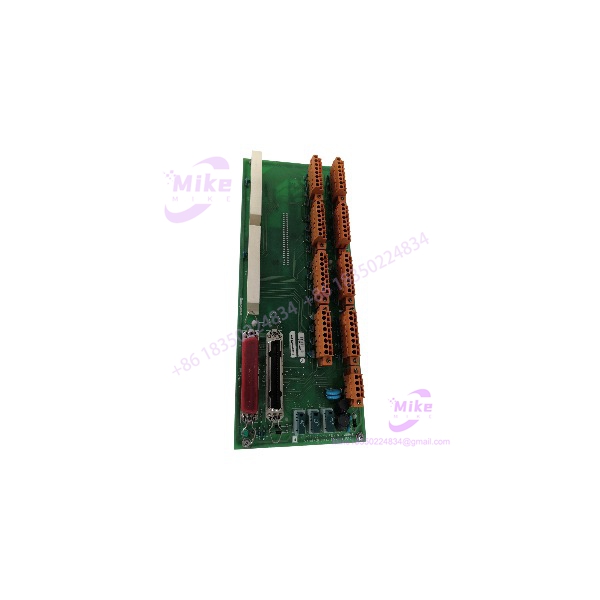
Honeywell MC-TDIY22 | 24 VDC Digital Input FTA
Product Introduction
A failed digital-input termination assembly can create a surprisingly ugly maintenance problem. The field switches may be fine. The controller may be fine. The wiring may even test correctly. Yet the control system still cannot see the required discrete states. Honeywell MC-TDIY22 sits directly in that signal path, providing the field-side termination interface for 24 VDC digital inputs in Honeywell’s PM I/O architecture.
The MC-TDIY22 is a 32-channel digital input Field Termination Assembly, using compression-style field terminals and a Size B mounting format. Honeywell documentation distinguishes it from similar-looking TDID and TDIY variants, so the model number matters when replacing legacy hardware. This is not a generic 24 VDC input card; it is an FTA intended to work with the corresponding Honeywell I/O architecture.
One procurement warning deserves attention: published supplier records associate different numerical assembly identifiers with MC-TDIY22. Honeywell’s hardware-planning documentation identifies the model with 80366180-series part numbers, while some aftermarket listings publish a different number. For a production replacement, verify the physical nameplate and installed-system documentation rather than ordering from a numerical cross-reference alone.
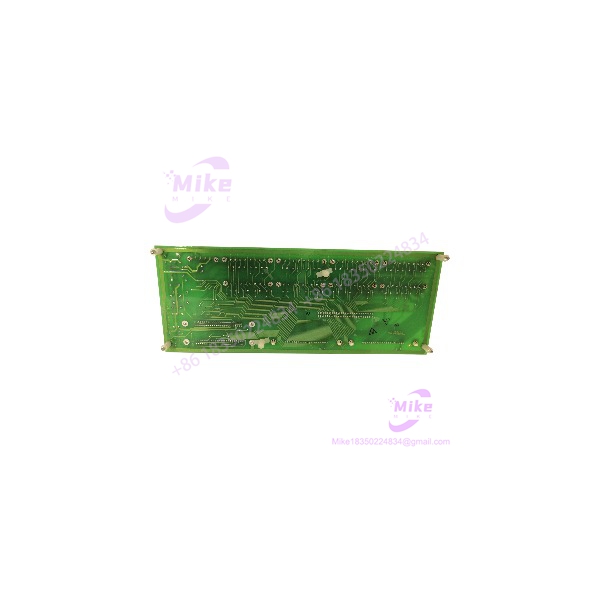
MC-TDIY22
Key Technical Specifications
- Manufacturer: Honeywell
- Model: MC-TDIY22
- Product Type: Digital Input Field Termination Assembly
- Signal Type: 24 VDC Digital Input
- Input Capacity: 32 channels
- Terminal Configuration: Compression terminals
- Mounting Size: Size B
- Coating: Conformal coating
- System Application: Honeywell PM I/O / Experion-related control architectures
- Field Signal: Discrete 24 VDC status signals
- FTA Function: Field termination and interface between field wiring and the associated I/O processor
- Architecture: Honeywell digital-input FTA
- Associated Processor Family: PDIY22 architecture, subject to the installed system configuration
- CE Configuration: Honeywell planning documentation identifies a CE-compliant MC-TDIY22 configuration.
The important number here is 32 channels. Do not confuse MC- with the similarly named MC-TDID12 or MC-TDIY62. Those assemblies have different terminal arrangements or hardware references.
Application Scenarios & Pain Points
Legacy DCS Digital Input Recovery
Without the correct FTA: A cabinet can lose dozens of discrete signals even though the field devices themselves remain operational.
The existing Honeywell digital-input architecture can be maintained rather than immediately redesigned around a new I/O platform.
That distinction is important during shutdown work. Replacing one FTA is fundamentally different from engineering a new digital-input subsystem.
32-Point Field Termination
The 32-channel density makes MC- appropriate for applications involving numerous discrete status points—limit switches, contact indications, permissive signals, interlocks, alarm contacts, and similar binary field conditions.
One cabinet section can therefore consolidate a substantial amount of field wiring without requiring a separate termination assembly for every signal.
Refinery and Process Plant Maintenance
Picture a maintenance window with several dozen valve-position indications showing bad or missing states.
The first temptation is to blame the controller.
A better troubleshooting sequence starts at the field device, checks the 24 VDC signal, verifies the wiring path, and then examines the FTA and I/O processor interface. If several channels fail together, the common termination hardware becomes a much more credible suspect.
Legacy System Spare Strategy
With a stocked MC-: A failed termination assembly becomes a controlled maintenance event.
Without one: Procurement may become the critical path, particularly when the plant depends on an aging Honeywell I/O installation.
For discontinued or difficult-to-source DCS hardware, the spare itself can be worth more operationally than its purchase price suggests.
QA & Live Testing SOP
For an industrial surplus Honeywell MC-, we do not treat visual condition as proof of functionality.
The recommended receiving procedure is:
- Model verification: Confirm the physical marking reads .
- Revision verification: Record PCB, assembly, and manufacturing revision information.
- Nameplate inspection: Compare the physical identification with the purchase specification and existing cabinet documentation.
- Terminal inspection: Check all compression-terminal positions for deformation, corrosion, contamination, or previous field damage.
- PCB inspection: Look for cracked solder joints, damaged components, oxidation, burn marks, and evidence of unauthorized repair.
- Conformal-coating inspection: Examine the coating for cracking, peeling, contamination, or mechanical damage.
- Electrical continuity: Verify appropriate termination paths before connecting the assembly to production hardware.
- Controlled power test: Energize through a suitable Honeywell-compatible test arrangement rather than immediately installing an unknown unit in an operating rack.
- 32-channel verification: Where the appropriate test rack is available, simulate representative 24 VDC digital states across multiple input channels.
- I/O recognition: Confirm the associated Honeywell processor recognizes the expected input assembly.
- ESD protection: Handle the assembly using a grounded ESD workstation and antistatic packaging.
A board that simply powers up is not necessarily a board that passes a functional test. For a digital-input FTA, channel-state verification is the meaningful part.
Field Engineer’s Pitfall Guide
❗ Do not confuse MC- with MC-TDID12. Both are 24 VDC digital-input FTAs, but Honeywell’s hardware documentation assigns them different channel/mounting configurations. MC- is the 32-channel Size B compression-terminal version.
❗ Do not confuse MC- with MC-TDIY62. The model numbers are almost identical, but the terminal arrangements differ. Honeywell documentation identifies MC- with compression terminals, while MC-TDIY62 uses fixed-screw terminals. A cabinet designed for one should not be assumed compatible with the other.
❗ Do not treat the FTA as the processor. MC- provides the field termination interface; it is not the same hardware as the associated digital-input processor. Published technical documentation identifies the PDIY22 processor family with this FTA architecture.
❗ Watch the part-number discrepancy. Some commercial listings identify MC- using a numerical identifier that differs from Honeywell’s published planning documentation. Do not accept a numerical cross-reference without checking the physical label and cabinet configuration.
One more practical point: photograph and label every field connection before removing the old assembly. Thirty-two discrete channels can become a very expensive guessing game if the wiring map is lost.
Intent-Driven FAQ
What is Honeywell MC-?
Honeywell MC- is a 32-channel, 24 VDC Digital Input Field Termination Assembly used within Honeywell’s PM I/O control architecture. Honeywell documentation identifies it as a Size B FTA using compression terminals.
How many inputs does MC- have?
The MC- provides 32 digital input channels. The inputs are intended for 24 VDC discrete field signals.
Is MC- a digital input or digital output module?
It is a digital input FTA. Its job is to terminate field-side discrete signals and interface them with the associated Honeywell digital-input processing hardware. It should not be confused with Honeywell’s TDO-series digital-output FTAs.
What type of terminals does MC- use?
The documented MC- uses compression terminals. This is one of the key distinctions between MC- and the similarly named MC-TDIY62, which uses a different terminal arrangement.
Is MC- the same as the PDIY22 processor?
No. MC- is the Field Termination Assembly. The associated PDIY22 hardware performs the I/O processing function. Treating the two as interchangeable can result in ordering the wrong component for the cabinet.
Can I replace MC- with MC-TDIY62?
Not as an automatic drop-in substitution. Although both belong to the 24 VDC digital-input family, Honeywell specifies different terminal arrangements. Verify the field wiring, cable interface, mounting arrangement, and complete I/O configuration before considering substitution.
What should I verify before buying MC-?
Verify , the physical assembly identification, terminal style, 32-channel configuration, associated I/O processor, mounting arrangement, and system generation. If the seller supplies a separate numerical part identifier, compare it against the physical unit and Honeywell documentation rather than assuming the number is correct.
Can MC- be hot-swapped?
Do not assume it can. The FTA may be physically accessible while the associated I/O system remains energized, but live replacement depends on the specific Honeywell architecture and approved maintenance procedure. Follow the installed-system documentation and plant isolation requirements.
Is MC- obsolete?
The model belongs to Honeywell’s legacy PM I/O hardware family and is now primarily encountered in installed-base and industrial spare-parts channels. However, an official lifecycle status should be verified for the exact revision and numerical assembly identifier before making an obsolescence claim.
How should a surplus MC- be tested?
At minimum, inspect the physical assembly, verify the model and revision, check the terminal and PCB condition, perform controlled electrical checks, and—where the correct Honeywell test environment is available—verify representative digital input states across multiple channels. A simple power-on test is not enough.
What warranty should I expect?
Warranty depends on the supplier and the condition of the individual unit. New factory-stock, new surplus, refurbished, and used hardware should not be treated as equivalent. Obtain the warranty terms in writing and confirm whether functional failure after installation is covered.





