

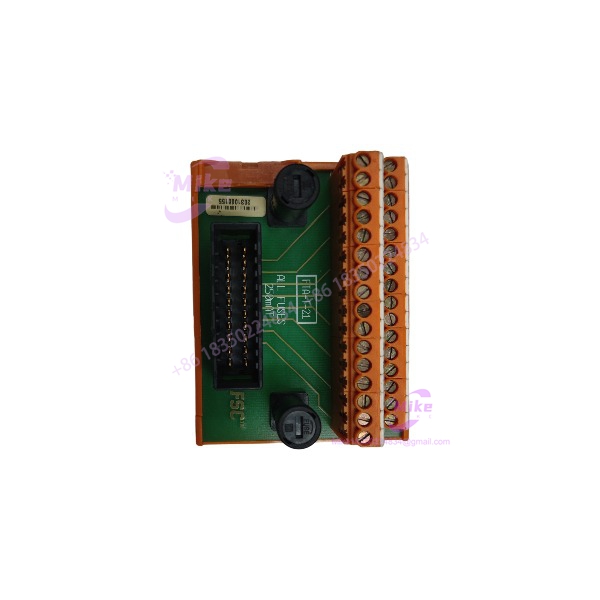
Description
Honeywell FTA-T-21 | 16-Channel NAMUR Input FTA
Dynamic Product Introduction
A NAMUR input is not just another dry-contact input.
The Honeywell FTA-T-21 is designed for a specific FSC digital-input architecture where field devices use NAMUR-style sensing. Honeywell’s FSC hardware documentation classifies the FTA-T-21 as a 16-channel fail-safe digital input FTA for 24/48/60 VDC NAMUR applications. That makes the FTA-T-21 fundamentally different from neighboring FSC termination assemblies intended for ordinary fail-safe inputs, isolated passive inputs, or current-limited inputs.
This distinction matters during replacement. The FTA-T-21 is part of the field termination layer, so its compatibility depends on the associated FSC input module, system interconnection cabling, field-device type, and approved wiring architecture. A physically similar FTA is not automatically an electrical substitute.
The model has also been identified in established Honeywell FSC equipment inventories as a digital input terminal board, reinforcing its role as field termination hardware rather than a standalone programmable I/O processor.
For procurement, treat FTA-T-21 as a complete architecture-specific part number. Do not reduce the specification to “16-channel digital input.”
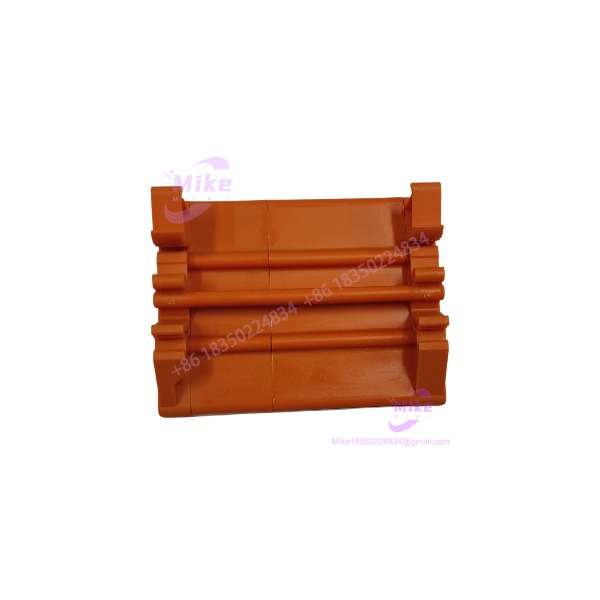
FTA-T-21
Key Technical Specifications
- Model:
- Manufacturer: Honeywell
- System: Honeywell Fail-Safe Control (FSC)
- Function: Fail-safe digital input field termination
- Input Channels: 16
- Input Technology: NAMUR
- Application Voltage: 24/48/60 VDC
- Signal Category: Digital/discrete field input
- Assembly Type: Field Termination Assembly
- Safety Role: Fail-safe input interface
- Installation: FSC cabinet / field termination architecture
- Related FSC FTA: FTA-T-02 — fail-safe input, 24/48/60 VDC, 24 channels
- Related FSC FTA: FTA-T-16 — fail-safe active digital input with line monitoring, 16 channels
- Related FSC FTA: FTA-T-23 — current-limited digital input, 24 VDC, 16 channels
- Related FSC FTA: FTA-T-29 — fail-safe active/passive digital input, 115 VAC/DC, 16 channels
The model differentiation is important. Honeywell’s FSC documentation places the alongside several other digital-input FTAs, but specifically assigns the T-21 to NAMUR service.
I would not publish unsupported figures for terminal resistance, channel current, connector pinout, dimensions, or exact fuse ratings unless those values are verified against the applicable Honeywell hardware-manual revision. Several secondary listings currently circulate conflicting specifications for this model, including incorrect channel counts and voltage descriptions. The architecture-level specification is much better supported.
Global Sourcing & Live-Test SOP
Inbound Verification
The first inspection question is simple: Is this actually an ?
Verify:
- Complete model marking.
- Honeywell manufacturer identification.
- Hardware/assembly revision where available.
- Connector arrangement and keying.
- Terminal condition.
- PCB condition where visible.
- Signs of unauthorized rework.
- Corrosion, contamination, or cracked terminal bodies.
- Serial or traceability information where available.
- Compatibility with the customer’s FSC bill of material.
Do not accept a seller’s generic description such as “Honeywell digital input module” as sufficient identification. The difference between , FTA-T-02, FTA-T-16, and FTA-T-23 is functional, not merely nomenclature.
Live Simulation
The preferred test environment is an authenticated Honeywell FSC rack using the corresponding input architecture and system interconnection hardware.
Connect the according to the approved configuration.
Then simulate the expected NAMUR input conditions using an appropriate calibrated simulator or representative field device. Confirm that each channel transitions correctly at the FSC input and that the controller identifies the correct channel.
Do not substitute a simple jumper for the complete test unless the approved test procedure specifically calls for it. A NAMUR input has a defined electrical behavior; a basic open/closed contact test does not necessarily reproduce that behavior.
Diagnostics
A practical acceptance sequence should include:
- Visual inspection of all terminals and connectors.
- Conductor continuity testing.
- Isolation testing where applicable.
- NAMUR signal simulation.
- Channel-by-channel state verification.
- Channel mapping verification.
- Diagnostic/alarm review.
- Verification of fail-safe response.
- Repeated state-transition testing.
- Comparison against the approved I/O drawing.
A calibrated Fluke-class multimeter is useful for basic voltage and continuity checks. For actual acceptance, use an appropriate NAMUR-compatible signal simulator or test fixture.
Extended Test
For critical spare inventory, run the under representative operating conditions for an extended period.
Monitor:
- Input state stability.
- Supply voltage.
- Diagnostic status.
- Connector integrity.
- Temperature.
- Repeated input transitions.
- Unexpected channel-state changes.
The purpose is to catch intermittent behavior that a five-minute bench test can miss.
Final Prep
Before releasing the :
- Record exact model and hardware revision.
- Record serial/traceability information.
- Photograph connectors and terminal sections.
- Record the test fixture and configuration.
- Retain channel-by-channel test results.
- Package with ESD-conscious handling.
- Protect connectors against mechanical impact.
- Store with the approved system compatibility information.
For a safety-system spare, traceability is part of the QC process.
The Field Engineer’s Pitfall Guide
❗ Warning 1 — Do not substitute an ordinary digital-input FTA for the .
The is specifically identified for NAMUR digital input service. The neighboring FSC FTA models have different electrical purposes. A generic “16-channel digital input” description is not enough to establish compatibility.
❗ Warning 2 — Verify the field-device technology before reconnecting the channels.
NAMUR sensors, dry contacts, active digital transmitters, and line-monitored inputs are not interchangeable simply because they ultimately produce an ON/OFF state. I’ve seen a replacement selected by channel count alone, followed by hours of troubleshooting because the field sensor and input conditioning method did not match.
❗ Warning 3 — Do not assume the 24/48/60 VDC designation means every field device can be connected directly.
The voltage classification describes the FTA application architecture, not permission to connect arbitrary field equipment. Check the complete loop drawing, field-device specification, barrier/isolator arrangement where applicable, and FSC input configuration before energizing the circuit.
A particularly bad mistake is testing only one channel and then releasing a 16-channel spare. Channel-to-channel defects, connector problems, and termination errors can remain invisible until the module is installed in production.
Intent-Driven FAQ
What is the Honeywell ?
The is a 16-channel fail-safe digital input Field Termination Assembly for Honeywell FSC systems. Its defining application is NAMUR input service at 24/48/60 VDC.
Is the a PLC input card?
Not in the conventional sense. It is a field termination assembly within the FSC architecture. The associated FSC input electronics and system interconnection hardware complete the signal path.
How many channels does the have?
The documented FSC specification identifies 16 channels.
Is the designed for NAMUR sensors?
Yes. This is the defining characteristic separating it from several other Honeywell FSC input FTAs. Honeywell’s hardware documentation explicitly describes the as a NAMUR 16-channel fail-safe digital input FTA.
Can I replace an with an FTA-T-02?
Not as a direct assumption. Both are fail-safe digital-input FTAs associated with 24/48/60 VDC applications, but the FTA-T-02 is specified for 24 channels, while the is the 16-channel NAMUR version. The field-device technology and complete FSC architecture must match.
Can I use a dry-contact switch on the ?
Do not assume that a dry contact is an equivalent substitute for a NAMUR sensor. The correct answer depends on the exact FSC input architecture, associated module, and approved wiring design. If the installation was engineered around NAMUR devices, preserve that architecture unless an approved engineering change specifies otherwise.
Does the contain firmware?
No. It is field termination hardware rather than a programmable CPU. Firmware version matching is therefore not the principal replacement concern. Hardware revision, field-device compatibility, I/O mapping, and termination architecture are more important.
Can the be hot-swapped?
Do not assume hot-swap capability. Removing an active digital-input termination assembly can alter safety-system input states. Follow the approved FSC maintenance and isolation procedure before disconnecting the assembly.
How should a surplus be tested?
Verify the model and physical condition first. Then test continuity and isolation as appropriate, connect it to a representative FSC test environment, simulate the correct NAMUR input conditions, and verify all 16 channels individually. For critical service, record the results rather than relying on a generic “tested” statement.
Is the obsolete?
Some current secondary-market listings identify the as discontinued, so replacement sourcing should be treated as a lifecycle-management issue rather than ordinary catalog purchasing. However, the correct replacement decision depends on the installed FSC revision and approved spare-parts strategy.
What should I verify before buying an ?
Confirm , Honeywell manufacturer identification, 16-channel NAMUR application, 24/48/60 VDC system compatibility, hardware revision, physical connector condition, and the customer’s approved FSC configuration. Do not purchase based solely on a marketplace description that calls it a generic “digital input module.”





