

Description
Honeywell FTA-T-02 | 24-Channel Fail-Safe Digital Output FTA
Dynamic Product Introduction
When a safety-system output fault follows a cabinet intervention, the FTA is one of the first places I check. A failed termination assembly, incorrect channel mapping, or loose screw connection can produce symptoms that initially look like an I/O module or controller problem.
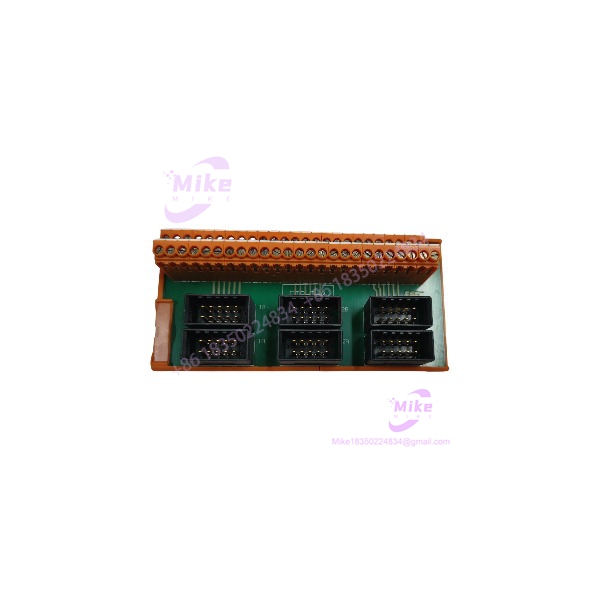
The Honeywell FTA-T-02 is a 24-channel fail-safe digital output Field Termination Assembly designed to interface system interconnection cables with external field wiring. The documented architecture divides the 24 channels into six groups of four, with six SIC connectors identified as 1A, 1B, 2A, 2B, 3A, and 3B. Field connections are made through screw terminals, while the assembly mounts on standard DIN rail hardware.
The electrical envelope is substantial for a termination assembly: the documentation specifies 2 A maximum continuous current per channel, with application voltages covering 24/48/60 VDC. That does not mean every connected load should simply be operated at 2 A; the complete load, protection scheme, wiring, ambient temperature, and associated safety-system hardware still have to be checked.
The model number deserves particular attention during procurement. FTA-T-02 is documented as a Honeywell fail-safe digital output FTA—not a Weidmüller-branded product. If a marketplace listing identifies the same part as Weidmüller, verify the physical nameplate and technical documentation before publishing or purchasing.
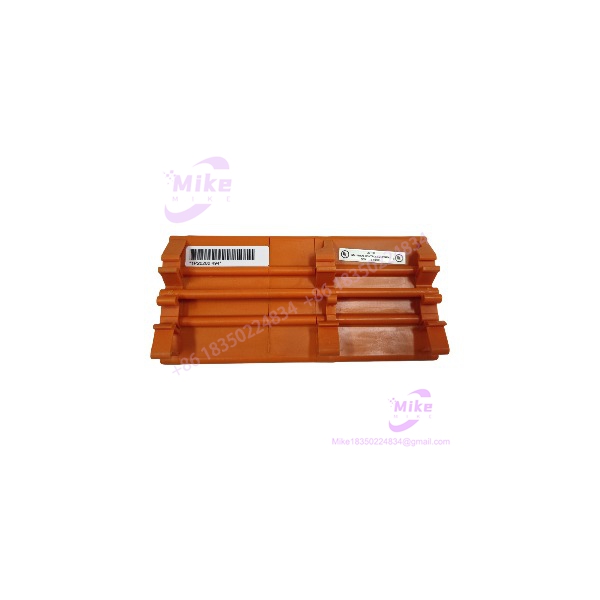
FTA-T-02
Key Technical Specifications
- Model: FTA-T-02
- Verified Manufacturer: Honeywell
- Product Type: Fail-Safe Digital Output FTA
- Number of Channels: 24
- Channel Arrangement: 6 groups × 4 channels
- Application Voltage: 24/48/60 VDC
- Maximum Continuous Current: 2 A per channel
- System Interface: System Interconnection Cables (SICs)
- Field Connection: Screw terminals
- SIC Connectors: 1A, 1B, 2A, 2B, 3A, 3B
- Mounting: TS32 / TS35 × 7.5 DIN rail
- Module Dimensions: 145 × 70 × 57 mm
- Recommended Rail Length: 146 mm
- Maximum Field-Wire Size: 2.5 mm² / AWG 14
- Wire Strip Length: 7 mm
- Terminal Tightening Torque: 0.5 Nm / 0.37 ft-lb
- Documented Approvals: CE, UL
The FTA-T-02 documentation also specifies maximum voltage values of 125 VAC / 150 VDC under the cited IEC 1010 overvoltage-category conditions. Those values should not be confused with the normal 24/48/60 VDC fail-safe output application range.
Global Sourcing & Live-Test SOP
Inbound Verification
For a safety-related termination assembly, receiving inspection should establish exactly what arrived before it is released to maintenance stock.
Check:
- Complete FTA-T-02 model marking.
- Manufacturer identification on the physical assembly.
- Hardware or PCB revision where present.
- Connector labels and keying.
- Six SIC connector positions.
- Terminal block condition.
- DIN-rail mounting mechanism.
- PCB contamination, corrosion, cracked solder joints, or mechanical damage.
- Evidence of field modification or unauthorized rewiring.
- Serial/traceability information where available.
The manufacturer discrepancy deserves a separate QC flag. If the purchasing record says “Weidmüller ” but the hardware identifies Honeywell, stop the receiving process and reconcile the discrepancy before the unit enters production inventory.
Live Simulation
The should be tested with the appropriate Honeywell FSC/Safety Manager-compatible system-interconnection hardware rather than as an isolated terminal board.
Connect the appropriate SIC interface and use controlled simulated loads on the output channels. Exercise each channel independently while confirming that the expected field-side terminal responds to the corresponding system command.
For a 24-channel assembly, channel mapping should be documented rather than inferred from physical position.
Diagnostics
A practical test sequence should include:
- Visual inspection of every terminal.
- Point-to-point continuity testing.
- Conductor isolation testing where applicable.
- Verification of SIC connector continuity.
- Channel-by-channel output simulation.
- Voltage measurement under representative load.
- Controlled current-load verification.
- Inspection for abnormal voltage drop.
- Verification of channel grouping.
- Review of system diagnostic indications.
A calibrated Fluke-class multimeter is suitable for basic voltage and continuity measurements. For a meaningful acceptance test, however, the output should be exercised through the associated safety-system hardware.
A continuity check alone is not enough. It can prove that a conductor is electrically continuous while missing incorrect channel assignment, intermittent contact, damaged connector retention, or a field wiring error.
24-Hour Heat Run
For critical spare inventory, an extended powered test provides additional confidence.
Operate the with representative loads while monitoring:
- Output voltage.
- Load current.
- Terminal temperature.
- Connector temperature.
- Diagnostic status.
- Intermittent output behavior.
- Supply stability.
Do not intentionally exceed the specified channel current merely to “prove” the unit. The 2 A per-channel figure is a maximum continuous rating, not a recommended commissioning test point.
Final Prep
Before releasing the :
- Record the exact model.
- Record hardware revision where available.
- Record serial/traceability information.
- Document the test configuration.
- Preserve channel-test results.
- Photograph the connector and terminal areas.
- Package against ESD and mechanical damage.
- Protect all terminal hardware from contamination.
For surplus replacement hardware, the test record should travel with the part.
The Field Engineer’s Pitfall Guide
❗ Warning 1 — Verify the manufacturer before you publish or purchase.
The model is documented as a Honeywell fail-safe digital output FTA. A marketplace title identifying it as Weidmüller should not override the physical nameplate or Honeywell documentation. I’ve seen purchasing records propagate the wrong manufacturer simply because an old ERP description was copied into a new listing.
❗ Warning 2 — Do not treat 2 A as an unrestricted load recommendation.
The specification identifies 2 A maximum continuous current per channel, but the actual installation still depends on the connected load, wiring, protective devices, ambient conditions, and associated system architecture. A solenoid or actuator circuit that works on a bench can behave differently when several channels are energized simultaneously.
❗ Warning 3 — Do not reconnect the six SIC groups by appearance alone.
The uses six SIC connectors—1A, 1B, 2A, 2B, 3A, and 3B—serving the 24-channel architecture. Copy the existing approved wiring documentation before removal. A connector installed in the wrong position can create a channel-mapping problem that looks like a failed output module.
One particularly nasty failure mode is discovering the error only after field equipment has been energized. At that point, the troubleshooting exercise becomes much more expensive than the five minutes spent photographing the original termination arrangement.
Intent-Driven FAQ
What is the Honeywell ?
The is a 24-channel fail-safe digital output Field Termination Assembly. It interfaces Honeywell system interconnection cables with external field wiring through screw terminals.
Is the made by Weidmüller?
The technical documentation I found identifies as Honeywell hardware. If a particular marketplace listing identifies the item as Weidmüller, verify the physical label before treating that manufacturer description as authoritative.
How many outputs does the support?
The provides 24 channels, arranged as six groups of four channels.
What voltage does the support?
The documented application is 24/48/60 VDC fail-safe digital output. The documentation separately lists maximum voltage values under IEC 1010 overvoltage-category conditions, so those figures should not be interpreted as the normal operating voltage selection.
Can each channel carry 2 A?
The published specification gives 2 A maximum continuous current per channel. That is a rating limit, not a blanket statement that every application should operate at 2 A. Check the actual field load, wiring, protection, temperature, and upstream safety I/O specification.
Does the contain firmware?
No. It is a field termination assembly rather than a programmable controller or CPU. There is no application logic or firmware package to download into the .
Can I hot-swap the ?
Do not assume so. Disconnecting or reconnecting an active fail-safe output termination assembly can change field-device states. Follow the site’s approved shutdown, isolation, and proof-test procedure before removing the assembly.
How should a surplus be tested?
First verify the physical model and manufacturer. Then inspect the six SIC interfaces and screw terminals, perform continuity and isolation checks, and conduct a channel-by-channel functional simulation with the appropriate Honeywell system hardware. For critical service, document the test results and perform an extended operating test before releasing the unit to production stock.
Is the obsolete?
The model appears in Honeywell FSC hardware documentation, including the documented 24-channel fail-safe output configuration. Obsolescence should still be determined from the customer’s installed system revision and approved spare-parts strategy rather than marketplace availability alone.





