

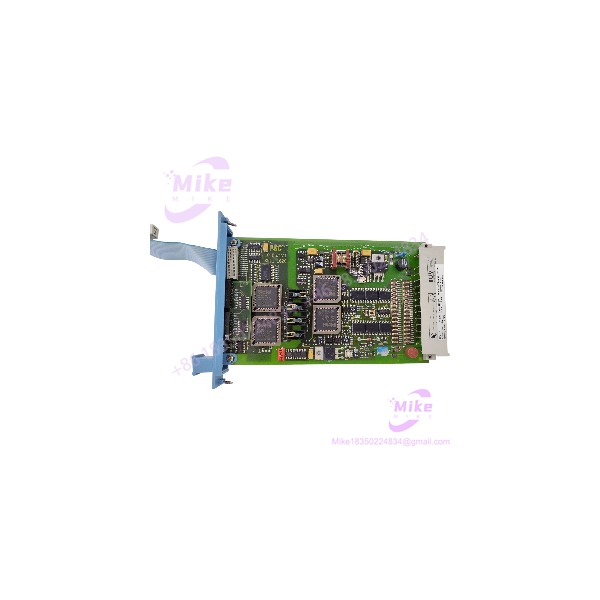
Description
Honeywell FC-SDIL-1608 | 16-Channel Safe Digital Input Module
Dynamic Product Introduction
If a buyer searches for FC-SDIL-1608 and sees “16-channel digital input,” that is only half the story. The defining feature is line monitoring. Honeywell designed the SDIL-1608 to handle either loop-monitored circuits or status signals, using DIN 19234/NAMUR input characteristics rather than the conventional voltage-threshold input scheme found on a standard PLC DI card.
Each FC-SDIL-1608 provides 16 input channels, with a specified switch level of 1.4–1.9 mA and hysteresis of 0.2 mA ±0.05 mA. The module provides an approximately 8 V loop supply, specified at 7.9–8.7 V, with a short-circuit-protected output current capability of 170 mA. Those numbers immediately tell an experienced controls engineer that this is a specialized safety input interface—not a 24 VDC sourcing/sinking input bank.
The FC designation is also worth preserving in procurement records. Honeywell separately identifies FC-SDIL-1608, FS-SDIL-1608, and FA-. Do not substitute between those variants simply because the core function appears similar.
Honeywell’s TÜV release history also records hardware modifications to FC- and FA-, demonstrating that revision control matters when maintaining a certified Safety Manager installation.
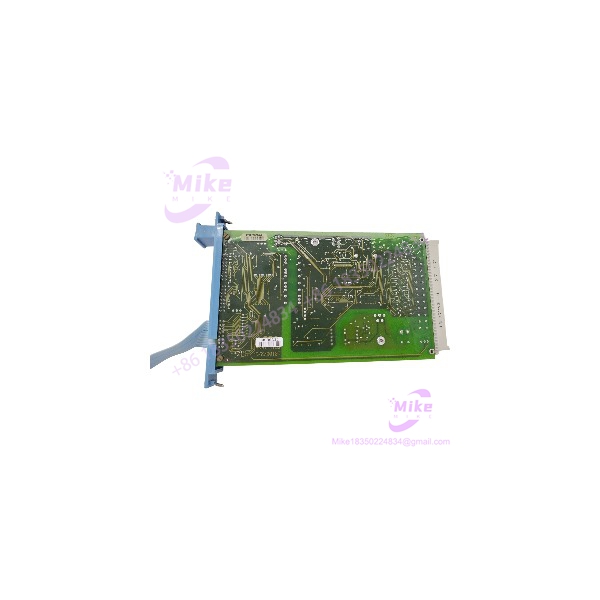
FC-SDIL-1608
Key Technical Specifications
- Manufacturer: Honeywell
- Model: FC-
- Product Type: Safe Digital Input Module / Safe Line-Monitored Digital Input Module
- System: Honeywell Safety Manager
- Safety I/O Application: Safety-related digital input and line-monitoring applications
- Input Channels: 16
- Input Type: DIN 19234 / NAMUR
- Switch Level: 1.4–1.9 mA
- Hysteresis: 0.2 mA ±0.05 mA
- Input Filter: First-order low-pass, 100 Hz
- Maximum Field-Wire Resistance: 50 Ω
- 8 V Loop Supply: 7.9–8.7 VDC
- Loop Supply Output Current: 170 mA, short-circuit protected
- Maximum Load Capacitance: 100 nF
- 5 VDC Power Requirement: 160 mA
- 24 VDC Power Requirement: 110 mA
- Mechanical Space: 4 TE × 3 HE, equivalent to 4 HP × 3U
- Approvals: CE, TÜV, UL, CSA, FM
These are the parameters specified in Honeywell’s Safety Manager Hardware Reference.
What the “1608” Designation Actually Means
Do not interpret “1608” as sixteen 24 VDC inputs plus eight outputs.
The Honeywell documentation identifies the as a 16-channel input module. The module’s “line monitoring” function is what differentiates it from a conventional digital input card. Some reseller pages incorrectly describe FC- with eight outputs, Modbus, RS-485, IP65 construction, or conventional 24 VDC digital inputs. Those claims conflict with Honeywell’s own hardware reference and should not be used as procurement specifications.
Global Sourcing & Live-Test SOP
1. Inbound Verification
For FC-, receiving inspection should establish the complete module identity before it enters safety-system inventory.
Record:
- Exact FC- marking
- Hardware revision
- Part number
- Serial number
- Conformal-coating condition
- Connector/keying condition
- Housing condition
- Evidence of moisture, corrosion, contamination, or mechanical damage
- Storage and ESD-handling history where available
Pay particular attention to the FC / FS / FA designation. Honeywell lists these as separate type numbers.
2. Live Simulation
Testing should be performed in an authentic Honeywell Safety Manager test environment compatible with the intended installation.
A practical acceptance sequence is:
- Verify the module against the target hardware configuration.
- Confirm module initialization and status.
- Connect representative NAMUR-compatible test circuits.
- Verify normal switching behavior.
- Simulate appropriate line-fault conditions where supported by the test setup.
- Confirm diagnostic behavior.
- Verify all 16 channels individually.
- Record the observed switch thresholds and diagnostic results.
A generic 24 VDC bench supply is not an adequate substitute for this test. The ‘s input architecture is based on current-level/NAMUR sensing and an 8 V loop supply, so a conventional PLC DI simulator can give misleading results.
3. Diagnostics
The test report should capture:
- Module startup condition
- Module status
- Channel-by-channel input recognition
- Normal/abnormal loop behavior
- Line-monitoring response
- Input threshold behavior
- Diagnostic/event indications
- Safety Manager application recognition
A useful field instrument is a calibrated multimeter or loop-current source capable of accurately simulating the specified milliampere levels. Do not judge this module solely by measuring whether a 24 V signal appears at an input terminal.
4. Final Preparation
Before storage or shipment:
- Photograph the identification label.
- Record hardware revision.
- Record serial number.
- Record test configuration.
- Record the Safety Manager release used during testing.
- Package in ESD-safe material.
- Protect the field connector and keying features.
- Keep the module segregated from visually similar SDI/SDIL variants.
Honeywell’s own release documentation records hardware modifications, so revision traceability is not paperwork for its own sake. It can determine whether a spare belongs in a qualified system configuration.
Field Engineer’s Pitfall Guide
❗ 1. Do Not Apply 24 VDC Directly and Call It a Successful Test
This is the most common conceptual mistake.
FC- uses DIN 19234/NAMUR input characteristics, with a 1.4–1.9 mA switch level and an approximately 8 V loop supply. It is not a conventional 24 VDC voltage-threshold input module.
If a technician expects a normal PLC DI response from a 24 V source, the test setup itself may be wrong before the module is even suspected.
❗ 2. Do Not Confuse With SDI-1624
These are not simply two different part-number suffixes for the same electrical interface.
is the line-monitored/NAMUR-oriented module. FC-SDI-1624, by contrast, belongs to a different Safe Digital Input architecture. The field wiring, signal levels, and termination strategy therefore need to be checked before substitution.
The distinction is visible directly in Honeywell’s hardware reference: specifies DIN/NAMUR input characteristics and an 8 V loop supply.
❗ 3. Check the Hardware Revision Before Replacing an Older Module
Honeywell’s TÜV release history explicitly records a hardware modification for FC-/FA- associated with a Safety Manager release.
That means “same model number” should not be the end of the compatibility check. Record the installed module revision and compare it against the target Safety Manager release and qualified hardware configuration.
Intent-Driven FAQ
What is Honeywell FC-?
FC- is a 16-channel Safe Digital Input Module with line monitoring for Honeywell Safety Manager. Honeywell specifies DIN 19234/NAMUR input characteristics.
Is FC- a 24 VDC digital input module?
Not in the conventional PLC sense. The module has a 24 VDC system power requirement, but its field inputs use NAMUR/current-level sensing with an approximately 8 V loop supply. The specified switching level is 1.4–1.9 mA.
How many channels does FC- have?
It provides 16 input channels. Honeywell’s hardware reference does not define it as a 16-input/eight-output module.
What is the difference between FC- and FC-SDI-1624?
The two modules use different input architectures. FC- is specifically line monitored and uses DIN/NAMUR current-level input characteristics, whereas FC-SDI-1624 is a separate Safe Digital Input family with different field-interface specifications.
They should not be treated as drop-in equivalents merely because both have “16” in their model numbers.
Does FC- use Modbus or RS-485?
Do not specify Modbus or RS-485 for this module based on generic reseller listings. Honeywell’s official hardware reference describes FC- as a Safety Manager I/O module with defined field input and loop-supply characteristics; it does not identify the module as a standalone Modbus/RS-485 field device.





