

Description
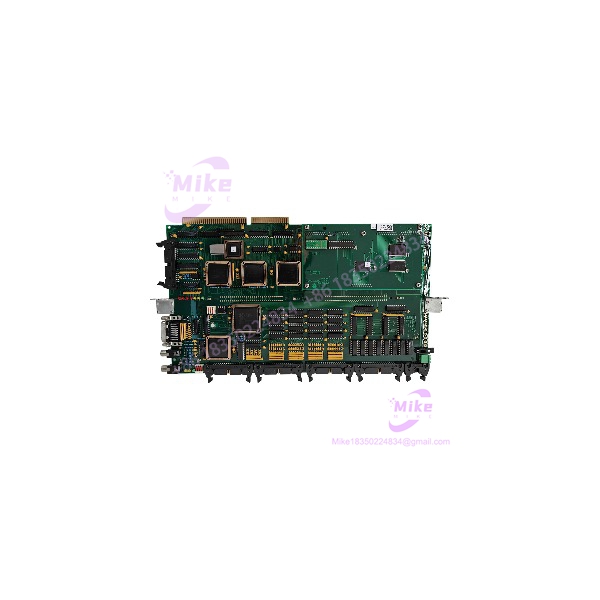
HEUFT HBE010200 | CPU3 Multi I/O Card
Product Introduction
The HEUFT HBE010200 is not a generic PLC input/output card. Available industrial records identify it as a CPU3 Multi I/O Card, with the HBE010200MI version specifically associated with the T186-C3/MI board designation. Radwell lists HBE010200MI as a discontinued HEUFT PC board and describes it as a CPU3 Multi I/O card.
That distinction matters when buying legacy HEUFT hardware. The board sits inside a machine-specific control architecture, so simply matching connector count or PCB dimensions is not enough. Used-market evidence also shows HBE010200MI boards sold together with an HBE010312ST CPU3 PC board, demonstrating that some assemblies contain multiple related boards rather than the HBE010200 acting as an independent universal controller.
Public technical documentation for the exact HBE010200 is limited. I therefore would not publish unverified processor speed, RAM capacity, supply voltage, I/O channel count, communication protocol, or pin assignments as fixed specifications. Those parameters can depend on the exact board revision and machine configuration.
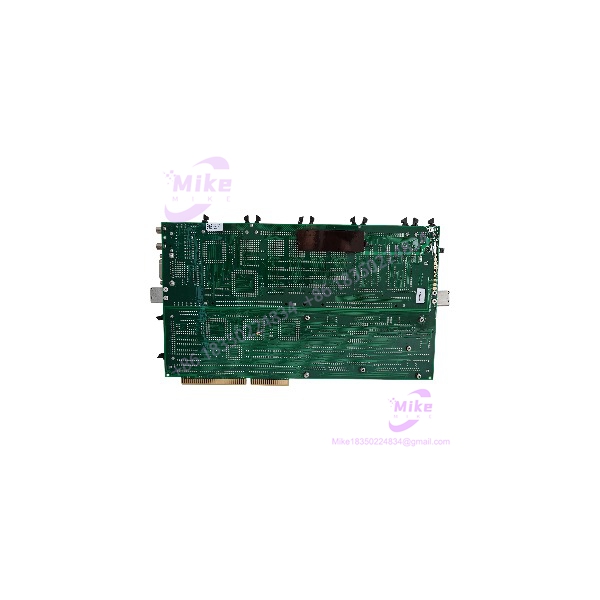
HBE010200
Key Technical Specifications
- Manufacturer: HEUFT
- Part number: HBE010200
- Known detailed variant: HBE010200MI
- Board designation: T186-C3/MI
- Product type: CPU3 Multi I/O PC board
- Functional category: Industrial machine-control / inspection-system electronics
- Board format: Printed circuit board assembly
- System association: HEUFT electronic control equipment
- Related CPU3 hardware: HBE010312ST appears in documented used-board assemblies
- Lifecycle: Legacy / discontinued; HBE010200MI is listed as discontinued by manufacturer in current industrial parts data
- Country association: HEUFT equipment is associated with Germany; one current HBE010200MI commercial listing identifies Germany as country of origin
- Exact processor: Not sufficiently verified from reliable public documentation
- Exact memory capacity: Not sufficiently verified
- Exact I/O count: Not sufficiently verified
- Exact supply voltage: Not sufficiently verified
- Exact communication interfaces: Not sufficiently verified
- Exact firmware revision: Must be read from the physical board/system configuration
The identification is supported by multiple independent commercial records: one listing calls it a Multi I/O Card for Electronic Components, while another identifies it as a PC board, Multi I/O card, T186-C3/MI.
Variant and Revision Control
This is where buyers of legacy HEUFT boards need to slow down.
The generic designation HBE010200 appears in several forms in the secondary market, including:
- HBE010200STP
- associated with T186-C3/MI
The ST/P versions are separately cataloged by industrial suppliers, while is explicitly identified with the T186-C3/MI Multi I/O configuration.
Do not assume an ST/P board can replace an MI board simply because the base number begins with . Confirm the complete label, PCB revision, connector arrangement, installed memory, and the target HEUFT machine configuration.
Global Sourcing & Live-Test SOP
1. Inbound verification
Before powering the board:
- Photograph both sides of the PCB.
- Record the complete HBE part number, including MI, ST/P, STP, or any revision suffix.
- Photograph all serial numbers, inspection stickers, and handwritten service markings.
- Check PCB revision identifiers against the customer’s removed board.
- Inspect edge connectors for oxidation, contamination, bent contacts, or evidence of repeated insertion.
- Inspect electrolytic capacitors for leakage or swelling.
- Look for cracked solder joints around connectors, heatsinks, transformers, and mechanically stressed components.
- Confirm that memory devices, daughterboards, and removable modules are actually present.
Used HEUFT boards are sometimes sold as complete assemblies. One documented listing included an HBE010312ST PC board, so buyers should verify whether the offered item is the standalone board or a larger assembly.
2. Electrical inspection
Before connecting it to production equipment:
- Check for obvious shorts between supply rails and ground.
- Inspect the power-entry circuitry for burned components.
- Check connector continuity against the known-good board where available.
- Inspect for corrosion around connectors and board edges.
- Do not apply an arbitrary 24 VDC supply simply because the board is used in industrial automation.
The exact supply requirements were not sufficiently verified in the public sources reviewed, so the correct machine documentation or nameplate information should control the bench-test procedure.
3. System-level live test
The meaningful test is not merely “LED turns on.”
Where the correct HEUFT host equipment is available:
- Confirm successful CPU initialization.
- Verify the board is recognized by the host system.
- Confirm communication with the associated CPU/control electronics.
- Exercise available I/O under controlled conditions.
- Check machine diagnostic messages.
- Verify that configuration data is retained after controlled power cycling.
- Monitor the board during an extended operating period.
For a legacy machine controller, a board that powers up but fails to initialize correctly is not a functional replacement.
4. Configuration preservation
Before removing an installed :
- Photograph every configuration label.
- Record firmware and BIOS information if accessible.
- Record DIP-switch or jumper positions.
- Photograph connector orientation.
- Preserve removable memory or configuration media where applicable.
- Record the host machine model and software revision.
This information can be more valuable than the bare PCB because legacy HEUFT systems can depend heavily on machine-specific configuration.
5. Final preparation
For a tested surplus , document:
- Exact part number
- Complete suffix
- PCB revision
- Serial number
- identification
- Installed memory/modules
- Power-up result
- Host-system test result
- I/O test result
- Observed diagnostic status
- Test date
Seal the board in an ESD-safe bag and protect the connectors from mechanical impact during international shipment.
Field Engineer’s Pitfall Guide
❗ 1. is not automatically equivalent to every suffix
The MI version is specifically identified as the T186-C3/MI Multi I/O configuration, while separate listings exist for -ST/P / HBE010200STP. Treat the suffix as part of the identification, not as optional text.
❗ 2. Do not confuse the Multi I/O card with a conventional PLC CPU
The available records describe as a PC board / Multi I/O card. That is materially different from selling it as a universal PLC processor with standardized I/O. The exact machine interface and software environment need to be verified before declaring compatibility.
❗ 3. Watch for incomplete assemblies
Used-market photographs show an board paired with an HBE010312ST board. If a customer’s failed assembly contains both boards, supplying only the may leave the machine incomplete. Compare the entire assembly before purchasing.
Intent-Driven FAQ
What is the HEUFT ?
The is a legacy HEUFT industrial control PCB associated with the Multi I/O Card architecture. The version is identified as in current industrial parts records.
Is a PLC module?
It should not be marketed as a generic PLC I/O module. The available evidence identifies it as a HEUFT Multi I/O PC board, intended for HEUFT equipment rather than standardized PLC backplane use.
What does the “MI” suffix mean?
The documented version is identified as the Multi I/O configuration and associated with . It should be matched against the exact board installed in the customer’s machine.
Is still manufactured?
Current industrial parts records identify as discontinued by the manufacturer. Consequently, surplus, used, refurbished, and repair-stock sourcing are relevant for maintenance applications.
Can -ST/P replace ?
Do not assume so. -ST/P is separately identified in current surplus listings. The complete board suffix, revision, connector configuration, installed hardware, and target machine should be compared before approving a substitution.
Does contain the machine’s complete control program?
That cannot be established from the public information reviewed. A CPU/multi-I/O board may contain or execute part of a machine’s control environment, while configuration, software, and machine-specific data can reside elsewhere. Verify the actual HEUFT system architecture before promising that a replacement board will arrive “programmed.”
What should I request from a seller before buying?
Request clear photographs of the entire front and rear of the PCB, the full HBE part number, revision markings, serial/inspection labels, installed memory or daughterboards, and all connectors. For a mission-critical replacement, also request evidence of power-up and host-system testing. A continuity check alone is not an adequate functional test for this type of board.





