

Description
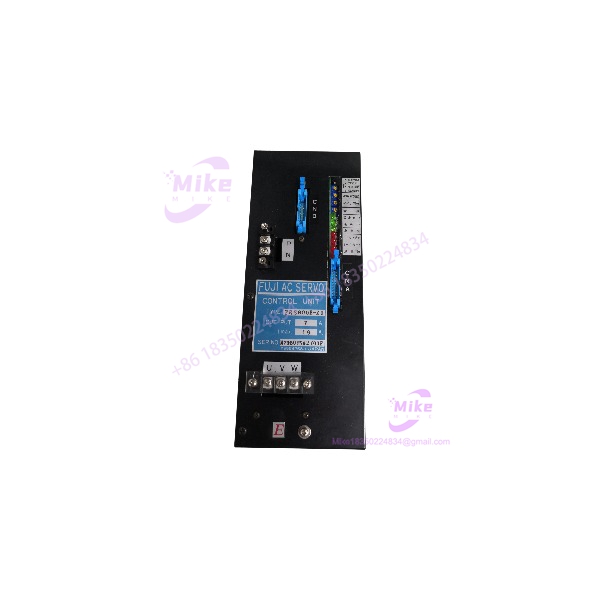
Fuji FRS-800B | 19A Servo AC Control Unit
Dynamic Product Introduction
A servo controller can fail in a way that looks mechanical.
The machine may report following errors, refuse to complete homing, trip during acceleration, or simply disable the axis. Replacing the motor immediately is often the wrong first move. With the Fuji Electric FRS-800B, the drive/controller itself has to be separated from the motor, encoder, command interface, and machine wiring before the fault can be assigned correctly.
The FRS-800B, also written FRS800B, is identified in industrial equipment references as a Fuji Electric Servo AC Control Unit with a 19 A rating. That places it in a very different category from a conventional general-purpose inverter. Its job is coordinated servo motion, where current regulation, feedback behavior, acceleration, deceleration, and position control all interact.
That distinction matters during procurement.
A visually similar Fuji drive is not automatically a valid substitute. Servo systems are particularly sensitive to the relationship between drive electronics, motor characteristics, encoder feedback, command signals, and parameter sets. A replacement can power up perfectly and still fail when the machine attempts its first controlled move.
Honestly, for a legacy FRS-800B installation, exact model matching is usually cheaper than troubleshooting an improvised substitute after commissioning.
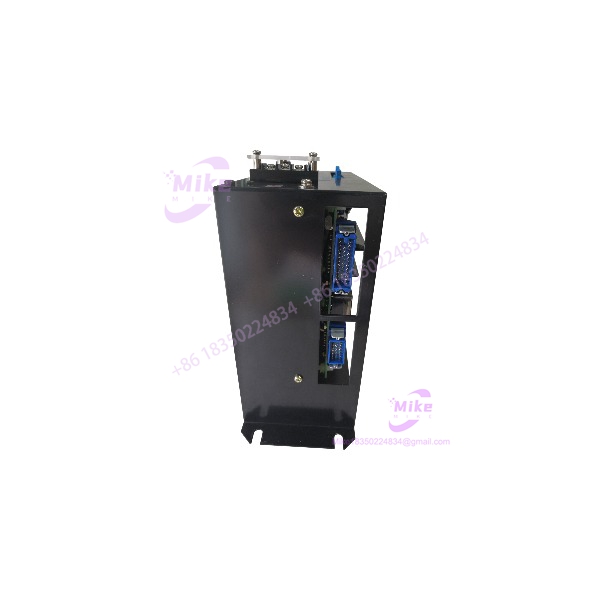
FRS-800B
Key Technical Specifications
- Manufacturer: Fuji Electric
- Model: FRS-800B
- Alternate Model Format: FRS800B
- Product Type: Servo AC Control Unit
- Rated Current: 19 A
- Application: Industrial servo motor control
- Control Category: AC servo / motion control
- Installation Class: Industrial machinery and automated equipment
- Replacement Strategy: Match the exact FRS-800B configuration before substitution
- Procurement Condition: New, surplus, refurbished, or used units may be encountered
- Critical Compatibility Items: Motor, feedback device, command interface, wiring, and drive parameters
The 19 A rating is specifically reported for FRS800B in an industrial equipment reference.
I am deliberately not assigning an input voltage, horsepower/kW motor rating, encoder type, communications protocol, or output voltage to this exact without primary documentation. Those values can vary across servo-drive families and should not be inferred merely from the model name.
Global Sourcing & Live-Test SOP
Inbound Verification
For a used , identification should begin at the nameplate.
Record:
- Complete model number
- Serial number
- Revision/date code
- Manufacturer label
- Input and output terminal markings
- Motor connector
- Encoder/feedback connector
- Command/control connector
- Grounding terminals
- Cooling hardware
- PCB revision where accessible
Inspect for:
- Burned power components
- Discolored terminals
- Cracked solder joints
- Failed cooling fans, if fitted
- Electrolytic capacitor swelling
- Corrosion
- Foreign contamination
- Evidence of previous board repair
- Damaged connector locks
A 19 A servo drive that has spent years in a hot electrical cabinet deserves a much more serious inspection than a clean visual check.
Live Simulation
Do not bench-test the by randomly applying power.
The correct procedure requires a compatible test arrangement, including an appropriate motor or engineered drive simulator and the correct feedback interface where applicable.
Before enabling the output stage:
- Verify wiring.
- Verify protective grounding.
- Confirm control-voltage requirements from the applicable documentation.
- Check motor-circuit continuity.
- Check feedback wiring.
- Confirm parameter memory/drive configuration.
- Energize under controlled conditions.
- Observe drive status and fault indications.
- Perform low-speed operation first.
The first successful power-up is only the beginning of the test.
Diagnostics
A proper evaluation should examine:
- Drive initialization
- Alarm/fault status
- DC-bus behavior
- Motor current
- Phase balance
- Feedback integrity
- Command response
- Acceleration
- Deceleration
- Low-speed stability
- Following error
- Thermal behavior
Where the original machine uses an encoder, verify the actual feedback signal rather than trusting the drive’s “ready” indication.
A Fluke multimeter is useful for static electrical checks; an oscilloscope is valuable when investigating feedback or command-signal instability.
Servo Performance Test
Run a controlled motion sequence.
Start with:
- Enable
- Low-speed jog
- Direction reversal
- Controlled acceleration
- Controlled deceleration
- Repeated positioning
- Stop/start cycles
Then monitor the axis for abnormal current, vibration, hunting, or position error.
Do not immediately run a 100% speed cycle on a used servo controller. If the drive has a latent power-stage problem, high-current operation can turn a diagnostic exercise into component damage.
Thermal Run
A refurbished should be operated long enough for the power electronics to reach a representative temperature.
Monitor:
- Heat-sink temperature
- Cooling performance
- Drive current
- Alarm history
- Motor response
- Feedback stability
- DC-bus behavior
A cold drive can pass a short bench test and fail after thermal expansion or capacitor heating. That is why an extended run is part of a meaningful refurbishment process.
Final Preparation
Before shipment or installation:
- Photograph the complete nameplate.
- Record serial and revision information.
- Record test-drive configuration.
- Document motor/feedback combination used for testing.
- Record all observed alarms.
- Record thermal-run results.
- Protect connectors against ESD and mechanical damage.
- Secure the unit against vibration during transport.
For a legacy servo controller, the test record should travel with the hardware.
Field Engineer’s Pitfall Guide
❗ Do not treat the 19 A rating as the whole specification
The ‘s 19 A rating tells you something important, but it does not establish complete compatibility.
The motor, feedback device, command architecture, supply requirements, and parameter set must all match the machine.
A replacement drive with the same current rating can still be electrically wrong.
❗ Do not swap the controller before checking the encoder circuit
Servo faults frequently originate in feedback wiring.
A broken encoder conductor, poor shield termination, loose connector, or damaged feedback device can produce symptoms that look exactly like a failed drive.
I would check the feedback path before condemning an expensive —especially when the drive powers up normally but reports following or position-related faults.
❗ Never commission a replacement with unknown parameters
A servo drive’s parameter set is part of the machine’s functional configuration.
Motor constants, current limits, acceleration/deceleration behavior, electronic gearing, feedback scaling, and protection settings can determine whether the axis operates correctly.
Save the existing configuration before replacing a working controller whenever possible. If the original drive is already dead, obtain the machine’s documented parameter set before attempting commissioning.
Intent-Driven FAQ
What is the Fuji ?
The Fuji Electric is identified as a Servo AC Control Unit with a 19 A rating. It is intended for industrial servo-motion applications rather than ordinary fixed-speed motor control.
Is the same as FRS800B?
Yes. and FRS800B are commonly used representations of the same model identifier in industrial listings. Current equipment references list the MPN as FRS800B.





