

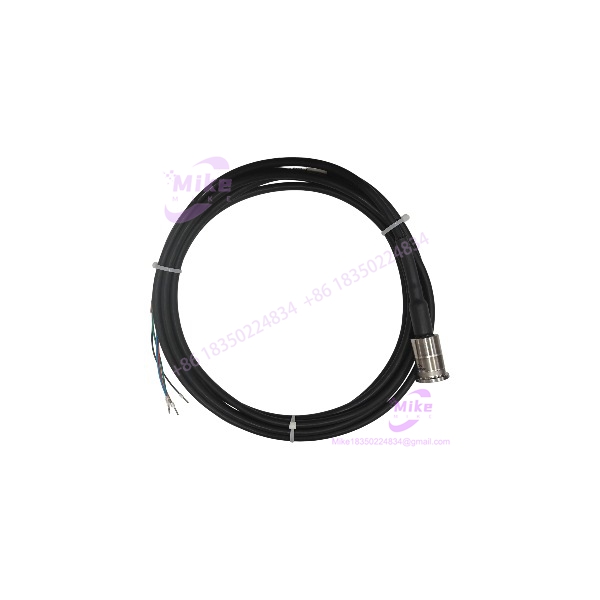
Description
Emerson MAS 2600-G30-10-0/0P | Tank Level Transmitter
Dynamic Product Introduction
Tank-level measurement failures are not always caused by the monitoring system. In marine ballast, fuel, and service-water applications, the pressure transmitter and its cable are exposed to conditions that can gradually compromise measurement reliability. A drifting level signal can affect tank inventory calculations, alarm thresholds, and operator decisions.
The Emerson MAS 2600-G30-10-0/0P belongs to a hydrostatic tank-level measurement family developed for marine and industrial tank monitoring. The MAS 2600 architecture uses a pressure-sensitive silicon sensor behind an isolation diaphragm, with pressure changes converted into an electrical signal and transmitted through an amplifier as a 4–20 mA loop-powered output. The transducer uses a titanium housing and diaphragm, and the family is designed for submersible service.
For maintenance teams, the advantage is a defined measurement architecture suited to liquid-level monitoring—not a claimed improvement in accuracy over every legacy transmitter. The published MAS 2600 reference manual specifies ±0.25% of full scale accuracy at 20°C for the family. That figure should not be treated as a guaranteed as-received performance result for a surplus MAS 2600-G30-10-0/0P unit.
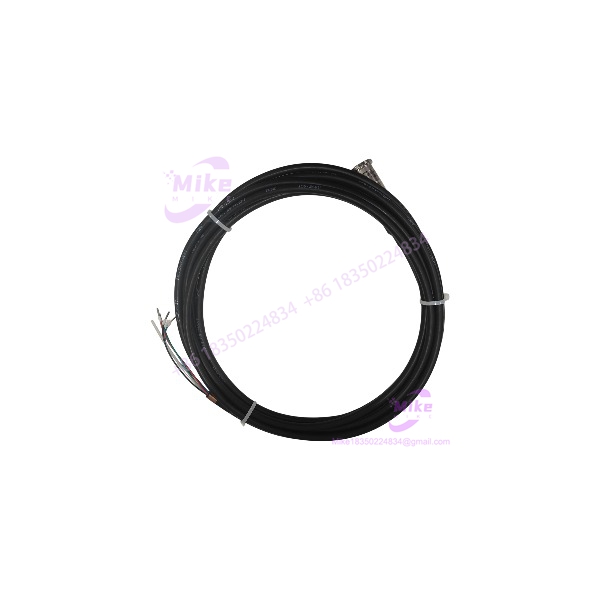
MAS 2600-G30-10-0/0P
Key Technical Specifications
- Manufacturer / Brand: Emerson / Damcos
- Product Family: MAS 2600
- Full Model: MAS 2600-G30-10-0/0P
- Measurement Principle: Hydrostatic pressure measurement
- Application: Tank contents and liquid-level measurement
- Output Architecture: 2-wire, loop-powered 4–20 mA DC
- Sensor Construction: Titanium housing and diaphragm
- Transducer Protection: IP68 submersible design
- Accuracy: Family reference specification of ±0.25% F.S. at 20°C
- Amplifier Options: MAS 2600 variants include programmable, fixed-range, and differential configurations
- Temperature Sensor: Availability depends on the exact variant; confirm against the complete ordering code
- Pressure Range: Must be verified from the full model code and physical nameplate
The MAS 2600 reference documentation identifies multiple transducer ranges and amplifier configurations. Do not infer the precise pressure range, temperature-sensor provision, or calibration method from the family name alone.
Global Sourcing & Live-Test SOP (Transparency Core)
A used MAS 2600 transmitter can look serviceable while carrying a damaged diaphragm, compromised cable, or amplifier calibration drift. For a tank-level instrument, visual condition is only the starting point.
The following is a recommended qualification procedure for surplus inventory. It is not a claim that the specific listed unit has passed testing.
Inbound Verification
- Match the complete MAS 2600-G30-10-0/0P ordering code against the nameplate.
- Record serial number, manufacturing markings, and available hardware or amplifier revisions.
- Request OEM documentation, supplier traceability, and any available calibration certificates.
- Inspect the titanium transducer housing, diaphragm area, cable jacket, cable entry, and amplifier enclosure.
- Check for corrosion, impact damage, cable splices, and evidence of unauthorized repair.
- Verify whether the supplied unit includes the transducer, cable, amplifier, and any required accessories.
The complete assembly matters. A transmitter offered without its matching amplifier or cable may not be a drop-in replacement for the installed system.
Live Simulation & Functional Testing
Use a compatible MAS 2600 amplifier arrangement and a controlled pressure-calibration setup.
- Verify the applicable supply and loop-wiring requirements before energizing.
- Confirm the amplifier’s output configuration and calibration method.
- Apply known pressure points using a calibrated pressure source.
- Measure the 4–20 mA loop response with a calibrated meter.
- Compare measured output against the configured pressure range.
- Check zero and span behavior and document any deviation.
- Inspect cable continuity and insulation using methods approved for the instrument.
For marine or hazardous-area service, testing must preserve the applicable intrinsic-safety requirements. Do not connect ordinary test equipment into an intrinsically safe circuit unless the test arrangement has been assessed and approved for that purpose.
Diagnostics & Extended Testing
For critical spares, record:
- Loop current at zero and intermediate pressure points
- Full-scale response
- Calibration deviation
- Output stability over time
- Cable and connector inspection results
- Amplifier configuration and calibration settings
A 24-hour powered test may be included in a buyer-specific acceptance plan, provided the test setup and instrument limits support it. It should not be described as completed unless records substantiate the test.
Final Preparation & Shipment
Before dispatch, document the complete model number, serial number, inventory condition, and test results. Protect the transducer diaphragm and cable from impact, moisture ingress, and mechanical strain.
For a tank-monitoring application, request calibration evidence and written warranty terms before approving a surplus unit for operational service.
The Field Engineer’s Pitfall Guide
❗ Warning 1: Pressure-Range Mismatch Can Distort Tank-Level Readings
The MAS 2600 family is available in multiple pressure ranges. A replacement with a different full-scale range can produce incorrect tank-level indications even if the 4–20 mA output appears normal.
I’ve seen instrument replacements become calibration problems because the buyer matched the transmitter family but overlooked the pressure range. Verify the actual range against the tank’s measurement height, liquid density, and original instrument configuration.
❗ Warning 2: Amplifier Configuration Is Not Universal
MAS 2600 amplifier variants differ in output configuration and calibration method. Programmable, fixed-range, and differential variants are not automatically interchangeable.
Before commissioning, confirm the complete amplifier code and its calibration requirements. A replacement with a different output configuration can require changes to the monitoring system’s scaling or calibration procedure.
❗ Warning 3: Hazardous-Area Approval Must Match the Installation
The MAS 2600 family has intrinsically safe application options, but approval depends on the actual transmitter configuration and installation arrangement.
Do not assume that a generic MAS 2600 label establishes suitability for every hazardous area. Verify the instrument’s certification markings, safety barrier compatibility, and approved installation documentation before connecting it to a live plant or vessel system.
Intent-Driven FAQ
Q1: What does the Emerson MAS 2600-G30-10-0/0P measure?
It is part of the MAS 2600 hydrostatic tank-level transmitter family. The system measures liquid pressure and converts it into a proportional signal used to determine tank contents or level.
Q2: Does the MAS 2600-/0P provide a 4–20 mA output?
The MAS 2600 family uses a 2-wire, loop-powered 4–20 mA output architecture. Confirm the exact amplifier configuration and calibration range of the specific unit before connecting it to the existing control system.
Q3: Can I replace my existing MAS 2600 transmitter with this model?
Potentially, but verify the full ordering code, pressure range, amplifier configuration, cable length, and temperature-sensor requirements. A shared MAS 2600 family designation does not guarantee direct interchangeability.
Q4: Is the MAS 2600-/0P still available new?
Surplus inventory is listed by industrial and marine spare-parts suppliers. However, current OEM production status and factory-new availability for this exact configuration should be confirmed directly. Request actual-unit photographs and condition documentation before purchasing.
Q5: Can I calibrate the MAS 2600 in the field?
Calibration depends on the amplifier version. Programmable variants use DIP switches and potentiometers, while fixed-range variants use a different calibration approach. Confirm the exact amplifier configuration and follow the applicable MAS 2600 reference manual.
Q6: Is the MAS 2600 suitable for hazardous-area tank monitoring?
The MAS 2600 family has intrinsically safe application provisions when installed with appropriate safety barriers or isolation amplifiers. Suitability depends on the exact instrument certification and the installation’s hazardous-area requirements.
Q7: What warranty should I expect when buying a surplus MAS 2600-/0P?
Warranty coverage depends on the supplier and the condition sold. Obtain written confirmation of the warranty period, exclusions, return procedure, and whether calibration or functional failure is covered. Do not assume that used marine inventory carries an active OEM warranty.





