Description
Emerson A6500-UM Control card module Brand
Dynamic Product Introduction
Unscheduled turbomachinery shutdowns often trace back to aging monitoring cards whose signal conditioning drifts or whose internal processors succumb to component fatigue. When a vibration card fails on a critical steam turbine, maintenance teams cannot afford to gamble on untested surplus or wait months for a factory allocation window.
The Emerson A6500-UM universal monitor module resolves this operational risk by providing precise signal processing for high-speed rotating assets within established AMS 6500 architectures. Deploying this card restores reliable machinery protection and vibration tracking instantly—though verifying channel configuration jumper settings and sensor power jumpers in the software setup is mandatory before energizing the rack.
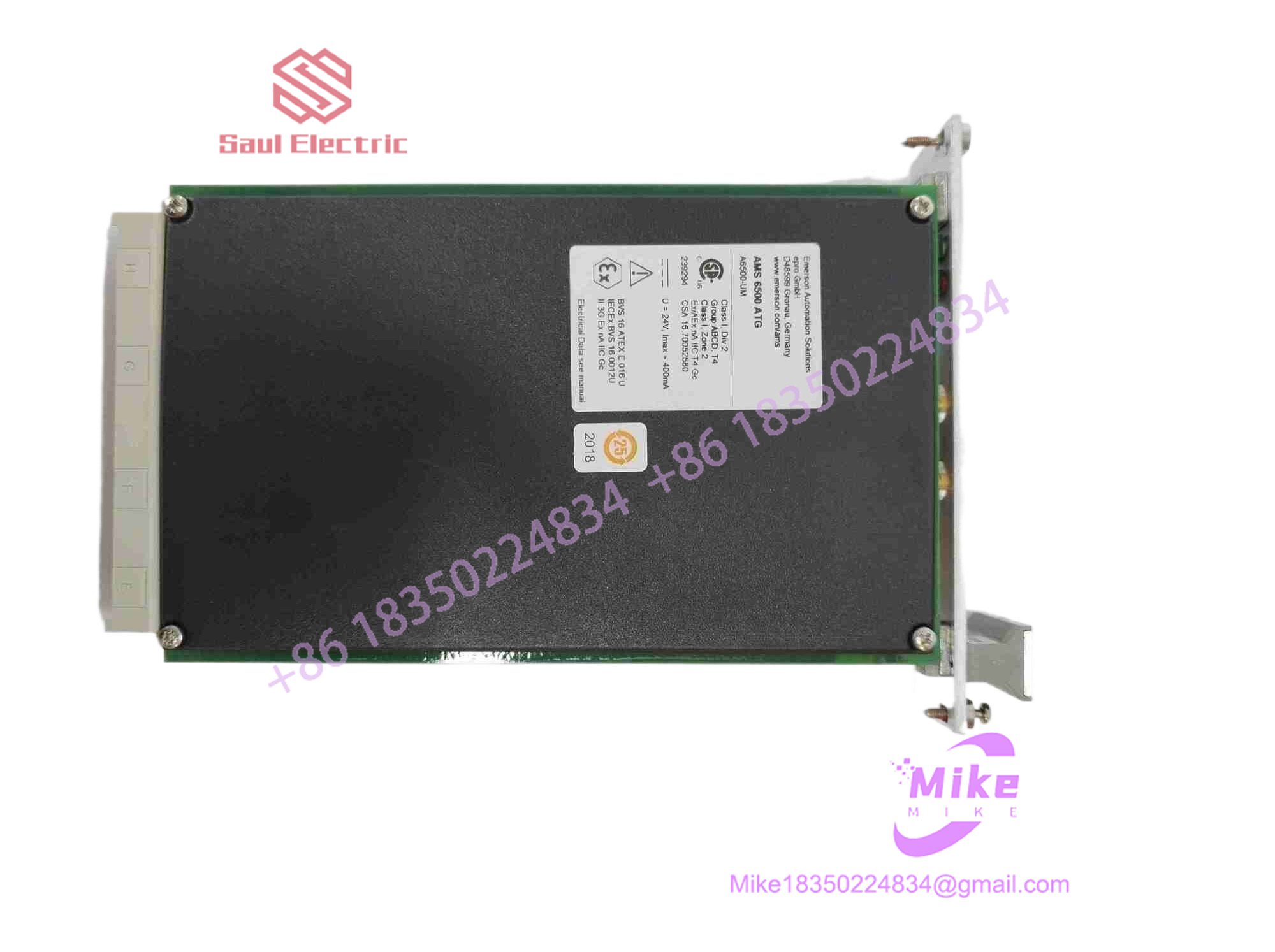
A6500-UM
Key Technical Specifications
| Parameter | Specification Details |
| Module Classification | Universal monitoring card (vibration, position, speed) |
| System Standard | API 670 compliant turbomachinery protection |
| Input Channels | Multi-channel dynamic signal inputs (proximity, velocity, acceleration) |
| Signal Processing | High-speed digital signal processing (DSP) with selectable filtering |
| A/D Conversion | High-resolution analog-to-digital conversion |
| Bus Interface | High-speed backplane communication for rack data aggregation |
| Diagnostic Indicators | Front-panel LED status indicators for channel health and OK status |
| Operating Temperature | -20°C to +65°C industrial environment rating |
| Approvals | CE, ATEX Zone 2, CSA Class 1 Div 2 hazardous locations |
Global Sourcing & Live-Test SOP (Transparency Core)
Deploying replacement electronics into safety-instrumented turbomachinery protection loops requires rigorous validation protocols to eliminate latent infant mortality and signal distortion.
- Inbound Verification: Every incoming module undergoes serial number tracking, anti-counterfeit hologram inspection, and historical traceability checks against verified factory databases.
- Live Simulation: Technicians seat the card onto a powered AMS 6500 test backplane chassis, verifying proper slot handshakes, internal bus communication, and power supply regulation.
- Diagnostics: We inject precise, calibrated dynamic signals using specialized function generators and Fluke multimeters to validate frequency response, amplitude linearity, and trip relay activation thresholds.
- Final Prep: Modules complete a 24-hour thermal soak cycle, followed by firmware revision logging, board-level contact inspection, and anti-static vacuum-sealed packaging.
The Field Engineer’s Pitfall Guide
❗ Firmware Mismatch Across Rack Slots: Upgrading a single monitor card to a newer firmware revision while adjacent cards run legacy versions can disrupt backplane data polling routines. I’ve seen system communication drop out entirely because a host controller rejected mixed firmware versions during an online sync.
❗ Sensor Power Configuration Errors: Neglecting to check internal power jumper or software configuration settings for probe power supply (e.g., -24V DC for proximity probes versus powered accelerometer loops) will instantly burn out field sensors or yield completely flatlined readings.
❗ Unverified Relay Voting Logic: Failing to re-verify trip multiplication and voting logic assignments after replacing a module can leave safety shutdown loops uncoupled from critical emergency stop solenoid valves.
Intent-Driven FAQ
Will replacing this module erase my configuration or alarm setpoints?
No. Configuration data, alarm thresholds, and scaling factors for the AMS 6500 system are stored in the rack’s configuration memory or downloaded from the system engineering software station, not permanently locked solely to volatile card memory. However, always verify current setpoints against site documentation after insertion.
Is the A6500-UM hot-swappable in an active machinery protection rack?
Yes, the system architecture supports hot-insertion and removal of individual monitor cards. Nevertheless, maintenance personnel must follow strict plant safety interlock procedures to ensure bypass states are active so that pulling a card does not trigger a false emergency turbine trip.
Are these modules sourced as factory original or refurbished?
Our inventory includes both factory-sealed surplus (untouched, stored in climate-controlled environments) and rigorously tested premium pulls from verified plant upgrades. Every unit undergoes identical multi-point bench testing regardless of sourcing path.
What warranty protects this replacement module?
Each delivered module is backed by an independent 12-month operational warranty, covering functional performance, measurement accuracy, and electrical integrity under standard industrial operating environments.
How does the card communicate with higher-level control systems or software?
The module routes data across the internal rack backplane to system communication gateways, delivering real-time vibration data and machinery health metrics via Modbus TCP/RTU or OPC UA protocols directly to plant distributed control systems (DCS) and asset management software.