


Description
Danaher / Pacific Scientific E22SSLT-LNN-NS-04 | NEMA 23 Step Motor
Architect’s Product Breakdown
The Pacific Scientific E22SSLT-LNN-NS-04 operates as a high-efficiency, low-loss hybrid stepping motor belonging to the robust E-Series line (historically supported under the Danaher Motion and Kollmorgen corporate umbrellas). Its core engineering design combines permanent magnet and variable reluctance technologies to provide high torque density and accurate step-by-step position control. It is widely used in legacy automation applications such as automated indexing tables, medical diagnostic equipment, semiconductor handling, and precision CNC positioning stages.
Because this hardware tier is long-discontinued, matching the exact part number string is vital. The nomenclature specifies a NEMA 23 frame size, dual rotor stacks, series winding configuration, and a specialized mounting code. Swapping this motor requires matching the phase current limits and ensuring compatibility with the microstepping drive powering the axis.
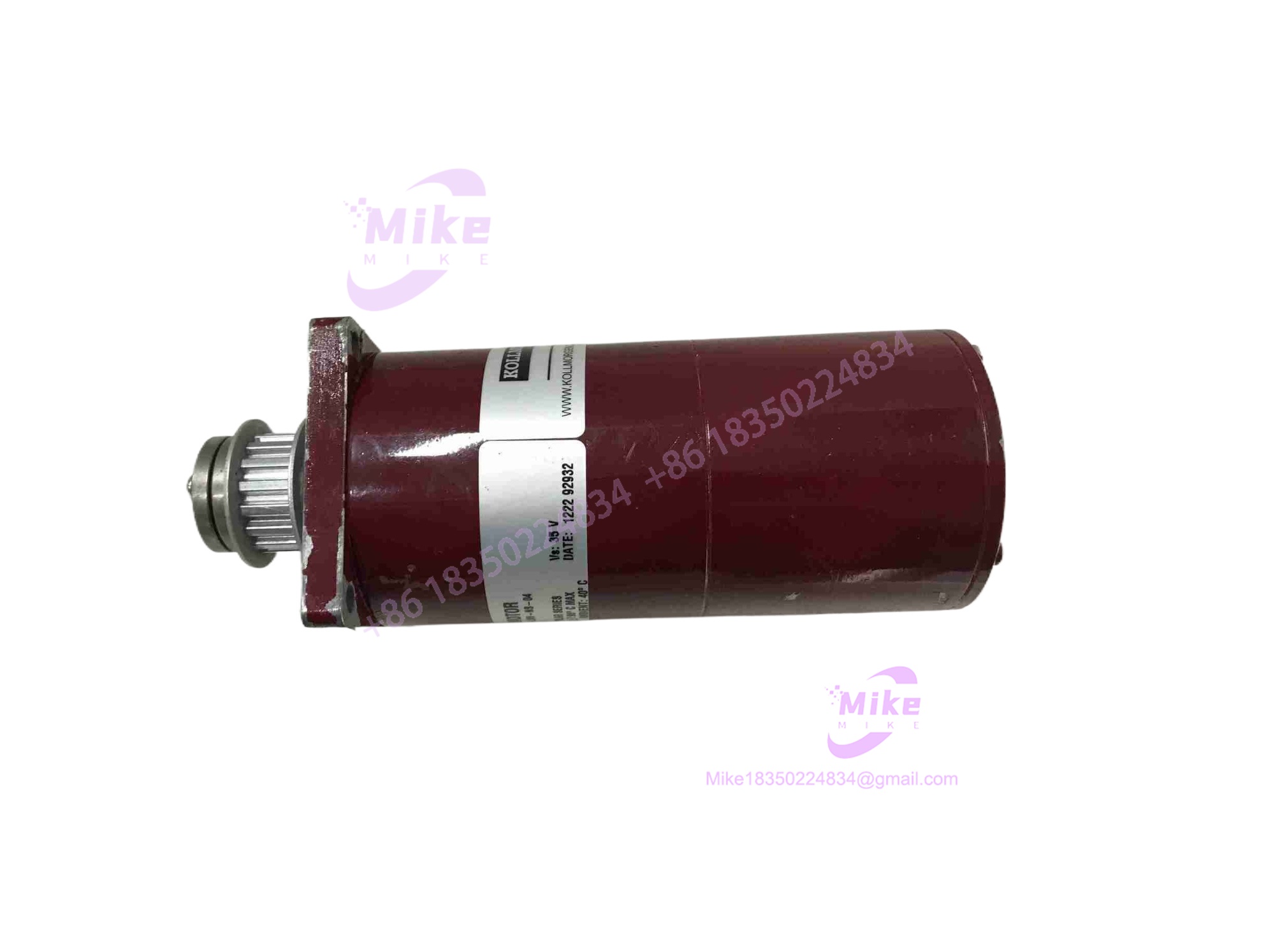
E22SSLT-LNN-NS-04
Key Technical Specifications
| Parameter | Specification |
| Series | Pacific Scientific E-Series Hybrid Stepper |
| Model / Part Number | E22SSLT-LNN-NS-04 |
| Frame Size | NEMA 23 (approx. 2.25-inch diameter) |
| Step Angle | 1.8° standard step resolution |
| Rotor Stacks | 2-stack configuration |
| Winding Type | 4-lead series connection (optimized for low-speed holding torque) |
| Shaft Configuration | Single, smooth shaft (no keyway) |
| Electrical Ratings | ~2.5 A phase current / ~35 VDC / ~62 W class (typical variants) |
| Operating Environment | Standard industrial temperature ranges |
Field Engineer’s Pitfall Guide
- WARNING: Incorrect Phase Wiring. Mismatching the 4-lead series wire pairings during motor installation will cause erratic jitter, stalling, or failure to rotate when energized by the step drive.
- WARNING: Exceeding Drive Current Limits. Driving this motor with an unconfigured microstepping controller set too high above its rated phase current will overheat the stator windings and destroy internal insulation.
- WARNING: Side-Load Stress on Smooth Shafts. Because this variant features a smooth shaft without a keyway, applying excessive radial side-loads via improperly aligned pulleys can cause slip or bearing wear.
- Field Anecdote: I remember an automated dispensing assembly stalling mid-cycle because a replacement motor was wired using an arbitrary phase sequence instead of following the exact Pacific Scientific winding color code, causing the indexer to reverse direction and throw a drive fault.
QA & Testing SOP
- Visual & Origin Verification: Inspect the motor housing, bearings, and lead wires for mechanical wear, damaged insulation, and verify original Pacific Scientific manufacturing labels and serial codes.
- Live Test Bench Environment: Mount the motor onto a calibrated test stand coupled to an adjustable microstepping drive and power supply.
- Electrical & Dynamic Testing: Measure winding resistance across phases for balance, check insulation breakdown limits (megger test), and execute low-to-high speed profile sweeps to verify smooth stepping performance.
- Anti-Static & Secure Packaging: Enclose the unit in heavy-duty protective cushioning and structural foam to prevent impact damage to the shaft and lead wires during transit.
Technical FAQ
Can the E22SSLT-LNN-NS-04 be driven by modern third-party microstepping drives?
Yes, provided the drive can be configured to match the motor’s rated phase current and voltage limits for its 4-lead series winding.
Does this motor include an integrated optical encoder for feedback?
No. The “-NS” portion of the configuration string indicates a non-encoder/special sequence base model relying on open-loop stepping control.
What causes a stepper motor to lose steps during operation?
Lost steps usually stem from mechanical binding in the load, acceleration rates set too aggressively for the available torque curve, or insufficient phase current from the driver.
Is this motor part of the current active Kollmorgen catalog?
No. While historical lineage traces through Pacific Scientific and Danaher Motion into Kollmorgen, the E-Series is obsolete, making new-surplus and professional repair services the primary sourcing channels.





