

Description
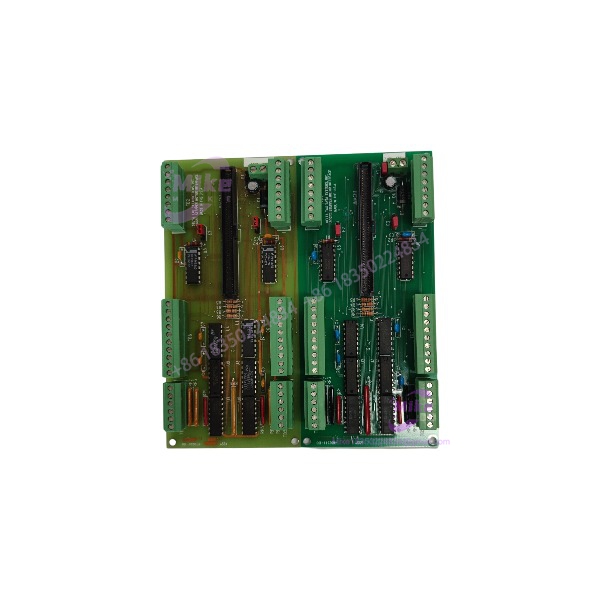
Delta Tau PMAC-2 ACC-8S | 8-Channel Sin/Cos Interpolator Board
Product Introduction
When sub-micron semiconductor alignment stages or precision optical grinders lose positioning accuracy, standard digital quadrature encoders simply cannot provide the resolution needed to hit tight manufacturing tolerances. The PMAC-2 ACC8S isn’t a basic breakout terminal; it is a specialized analog sinusoidal encoder interpolation module built specifically for Delta Tau PMAC-2 motion controllers. Attempting to feed raw 1Vpp Sin/Cos signals directly into standard digital inputs causes signal clipping and massive positional tracking errors—making this dedicated interpolator card essential for ultra-precision motion loops.
Operating inside noisy industrial control cabinets requires hardware engineered to reject electromagnetic interference and ground noise. The PMAC-2 ACC8S conditions raw analog sine and cosine waves from optical or magnetic scales, multiplying the signal resolution internally before transferring clean digital position data across the PMAC-2 expansion bus. Onboard differential line receivers protect sensitive analog signals over long cable runs—though you must carefully manage shield grounding at the cabinet entry to prevent common-mode noise from corrupting sub-micron counts.
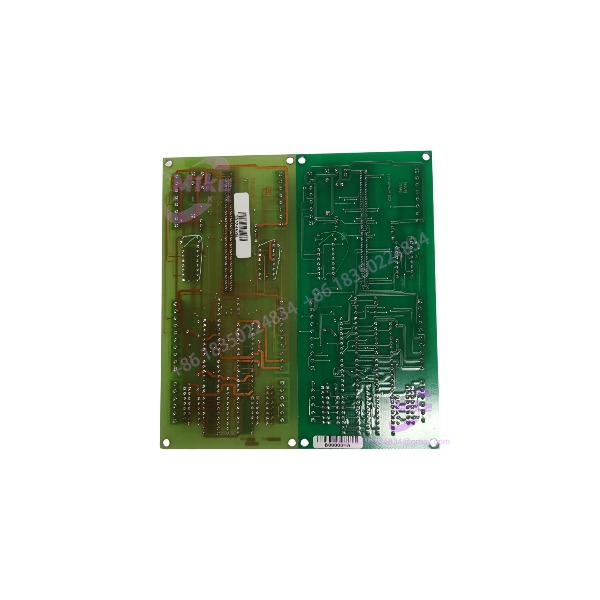
PMAC-2 ACC-8S
Key Technical Specifications
- Board Architecture: Hardware sinusoidal encoder interpolation and feedback expansion card
- Input Channel Capacity: Eight (8) independent analog sinusoidal encoder channels
- Input Signal Type: 1 Vpp differential Sin/Cos analog signals
- Signal Interpolation: High-resolution internal multiplication converting analog waves to digital quadrature
- Interface Bus: Direct connection to PMAC-2 backplane / accessory slot interface
- Power Requirements: Powered directly via PMAC-2 backplane power distribution rails
- Operating Temperature Range: 0°C to +55°C (32°F to 131°F)
- Storage Temperature Envelope: -20°C to +85°C (-4°F to +158°F)
- Relative Humidity Tolerance: 5% to 95% non-condensing operating environment
- Enclosure Form Factor: Open-frame printed circuit board designed for industrial card cages
- Mounting Format: Card-edge slot installation with front-panel retention brackets
Application Scenarios & Pain Points
A semiconductor wafer inspection facility in California suffered chronic positioning jitter and image blurring whenever high-speed scanning axes accelerated. Installing the PMAC-2 ACC8S card into their master controller rack allowed them to run high-resolution 1Vpp optical scales, multiplying position resolution by over 1000x without lagging the CPU. The result? Sub-nanometer tracking accuracy and a 15% increase in daily wafer inspection yield.
With vs. Without Dedicated Analog Interpolators:
- Without the PMAC-2 ACC8S: Motion controllers reading standard digital encoders hit a hard resolution ceiling, creating velocity ripple, quantization noise, and hunting at target positions.
- With the PMAC-2 ACC8S: High-speed hardware interpolation converts smooth analog sine waves into ultra-fine digital steps, enabling silky-smooth velocity profiles and fast settling times.
Ultra-Precision Optical Grinding Machines:
- Condition: Heavy multi-axis grinding heads operating in wet, high-vibration machining enclosures.
- Impact: Electrical noise from nearby spindle inverters distorts weak feedback signals, causing surface finish defects on optical glass.
- Solution: Running 1Vpp Sin/Cos feedback into the differential inputs of the PMAC-2 ACC8S filters high-frequency noise, locking down sub-micron surface finish tolerances.
QA & Live Testing SOP (Trust Signal)
Every PMAC-2 ACC8S card entering our shop undergoes a rigorous, hands-on validation protocol. We begin with a microscopic inspection of board traces, gold-plated edge connectors, and analog input circuitry to verify zero physical damage, component stress, or trace oxidation. Next, the card is seated into a powered PMAC-2 test rack—we verify internal power conversion and bus voltage stability using a calibrated Fluke digital multimeter.
During live functional testing, we feed simulated 1Vpp differential Sin/Cos waveform signals across all eight channels simultaneously. We monitor interpolation accuracy, signal Lissajous patterns, and digital pulse conversion across high frequency ranges to guarantee zero lost counts or amplitude distortion. Once passed, the card is cleaned, sealed inside static-dissipative ESD shielding, and packed into custom foam-lined boxes for shipment.
Field Engineer’s Pitfall Guide
❗ GOTCHA #1: Sin/Cos Signal Amplitude Calibration Do not assume your field encoders are outputting a perfect 1Vpp differential signal. If cable line loss drops signal amplitude below 0.6Vpp or over-amplification pushes it past 1.2Vpp, the internal interpolation circuits on the PMAC-2 ACC8S will fail to decode position correctly, triggering phase error faults.
❗ GOTCHA #2: Analog Shield Grounding & Cable Routing Never route 1Vpp analog encoder cables in the same wire tray as high-voltage AC motor power lines. High-frequency pulse-width modulation (PWM) noise from servo drives will couple directly onto the analog sine waves, causing phantom count jumps and axis instability.
❗ GOTCHA #3: Expansion Slot Pin Seating When installing the PMAC-2 ACC8S into the PMAC-2 backplane, apply firm, even pressure to ensure the card-edge connector seats completely. Partial insertion can cause intermittent contact on the analog power rails, leading to offset drift on analog-to-digital conversion stages.
Intent-Driven FAQ
What is the main difference between the PMAC-2 ACC8E and the PMAC-2 ACC8S?
The ACC8E is designed to process standard digital RS-422 quadrature encoder inputs, whereas the PMAC-2 ACC8S is specifically engineered to accept analog 1Vpp Sin/Cos encoder signals and perform high-resolution digital interpolation internally.
Can I mix digital and analog encoder cards in the same PMAC-2 rack?
Yes. As long as your PMAC-2 controller configuration supports the additional feedback channels and backplane current draw, you can combine digital interpolation cards (ACC8E) and analog sinusoidal cards (PMAC-2 ACC8S) within the same expansion chassis.
How do I configure the interpolation multiplication factor for this card?
Interpolation settings, scaling gains, and channel assignments are configured within the PMAC development software environment (such as PEWIN or IDE) by setting the appropriate I/O memory registers for the designated accessory slot.
What causes a phase error fault on a Sin/Cos encoder channel?
Phase error faults occur when the 90-degree phase shift between the Sine and Cosine signals shifts out of tolerance, or when signal amplitude drops too low. This is usually caused by physical scale misalignment, dirty optical gratings, or damaged cable shielding.
Is the PMAC-2 ACC8S compatible with older PMAC-1 bus architectures?
No. The PMAC-2 ACC8S is built specifically for the PMAC-2 accessory bus interface. It is physically and electrically incompatible with legacy PMAC-1 expansion backplanes.





