

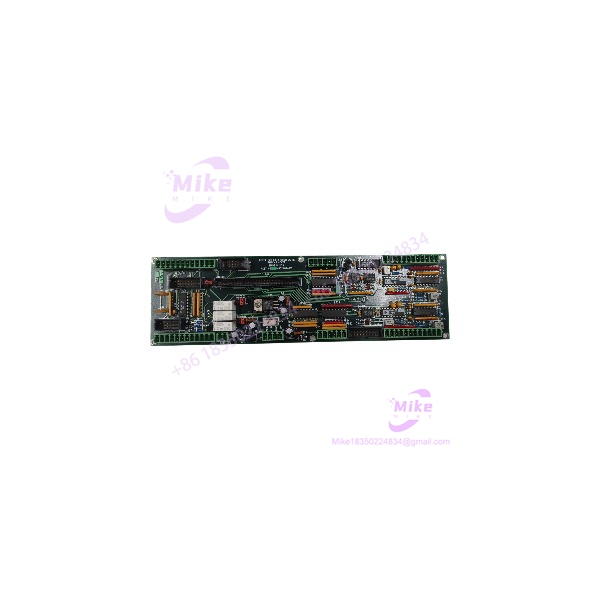
Description
Delta Tau PMAC-2 ACC-8E | 8-Channel Encoder Interpolator Board
Product Introduction
When a high-precision CNC milling machine or semiconductor wafer stage loses feedback tracking on a high-resolution optical encoder, positioning errors ruin expensive workpieces instantly. The PMAC-2 ACC8E isn’t a standard generic I/O breakout board; it is a specialized encoder interpolation accessory engineered specifically to expand the feedback processing capability of Delta Tau PMAC-2 motion controllers. Trying to run sub-micron axes without proper hardware interpolation leads to severe pulse jitter and lost feedback counts—making this exact expansion module critical for ultra-precise motion control.
Operating inside demanding industrial control racks requires hardware that rejects electrical noise and harsh servo transients. The PMAC-2 ACC8E conditions raw encoder signals from linear and rotary scales, translating them into clean digital position data for the master controller. Built-in differential line receivers safeguard signals against long cable runs—though you must ensure proper shield grounding to prevent stray electromagnetic interference from corrupting position loops.
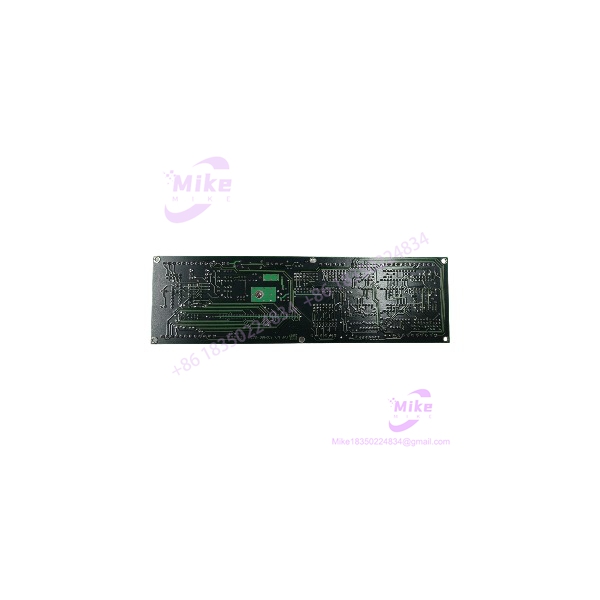
PMAC-2 ACC-8E
Key Technical Specifications
- Board Architecture: Dedicated hardware encoder interpolation and feedback expansion module
- Channel Capacity: Eight (8) independent encoder feedback processing channels
- Signal Compatibility: Differential RS-422 quadrature encoder inputs (Sin/Cos interpolation options depending on build)
- Interface Bus: Direct connection to PMAC-2 backplane / accessory expansion port
- Power Requirements: Powered directly via PMAC rack bus rails and local regulated supplies
- Operating Temperature Range: 0°C to +55°C (32°F to 131°F)
- Storage Temperature Envelope: -20°C to +85°C (-4°F to +185°F)
- Relative Humidity Tolerance: 5% to 95% non-condensing operating environment
- Enclosure Form Factor: Open-type printed circuit board assembly designed for industrial rack cages
- Mounting Configuration: Card-edge slot installation with secure retention brackets
Application Scenarios & Pain Points
A high-speed laser cutting facility in Michigan suffered chronic axis position drift whenever rapid acceleration cycles induced electrical noise across long encoder feedback cables. Integrating the PMAC-2 ACC8E card into their master controller rack cleaned up the quadrature pulse stream, eliminating spurious following errors and boosting daily cutting throughput by 12%.
With vs. Without Dedicated Hardware Interpolators:
- Without the PMAC-2 ACC8E: Controller CPUs struggle with raw high-frequency encoder pulses, leading to missed counts, velocity ripple, and frequent servo axis fault trips.
- With the PMAC-2 ACC8E: Hardware-level pulse processing unburdens the main controller processor, delivering ultra-smooth trajectory tracking and tight positional loop closure.
Precision Semiconductor Inspection Stages:
- Condition: Multi-axis vacuum stages operating in high-vibration, noise-dense cleanroom environments.
- Impact: Weak encoder feedback signals cause tracking jitter and micro-stepping errors during wafer alignment.
- Solution: Mounting the PMAC-2 ACC8E inside the control chassis provides robust differential line reception, locking down sub-micron positioning stability.
QA & Live Testing SOP (Trust Signal)
Every PMAC-2 ACC8E card that enters our facility goes through a strict, hands-on validation routine. We start with a full microscopic inspection of the printed circuit board traces, gold-plated edge fingers, and surface-mount components to verify there is zero thermal stress, corrosion, or handling damage. Next, the card is inserted into a dedicated PMAC-2 test rack powered by a regulated bench supply—we measure bus voltage regulation and current draw using a calibrated Fluke digital multimeter.
During live functional testing, we connect simulated multi-channel quadrature encoder pulse trains to the board inputs, verifying that all eight channels decode position counts cleanly without dropped pulses at high frequencies. We test communication handshaking across the expansion bus to ensure flawless data transfer to the controller. Once verified, the board is wiped clean, slipped into anti-static shielding, and packed into custom foam-lined boxes for safe transit.
Field Engineer’s Pitfall Guide
❗ GOTCHA #1: Differential Shield Ground Termination Do not leave encoder cable shields floating or terminated at only one end when wiring inputs to the PMAC-2 ACC8E. Unshielded or poorly grounded cable runs act as antennas, injecting high-frequency drive noise into the interpolation circuits and causing erratic position jumps.
❗ GOTCHA #2: Power Supply Rail Droop When adding multiple expansion cards like the PMAC-2 ACC8E to an existing PMAC rack, verify that your rack power supply can handle the additional 5V and ±15V current draw. Power rail droop will destabilize analog conversion circuits and trigger phantom watchdog faults.
❗ GOTCHA #3: Edge Connector Seating & Pin Alignment When sliding the board into the rack expansion slot, press it firmly and straight until the card edge seats completely into the backplane connector. Off-center insertion can bend delicate backplane pins, causing permanent communication loss across specific encoder channels.
Intent-Driven FAQ
What is the primary function of the PMAC-2 ACC8E in a motion control system?
The PMAC-2 ACC8E is an 8-channel encoder feedback and interpolation expansion card designed to process high-resolution encoder signals and feed clean quadrature position data directly into Delta Tau PMAC-2 motion controllers.
Can the PMAC-2 ACC8E handle both differential and single-ended encoder signals?
The module is engineered primarily for robust differential RS-422 quadrature encoder inputs to ensure high noise immunity over long industrial cable runs. Using single-ended encoders requires proper signal conversion to avoid common-mode noise corruption.
How do I configure the encoder resolution settings on this expansion card?
Configuration and scaling parameters are managed directly through the PMAC software environment (such as PEWIN or IDE) by setting specific control registers and gain variables associated with the designated accessory slot.
What causes an encoder channel on the ACC8E to register erratic counts or jumping positions?
Erratic counts are almost always caused by loose terminal wiring, damaged cable shields picking up EMI from nearby motor inverter cables, or incorrect line termination resistors on long encoder runs.
Is the PMAC-2 ACC8E compatible with older PMAC-1 architecture?
No. The ACC8E is specifically designed for the PMAC-2 accessory expansion bus architecture. Attempting to install it into older PMAC-1 racks will result in physical pin incompatibility and bus communication failure.





